

FROM RANCH TO TABLE
SRF BLOG

The Art of the Plate
By: Dave Yasuda
Stories
The Art of the Plate
By: Dave Yasuda
Photography by Guy Hand
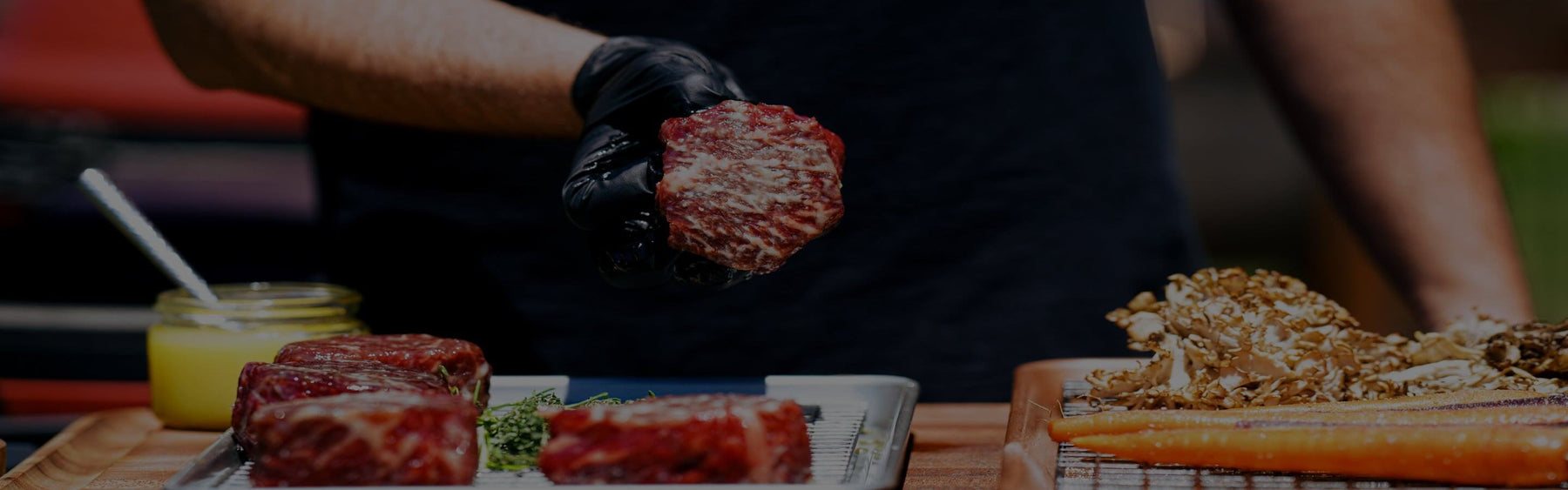
James Beard Award-winning Chef Kris Komori sees plating as an integral part of his cooking, shaped by aesthetics, experience and the way a dish is meant to be eaten.
His tips for plating at home: heat your sides so they hit the plate first, place food just off-center, slice and fan your steak, drizzle sauce around the plate and garnish with whole herb leaves.
Chef Kris Komori
Chef Kris Komori leads the kitchen at KIN, where each tasting menu unfolds as a seasonal progression of dishes. Named the 2023 James Beard Best Chef: Mountain, he has spent nearly two decades studying the visual language of food, a fascination that began with a plating project in culinary school. Chef Komori menus Snake River Farms beef and pork at KIN.
SRF Pork Shoulder. Brussels sprouts. Cabbage. Amaranth. Oak.
At his restaurant, KIN, each tasting menu unfolds as a progression. A dish arrives, then another, each one distinct but connected by a common story. The ingredients change with the seasons. So do the colors, textures and compositions. What ties them together is a deliberate sense of harmony.
The art of visual storytelling has been a longtime exploration for Chef Komori. His fascination with plating began in culinary school, where he chose it as an extracurricular project and began studying the photos in cookbooks. He initially reviewed books from the ’70s and ’90s while also examining the contemporary work of emerging chefs such as Grant Achatz of Alinea. “I didn’t even read the ingredients,” recalls Komori. “I just looked at the plating, scanned the images and kept a folder on my computer.”
That curiosity expanded beyond cookbooks. Komori began studying art books, drawing connections between the work of visual artists and the way chefs compose food on a plate. He also looked at chefs from different eras and their approach to plating, absorbing what appealed to him and questioning what didn’t.
How Chef Kris Komori Developed His Plating Style
He explored a range of styles, from the old-school French influences of Julia Child to the architectural, geometric techniques of Charlie Trotter. Later, as chefs such as René Redzepi and Noma began reshaping the look of fine dining, Komori watched with a more experienced eye.
Scandinavian plating retained precision but felt less rigid, incorporating natural materials such as rocks and shells into the composition. Through all of it, Komori was developing a visual language of his own.
“My style has evolved and shaped over time,” he explains. “I do lean toward minimalism, trying to be asymmetric, a little of Eastern art aesthetic as well. So for me it’s a balance of all of them.”
At KIN, that balance is particularly important because a tasting menu is not simply a collection of individual dishes. The plates must work together.
“You don’t want one dish that just looks totally different from the others unless it’s built into the story,” Komori says. “You don’t want to be repetitive on color, tone and things like that.”
Chef Komori plating for an event.
SRF Beef Coulotte. Squash blossom. Cherry. Basil. Popcorn.
Why Color and Seasonality Matter in Food Plating
That makes seasonality as much a visual consideration as a culinary one. In early spring, the kitchen might find itself surrounded by bright shades of green. Summer and fall bring oranges, yellows and reds. Winter moves toward whites, purples and deeper, darker tones from braised foods. The limitation is part of the challenge. Unlike a painter, a chef doesn’t have every color available.
“We don’t have natural shades of blue, for example,” Komori explains.
Instead, the kitchen works with what the landscape provides, finding variety within those seasonal palettes. A dish might be largely composed of a single color, with one course dominated by yellow and the next by orange. The goal isn’t to make every plate look different simply for the sake of variety. It’s to create a visual progression that feels intentional.
The same thinking applies to the physical composition of a dish. Komori tells his cooks to visualize what a plate will look like before they begin making it. But food, unlike manufactured objects, doesn’t always cooperate. Vegetables have irregular shapes. Ingredients vary from one piece to the next.
“If you want to make perfect circles, you’ve got to punch it out with a ring mold,” he says. “Otherwise, it’s going to look like you tried to make a circle.”
There is beauty, too, in allowing an ingredient to remain what it naturally is. “If you let something be its natural shape, then that’s what it’s going to be,” he says. For Komori, precision is a tool, not the ultimate goal. A dish should not feel disconnected from the food itself.
“We want food on the plate to look different, to look like something you wouldn’t do at home,” he clarifies. “But we also want it to connect.” That connection is where plating becomes part of cooking rather than decoration.
How to Plate Food at Home: 5 Tips From Chef Komori
Start with the sides: Potatoes hold longer than steak. Heat them so they’re very hot. Have them hit the plate first.
Drizzle the sauce: Drizzle sauce around the plate.
Go off-center: Place food just off-center.
Slice and fan: Don’t serve the steak whole. Slice it, then shingle and fan them out to create a more appetizing visual.
Finish fresh: Garnish with whole herb leaves saved from the sauce.
How Plating Affects the Way Food Tastes
Komori approaches the appearance of a dish much as he approaches its flavor. Is it balanced? Does it need acid? Does it need freshness? Is there enough textural contrast? Those questions can apply equally to the palate and the eye.
The visual equivalent of flavor might be color. A dish can taste exactly right and still need something. “We say the same thing to plating, right? This looks drab, it needs a pop of color,” he says.
Even the arrangement of the food can influence how the dish tastes. Komori considers what the first few bites should be like and how the components come together. Smaller pieces can allow more ingredients to arrive in a single bite. Larger pieces create a different experience.
“A lot of the plating structure depends on how you want to eat the dish,” he says.
At KIN, that consideration extends beyond the plate itself. The tasting-room experience begins before the food arrives, with phone calls to learn guests’ names and food allergies, servers learning the stories behind the dishes and all the small details that shape an evening.
“It’s the result of experience for me,” Komori reflects. “All the details help us reach more customers and create a personal experience.”
For a chef who has spent nearly two decades studying the visual language of food, perhaps the most important lesson is that there is no single formula.
SRF Flat Iron. Twice-baked fingerling potato. Carrot. Umeboshi. Blossoms.
Why Sauce Is the Secret to Beautiful Plating
Komori encourages young cooks to study, experiment and practice. One of his favorite exercises is working with sauce. At KIN, sauce is a constant presence, and its viscosity, texture and application can dramatically change a plate.
“The sauce is our medium, just like an artist uses paint,” he says.
He learned that lesson himself during downtime in restaurant kitchens, practicing circles with sauce until he could make them quickly and consistently. Twenty years later, the muscle memory remains.
But technique is only part of the equation. Komori still believes in experimentation. “Try something, look at it and if you don’t like the results, wipe the plate and try again,” he states.
“It’s a process,” he notes. And there is freedom in remembering what happens to every plate eventually. “We take what we do very seriously, but we don’t take ourselves too seriously,” Komori says. “We want it to look appealing, but what we make is meant to be eaten and disappear.”
SRF Beef Coulotte. Lobster and Pioppino Mushrooms. Cayenne. Ash.
Komori frequently asks the artists displaying work at the restaurant, “How do you know when a piece of art is finished?” The answers he receives are varied, but for his culinary art there is a distinction. “What we make is meant to be eaten,” he says.
That may be the most liberating part of plating. A dish doesn’t have to be perfect forever. It only has to be right for this moment, this table, this guest.
Tomorrow, there is always another plate.
Frequently Asked Questions About Food Plating
Who is Chef Kris Komori?
Chef Kris Komori is the chef at KIN and was named the 2023 James Beard Best Chef: Mountain. He has spent nearly two decades studying the visual language of food and menus Snake River Farms beef and pork at KIN.
How do you plate a steak like a chef?
Chef Komori recommends slicing the steak instead of serving it whole, then shingling and fanning the slices. Heat your sides so they hit the plate first, place food just off-center, drizzle sauce around the plate and garnish with whole herb leaves.
Does plating affect how food tastes?
According to Chef Komori, the arrangement of food can influence how a dish tastes. Smaller pieces allow more ingredients to arrive in a single bite, while larger pieces create a different experience. As he puts it, a lot of the plating structure depends on how you want to eat the dish.
Shop the Cuts Chef Komori Uses at KIN
Bring restaurant-quality plating home with the Snake River Farms cuts featured on Chef Komori’s plates: American Wagyu Coulotte, American Wagyu Flat Iron and Kurobuta Pork Roasts.
Read More

A Florentine Christmas
By: Snake River Farms
Stories
A Florentine Christmas
By: Snake River Farms
Recipes and Stories From Chef Gina D’Orozio-Stryker
Chef Gina’s five-course Florentine Christmas menu: Mushroom Pâté, Cacciucco alla Livornese (Tuscan Fisherman’s Stew), Bistecca alla Fiorentina with Cavolo Nero, Blood Orange & Rosemary Sorbetto and Bread Pudding With Scratch-Made Miso Caramel.
Chef Gina D'Orozio-Stryker
An Idaho native and third-generation chef from Challis, Idaho, Gina studied culinary arts in Italy and cooked in New York, Los Angeles and Aspen before returning to Boise in 2021. There she founded Clean Cuisine and The Wandering Table, an intimate dining experience built around food, community and hospitality. Her cooking stays rooted in Idaho's farmers, growers and ranchers, and in one family saying: the more you give, the more you live.
For Chef Gina D’Orozio-Stryker, Christmas Begins at the Table
Her holiday cooking is rooted in Italy, but it is shaped by the place she calls home. An Idaho native and third-generation chef, Gina grew up in a family where food was part of everyday life. If her family didn’t grow it, catch it, fish it or hunt it, they didn’t eat it. She later attended culinary school in Italy, where she fell in love with the simplicity and restraint of Florentine cooking.
That philosophy is at the heart of this holiday menu she created for Snake River Farms. It takes its cues from traditional Italian dishes and memories, then gives them an Idaho accent, drawing on the farmers, growers, ranchers and producers Gina works with every week.
I wanted to create a meal that was different but utilized what we have locally,” she says. “And we can do the Florentine bend on it, which is where my heart really is.
The menu also reflects the way she cooks at home. Food is something to be made together. Her children have grown up making pasta for the holidays, with each one choosing a different kind. One might make pappardelle, another gnocchi. The family cooks together, eats together and adds something new to the traditions each year.
For Gina, that spirit matters more than following a recipe perfectly.
I’m never more happy than when I’m sitting at a table with people that I love,” she says. “That gives me the greatest joy.
This five-course, Florentine-inspired Christmas menu is an invitation to gather around the table, cook with the people you love and make room for a little curiosity along the way.
The Florentine Christmas Menu
Antipasto: Mushroom Pâté
Primo: Cacciucco alla Livornese (Tuscan Fisherman’s Stew)
Secondo: Bistecca alla Fiorentina & Cavolo Nero (Florentine-Style Steak & Tuscan Black Kale)
Palate Cleanser: Blood Orange & Rosemary Sorbetto
Dolce: Bread Pudding With Scratch-Made Miso Caramel
Chef Gina’s menu is created with local products she uses on a regular basis in Boise, Idaho; however, substitutes can be found at your own local markets and grocery stores.
Antipasto: Ferg’s Fabulous Fungi Mushroom Pâté
Gina wanted to create something that captured the flavor of traditional Italian chicken liver pâté. For this version, she turned to mushrooms from local producer Brody Ferguson, the farmer behind Ferg’s Fabulous Fungi. The preparation is remarkably simple, allowing the mushrooms to remain the star.
Serves 6 to 8 | Prep 20 min | Chill 1 hr
Ingredients
1 lb. mixed mushrooms (oyster, king trumpet, lion’s mane, shiitake)
4 tablespoons unsalted butter
2 tablespoons olive oil
1 medium shallot, minced
2 cloves garlic, minced
2 tablespoons fresh thyme leaves
1 tablespoon tamari
¼ cup dry sherry or Marsala
4 oz. cream cheese, softened
2 tablespoons mascarpone or crème fraîche
Salt and pepper, to taste
1 loaf sourdough bread
Method
Heat the butter and olive oil in a large skillet over medium heat. Add the shallot and cook 2 to 3 minutes, until soft.
Add the mushrooms and cook 8 to 10 minutes, stirring occasionally, until browned and their liquid has evaporated.
Stir in the garlic, thyme and tamari, cooking 1 minute more, until fragrant.
Deglaze the pan with the sherry, scraping up any browned bits, and cook until the liquid is mostly absorbed.
Let the mixture cool slightly, then transfer to a food processor with the cream cheese and mascarpone. Pulse until smooth but still slightly textured. Season with salt and pepper.
Transfer to a serving dish and chill at least 1 hour to firm up.
Grill or toast the sourdough slices until charred at the edges. Serve alongside the pâté.
Chef's Note: Pulse just until spreadable. A little rustic texture is part of the charm, and it holds its shape better on the bread.
Featured Vendors: Ferg’s Fabulous Fungi (mushrooms), Hudson Baking Co. (sourdough bread)
Primo: Cacciucco alla Livornese (Tuscan Fisherman’s Stew)
This recipe carries a memory from Gina’s years studying in Italy. During a trip to Bari, she encountered local fishermen making the rustic seafood stew with their fresh catch, grilling tomatoes and building the dish from what was available. “I fell in love with it then,” she says. “They literally caught the seafood within hours of making the stew.”
Serves 6 to 8 | Prep 25 min | Cook 40 min
Chef’s Note: I love the Golden Slipper from Acme, a ciabatta loaf made with turmeric and black sesame seeds, but a good-quality ciabatta also works well.
Get the Cacciucco alla Livornese recipe →
Shop the seafood: Gulf Shrimp, Northwest Pacific Halibut, Maine Lobster Tails and Alaskan Golden King Crab Legs.
Secondo: Bistecca alla Fiorentina & Cavolo Nero (Florentine-Style Steak & Tuscan Black Kale)
Few dishes capture the spirit of Florentine cooking better than Bistecca alla Fiorentina. For Chef Gina, it also carries a personal memory: It was her first meal after arriving in Italy, her first time abroad and a formative introduction to Italian cooking.
Her culinary training reinforced a simple lesson: Less is more. Gina translates that philosophy to Idaho with a SRF Porterhouse, simply seasoned then quickly seared. An Italian-style herb sauce adds brightness without overpowering the beef.
“It was such a beautiful translation of the Florentine version to the Idaho version,” she says. “It was the heart of it. It was just keeping it simple and letting the steak flavor itself.”
Serves 6 to 8 | Prep 15 min | Cook 20 min
Steak Preparation Schedule
Temper and season the steaks.
Prepare the Herb Drizzle.
Sear the steak.
While the steak rests, prepare the Cavolo Nero.
Slice the steak and arrange it on a large platter.
Spoon on the Herb Drizzle. Arrange the kale on the platter.
Serve.
Chef’s Note: True Florentine-style is served rare in the center. Resist the urge to cook it further, and let the rest do its work.
Get the Bistecca alla Fiorentina & Cavolo Nero recipe →
Shop the steak: SRF American Wagyu Porterhouse
Palate Cleanser: Blood Orange & Rosemary Sorbetto
After the richness of the American Wagyu steak, Gina offers a bright Italian palate cleanser. Blood oranges remind her of Christmas in Italy, where she first fell in love with their vivid color and flavor.
This simple sorbet lets the citrus shine while refreshing the palate before dessert is served.
Serves 6 to 8 | Prep 15 min | Chill 3 hrs | Churn 25 min
Ingredients
3 cups fresh blood orange juice (about 8 to 10 blood oranges)
¾ cup local honey
¾ cup water
2 sprigs fresh rosemary
1 tablespoon fresh lemon juice
Pinch of salt
Method
Bring the water and rosemary sprigs to a gentle boil in a small saucepan. Add the honey and stir until dissolved.
Remove from the heat and let the rosemary steep in the syrup 15 minutes, then remove and discard the sprigs.
Stir the syrup into the blood orange juice along with the lemon juice and salt.
Chill the mixture completely, at least 2 hours, then churn in an ice cream maker according to the manufacturer’s instructions.
Transfer to a freezer-safe container and freeze at least 2 hours before serving in small glasses or coupes.
Chef’s Note: No ice cream maker on hand? Freeze the base in a shallow pan and scrape with a fork every 30 minutes until light and fluffy.
Dolce: Bread Pudding With Scratch-Made Miso Caramel
The final course includes an ingredient that might seem decidedly un-Italian: miso. The idea came about by accident. Gina was making caramel in a remote location and realized she was missing salt. She had miso on hand from a previous meal and decided to use it instead. The result was better than expected.
“Miso adds a depth of flavor,” she says. “I like it better than salted caramel.”
Gina now uses miso caramel regularly, particularly around the holidays. It is a fitting final note for a menu built around tradition but never afraid to wander.
Serves 6 to 8 | Prep 20 min | Rest 30 min | Bake 40 min
Ingredients
Bread Pudding
6 to 8 croissants, torn into pieces, day-old preferred
4 large eggs
2 cups whole milk
1 cup heavy cream
¾ cup brown or coconut sugar
1 tablespoon vanilla extract
½ teaspoon ground cinnamon
¼ teaspoon ground nutmeg
Pinch of salt
Miso Caramel
1 cup brown or coconut sugar
¼ cup water
¾ cup heavy cream, warmed
2 tablespoons white miso paste
4 tablespoons unsalted butter
Flaky sea salt, to finish
Method
Bread Pudding
Preheat the oven to 350°F. Butter a baking dish and add the torn croissant pieces.
Whisk together the eggs, milk, cream, sugar, vanilla, cinnamon, nutmeg and salt.
Pour the custard over the croissants, pressing down gently to soak. Let sit 20 to 30 minutes.
Bake 35 to 40 minutes, until set and golden on top.
Miso Caramel
Combine the sugar and water in a saucepan. Cook over medium-high heat without stirring until thickened and fragrant, bubbling steadily, 8 to 10 minutes.
Remove from the heat and carefully whisk in the warm cream, a little at a time, as it will bubble vigorously.
Whisk in the miso paste and butter until smooth.
Serve warm over the bread pudding, finished with a scatter of flaky sea salt.
Chef’s Note: The caramel keeps in the refrigerator up to a week. Make a double batch and reheat gently for an easy make-ahead finish.
Featured Vendor: Acme Bakeshop (croissants)
About Chef Gina
Chef Gina’s culinary journey has taken her from Idaho to Italy, New York, Los Angeles and Aspen before bringing her home again. Born and raised in Challis, Idaho, a small town that is the gateway to regional wilderness areas, she grew up with a deep appreciation for food and where it comes from.
After studying culinary arts in Italy, she briefly worked in New York kitchens, then worked in the film industry in Los Angeles while continuing to cook for film crews and productions. She eventually returned to professional cooking in Aspen, working as a private chef and preparing meals for wellness retreats and private gatherings.
Gina returned to Boise in 2021 and founded Clean Cuisine, along with The Wandering Table, an intimate dining experience built around food, community and hospitality. She now also leads culinary excursions that combine travel, cooking and discovery.
Her work remains closely connected to Idaho’s farmers, growers and ranchers, whose ingredients play a central role in her cooking. For Gina, food is ultimately an act of generosity and connection. As a family saying goes, “The more you give, the more you live.”
“Stick to the things you know and love,” Gina says. “But also be really curious about what things are.”
The Joy of the Table
For Gina, the best holiday meals aren’t necessarily the most elaborate ones. They are the ones that bring people together. Her family still cooks as a group during the holidays. Her children make pasta. Different family members take responsibility for different dishes. And each year, they try to introduce at least one new tradition.
That might mean putting a Florentine steak in the center of the Christmas table. It might mean making a seafood stew instead of lasagna. It might mean adding miso to caramel or rosemary to a blood orange sorbet.
The point isn’t to abandon tradition. It is to keep tradition alive by allowing it to evolve. Perhaps most importantly, to remember why we’re cooking in the first place.
“It’s really about coming together with people you love and breaking bread,” Gina says.
At the end of the day, that’s what makes a Christmas table worth gathering around.
Shop Chef Gina’s Florentine Christmas Menu
Bring this menu home with the Snake River Farms products at its heart:
Bistecca alla Fiorentina with SRF American Wagyu Porterhouse. Cacciucco alla Livornese with Gulf Shrimp, Northwest Pacific Halibut, Maine Lobster Tails and Alaskan Golden King Crab Legs.
Planning the rest of your holiday? Use our holiday meal planning timeline to stay on track from guest list to Christmas dinner.
Read More

The Pan You Pass Down: The Story Behind Smithey Ironware
By: Snake River Farms
Stories
The Pan You Pass Down: The Story Behind Smithey Ironware
By: Snake River Farms
Smithey Ironware makes American-made cast iron cookware with a smooth, copper-toned interior, hand-finished and preseasoned with pure grapeseed oil. It all started with one vintage skillet and founder Isaac Morton’s backyard restoration hobby. Twenty years ago, he received a vintage cast iron skillet from his sister-in-law and became fascinated by it.
“The markings were very distinct, and it had this beautiful, super-smooth surface, which I wasn’t familiar with,” he recalls. “My association with most cast iron was a rough finish, so this piece totally changed my perspective.”
That skillet sent Isaac down a rabbit hole. He began restoring vintage cast iron, hunting swap meets, flea markets, antique shops and garage sales for forgotten pieces he could bring back to life and give to friends and family. His backyard eventually became a makeshift restoration shop.
“To the point,” he says, “where my wife was like, ‘You have to stop using our backyard to brew finishing materials.’”
Isaac Morton, Smithey Ironware Founder
Originally a real estate developer, Isaac had no background in manufacturing. But as his collection grew, so did his curiosity. What if he could recreate the qualities he loved in vintage cast iron: a smooth cooking surface, distinctive design and enduring construction, but make it for the modern kitchen?
That question became Smithey Ironware.
Forged in Curiosity and “One Bad Idea”
Isaac consulted an industrial designer to develop what would become the first Smithey skillet. He knew restoring centuries-old tools had value. The hard part was convincing someone to make a new one.
“I took that model to every foundry east of the Mississippi River, and all of them said no,” Isaac says. “Finally, I found one that was interested, and I flew out.”
With the right partner on board, Isaac set out to refine the technique, get raw castings delivered and figure out how to get them fettled, machine-polished and seasoned.
“I had one bad idea and one traditional skill that inspired me, and an interest in the history of cast iron,” Isaac says. “I believed that vintage cast iron had a place in the modern cookware world. That was the basis for me to go back to what had been done 100 years ago but do it with modern manufacturing capabilities.”
That philosophy remains at the heart of Smithey: Look backward for inspiration, then use modern methods to make something worth bringing forward.
Historic Craft Finds a Modern Resurgence
As cookware, cast iron dates back to China in the 5th century BCE. But most home chefs today might relate it more closely to 18th-century American history. Back then, cast iron pots had feet so that they could sit over open fires. But as cookstoves moved indoors, cast iron cookware became the flat-bottomed tools we know today.
Isaac saw something worth preserving in that history, not simply the durability of cast iron, but the way a well-made pan could become part of daily life.
“I think American food culture is developing in a more robust way,” Isaac says. “The tools of cooking are becoming more celebrated, and I think cast iron’s versatility and historical status are what’s driving it to grow.”
But Smithey adds another dimension. Its American-made cast iron has a smooth, copper-toned interior, is hand-finished and preseasoned with pure grapeseed oil.
“Making cast iron has become a lost art, but there’s a recipe to making it exceptional,” Isaac says. “We’ve experimented with materials like gold- and brass-colored stainless steel riveted to glass tops to elevate cast iron visually. There’s a unique identity to what we’re trying to create.”
Made to Be Used. Made to Be Kept.
Cast iron earns its place in a kitchen by being used. Isaac’s holiday go-to is a Snake River Farms Wagyu Eye of Ribeye Roast in a traditional No. 14 Dual Handle Skillet. His family’s favorite is much simpler: fried eggs and English muffins on the No. 12 Flat Top Griddle.
That’s the point. A great pan isn’t meant to sit in a cupboard waiting for a special occasion. It’s meant to become the tool you reach for without thinking for every meal. Over time, something happens. The pan acquires a deeper seasoning. Its surface becomes more familiar. It gathers the small marks of a life in the kitchen. And eventually, it may become something more than cookware.
That may be the real genius of cast iron: It doesn’t just survive generations. It participates in them.
Like family stories shared around the table, a well-used pan carries something forward. Every meal adds another layer: to its seasoning, its history and, eventually, its story.
Frequently Asked Questions About Smithey Ironware
Who founded Smithey Ironware?
Isaac Morton founded Smithey Ironware. A former real estate developer with no background in manufacturing, he started by restoring vintage cast iron in his backyard before developing the first Smithey skillet.
Where is Smithey cast iron made?
Smithey cast iron is designed and crafted in the USA.
What makes Smithey cast iron different?
Smithey cast iron has a smooth, copper-toned interior inspired by vintage cast iron. Each piece is hand-finished and preseasoned with pure grapeseed oil.
Shop Smithey Ironware at Snake River Farms
From everyday searing to cooking for a crowd, these handcrafted Smithey skillets and tools are built to perform and made to last for generations.
Isaac's holiday go-to: pair the No. 14 with a Wagyu Eye of Ribeye Roast.
No. 14 Dual Handle Skillet
Built for cooking at scale, with room to sear several Wagyu steaks at once and two side handles to carry a feast from stove or grill to the table.
Shop the No. 14 →
Leather Skillet Sleeve
Full-grain leather, sourced and crafted in the USA, for a confident hold on a hot cast iron handle. Fits the No. 10 and No. 12.
Shop the Skillet Sleeve →
No. 12 Cast Iron Skillet
Smithey's best-selling skillet, with a polished interior that's naturally nonstick and builds a golden brown sear on SRF steaks and smashburgers.
Shop the No. 12 →
No. 10 Chef Skillet
Curved sidewalls and an extended handle make this chef-inspired skillet ideal for sautéing, flipping and searing a full ribeye.
Shop the No. 10 →
Deep Farmhouse Skillet
A 12-inch carbon steel skillet with taller, curved walls for searing steaks, frying crispy potatoes and simmering braised dishes.
Shop the Farmhouse Skillet →
Mighty Spatula
An extra-wide stainless steel spatula with a walnut handle, made for smash burgers and deep enough to reach into any skillet.
Shop the Mighty Spatula →
Read More

Why Kurobuta Ham Is the Best Gift
By: Snake River Farms
Stories
Why Kurobuta Ham Is the Best Gift
By: Snake River Farms
Every culinary enthusiast knows nothing tastes better than food with a story, and no pork breed is more storied than Kurobuta. That history is part of what makes Kurobuta ham such a welcome gift, one remembered long after the wrapping paper is cleared away.
Where Does Kurobuta Pork Come From?
Berkshire hogs arrived in Japan in the 1860s, gifts to the emperors from the British monarchy. Recognizing the breed’s exceptional taste, Japanese farmers carefully cultivated the heritage line, naming it Kurobuta, or “black hog.”
More than a century later, a breed that began as a diplomatic present remains one of the more memorable gifts you can give. Behind every SRF ham is a history of care and respect for the animals raised on family farms. All that’s left for whoever opens the box is to heat it, plate it and set it on the table.
What Makes Kurobuta Special?
Kurobuta is a heritage breed prized for its abundant marbling and higher pH, qualities that contribute to exceptionally juicy pork, rich flavor and a tender bite. Our purebred Kurobuta hogs are humanely raised in a network of small family farms in the Midwest, where they are slow fed a carefully managed diet.
Farming practices, genetics and caretaking lead to a pork that’s renowned worldwide as exceptionally delicious.
A Gift Nobody Else Is Sending
An ideal gift threads a tricky needle: Something that feels extravagant but fits the budget. Something simple for the gift-giver that shows care and thoughtfulness. Something delightfully unexpected. Kurobuta ham checks every box.
It’s also one of those rare gifts that, by virtue of being a high-quality food item, bridges miles and extends your holiday table in spirit. You may not be able to share a meal with every person on your gift list, but you can be the founder of the feast, no matter how many miles away you are when it’s enjoyed.
Extravagant and Affordable
A Kurobuta ham arrives on a table or under the tree looking like a splurge. Kurobuta is a heritage breed with pork that is abundantly marbled. As a result, SRF hams are tender and flavorful with a note of smoke and a hint of sweetness. Our hams consistently earn high marks from professional tasting panels and leading food publications.
Unfussy Even for Novice Cooks
Every ham ships with a cook guide, and our Customer Care team is always available to help even the most inexperienced home chef. This makes it easy to give an SRF ham without the worry that the recipient will find preparation intimidating.
Simple to Check Off Your List Ahead of Time
Our hams ship frozen and have a six-month shelf life in the freezer. Our Customer Care team recommends using this to your advantage and ordering your ham ahead of time. Check something off your list early, while everyone else is still deliberating, and let the freezer (yours or theirs) do the waiting.
A Genuine Thank-You for the Whole Team at the Office
For the client you’d like to keep, a colleague who deserves more than a card or an entire team that pushed through a tough quarter, a ham is something that still feels impactful even when you’re sending 20 of them. It goes home to feed a family rather than sitting on a desk, and our Customer Care team can help with logistics, including personalized messages and delivery dates.
Consistency. Always top-notch Kurobuta. A few years in now. I bought 1 for my stash and 4 as gifts. No matter what bad things you do during the year to your friends or family, if you send them a SRF ham, all is miraculously forgiven. And if you haven’t tasted one yet, you need to. - Daniel G., Verified Buyer
A Ham Worth Sharing
A Kurobuta ham keeps giving long after the plates are cleared. Few things are tastier than leftover ham reimagined countless ways. The lucky recipient won’t just get a memorable dinner. They’ll also get ham and eggs for breakfast, ham and cheese sandwiches and an upscale version of grandma’s ham and bean soup.
Years of care went into this heritage breed long before it ever reached the table. Serve it or send it, savor it and pass it on.
Shopping for more than one person? Explore more Kurobuta pork gifts for the meat lovers on your list.
The most delicious piece of meat you will ever eat in your life. - Al Roker, Today Show Host
Kurobuta Whole Bone-In Ham
A classic holiday centerpiece with a note of smoke and a hint of sweetness. Made for gatherings and generous leftovers.
Shop Whole Bone-In Ham →
Kurobuta Half Bone-In Ham
All the flavor of a bone-in ham in a size that fits smaller tables and makes a thoughtful gift.
Shop Half Bone-In Ham →
Kurobuta Whole Boneless Ham
Easy to slice and serve, with the rich marbling Kurobuta is known for. A crowd-pleasing choice for holiday buffets.
Shop Whole Boneless Ham →
Kurobuta Half Boneless Ham
Simple to carve and perfectly sized for smaller gatherings, office gifts or a holiday brunch.
Shop Half Boneless Ham →
Frequently Asked Questions About Kurobuta Ham
What does Kurobuta mean?
Kurobuta means “black hog” in Japanese. It’s the name Japanese farmers gave the Berkshire breed after it arrived in Japan in the 1860s.
Is Kurobuta the same as Berkshire pork?
Yes. Kurobuta is the Japanese name for the Berkshire heritage breed.
Why is Kurobuta ham a good holiday gift?
Kurobuta ham feels extravagant without breaking the budget, and it’s an unexpected gift that shows care and thoughtfulness. It ships frozen with a cook guide, so it’s easy for the recipient to prepare, and it lets you share a holiday meal with someone even when you can’t be at the table.
How long does a Kurobuta ham keep in the freezer?
SRF hams ship frozen and have a six-month shelf life in the freezer, so you can order ahead of the holidays.
Does an SRF ham come with cooking instructions?
Yes. Every ham ships with a cook guide, and our Customer Care team is available to help. You can bake it in the oven or smoke it for extra flavor.
Can I send Kurobuta hams as corporate gifts?
Yes. Our Customer Care team can help with logistics for multiple recipients, including personalized messages and delivery dates.
What can you make with leftover ham?
Leftover Kurobuta ham is perfect for ham and eggs, ham and cheese sandwiches and ham and bean soup.
Read More

The Holiday Steak Playbook
By: Dave Yasuda
Stories
The Holiday Steak Playbook
By: Dave Yasuda
Come the first of November, I start thinking about holiday dinners. At the top of my list are showcase centerpieces like SRF Prime Rib and Kurobuta Ham. Every now and then, I mix things up with a rack of pork or a Manhattan roast. These are generous center-of-the-plate cuts designed to feed a group.
But not every holiday gathering calls for a crowd.
A couple of years ago, I hosted Thanksgiving dinner for five. While kicking around the menu with one of my guests, she offered a suggestion, almost jokingly.
“Why not steak?”
I took the suggestion seriously. I served SRF American Wagyu steaks, to the surprise and delight of everyone at the table. To make it feel like a holiday dinner rather than regular steak night, I leaned into festive sides and finished with pumpkin pie.
Holiday traditions are worth keeping. But sometimes the best traditions start with doing something different. A thick-cut Snake River Farms steak is a delicious alternative to the traditional holiday roast, especially when you’re cooking for a smaller gathering.
Here’s how to make steak the star of your holiday table.
What’s the Best Steak for a Holiday Dinner?
You can serve any steak for the holidays, but a special occasion calls for something extra special. In my biased opinion, there’s only one choice: ribeye.
Why Is Ribeye a Good Holiday Steak?
Ribeye is intensely marbled, giving it a rich, juicy texture and deeply beefy flavor. If that sounds a lot like prime rib, there’s a good reason. Both come from the rib section of the beef.
The difference is how they’re presented and cooked. Prime rib is roasted as a large piece with a crackling exterior. A ribeye is seared on all sides for a deeply browned crust.
“For a holiday meal, the combination of rich marbling and a beautiful flavorful sear makes a ribeye steak hard to beat.”
DAVE YASUDA
Want to know what makes ribeye so rich and tender? Explore the muscles behind every slice in Anatomy of a Prime Rib.
Which Ribeye Should You Serve?
One of the advantages of serving ribeye is the range of sizes and presentations available. Choose one based on the number of guests and the type of presentation you want to achieve at the table.
Ribeye
Cowboy Steak
Tomahawk
Bone
Boneless
Bone-in, with a shorter rib bone
Bone-in, with the entire long rib bone left in place
Thickness
1½ inches
About 2 inches
2 inches or more
Average Weight
Around 16 oz.
About 2½ lbs.
2½ lbs.
Serves
Two modest portions or one generous steak
Two to three guests
Two to three guests
Best for
An elegant choice for a smaller gathering
Making an impression
Maximum visual impact as a centerpiece
Ribeye
A 1½-inch-thick SRF American Wagyu Ribeye is an elegant choice for a smaller gathering. At around 16 ounces, it can provide two modest portions or one generous steak for a serious steak lover.
Cowboy Steak
This thick-cut, bone-in ribeye makes an impression. Cut to the full width of the rib bone so it measures about 2 inches thick and averages 2½ pounds. One steak generously serves two to three guests.
Tomahawk
For maximum visual impact, bring out the Tomahawk. It’s similar to the Cowboy, but the full rib bone is left attached. It’s part steak, part centerpiece and guaranteed to get a reaction when it hits the table.
Steakhouse Technique From Chef Higgins
Get a crisp crust and an evenly cooked center at home. Watch Chef Edward Higgins of The Lively in Boise sear a ribeye and finish it in the oven, steakhouse style.
For step-by-step temperatures, see our ribeye cooking guide.
What Other Steaks Work for a Holiday Dinner?
Ribeye may be my first choice, but it’s far from the only steak worthy of a holiday dinner. Filet mignon, New York strip and porterhouse are all excellent options.
Filet Mignon
Luxuriously tender with a buttery texture and mild flavor, filet mignon has long been a special-occasion favorite.
New York Strip
With a firmer texture and slightly less marbling, this is a classic steakhouse choice and cooks up perfectly on the grill or in a cast iron pan.
Porterhouse
A large bone-in steak with a New York strip on one side and a filet mignon on the other. Its size and dramatic presentation make it a natural holiday centerpiece.
I can’t decide which steak is more outstanding, this Porterhouse or the Cowboy Ribeye. Both receive compliments from guests stating that it’s the best steak they’ve ever had. The reverse sear is my preferred method and produces excellent results. A fine quality cut of meat that will not disappoint. Customer service from SRF is excellent. - Andrew Z., Verified Buyer
What Sides Go With a Holiday Steak Dinner?
The trick is to make steak feel like a holiday centerpiece. Rich, comforting sides like wild mushrooms, Yorkshire pudding and pommes purée do the job beautifully.
Sautéed Wild Mushrooms
Fall and winter bring a harvest of earthy mushrooms, from chanterelles to oyster mushrooms. Sauté them in butter with fresh herbs and a splash of sherry for an umami-rich complement to the beef.
Yorkshire Pudding
Crisp and golden on the outside, fluffy in the middle, this traditional British popover is an unexpected and delightful partner for steak.
Pommes Purée
Velvety French-style mashed potatoes enriched with generous amounts of butter. Few things make a steak feel more luxurious.
Frequently Asked Questions About Holiday Steaks
What’s the best steak for a holiday dinner?
Ribeye. It’s intensely marbled with a rich, juicy texture and deeply beefy flavor, and it comes from the same rib section as prime rib.
How many people does a Cowboy Steak serve?
A Cowboy Steak measures about 2 inches thick and averages 2½ pounds. One steak generously serves two to three guests.
What’s the difference between a Cowboy Steak and a Tomahawk?
Both are thick-cut, bone-in ribeyes. The Cowboy Steak has a shorter rib bone, while the Tomahawk keeps the entire long rib bone in place for a more dramatic presentation.
Is steak a good choice for a small holiday gathering?
Yes. A thick-cut steak is a delicious alternative to a holiday roast when you’re cooking for a smaller group.
What sides go with steak for a holiday dinner?
Rich, comforting sides help steak feel like a holiday centerpiece. Try sautéed wild mushrooms, Yorkshire pudding or pommes purée.
Make Steak the Star of Your Holiday Table
Whether you serve a single ribeye for two or a Tomahawk for the whole table, a thick-cut steak brings a sense of occasion to any holiday dinner. Choose the cut that fits your gathering.
Everything was so flavorful and delicious. My sons also loved their Christmas SRF gift boxes of several cuts of Wagyu steaks and pork selections. Everything ordered is juicy and a big taste explosion of deliciousness!! Also, order was well packed, cold and carefully delivered! High marks!! - Cyndie G., Verified Buyer
American Wagyu Ribeye
Richly marbled and about 1½ inches thick. An elegant choice for a smaller gathering.
Shop American Wagyu Ribeye →
Cowboy Steak
A thick-cut, bone-in ribeye that makes an impression. One steak generously serves two to three guests.
Shop Cowboy Steak →
Tomahawk
The full rib bone left attached. Part steak, part centerpiece.
Shop Tomahawk →
Filet Mignon
Luxuriously tender with a buttery texture. A long-standing special-occasion favorite.
Shop Filet Mignon →
New York Strip
A firmer texture and a classic steakhouse choice for the grill or cast iron.
Shop New York Strip →
Porterhouse
New York strip on one side and filet mignon on the other. A natural holiday centerpiece.
Shop Porterhouse →
Author Bio
Dave Yasuda has worked with Snake River Farms for over 12 years, cooking virtually every product we sell. He has prepared SRF products for photoshoots, food festivals, company events, and customers. A skilled home cook, Dave has collaborated in the kitchen with award-winning chefs, recipe developers, and content creators to enhance his culinary skills. He has also been a featured guest on numerous food-centric podcasts, including Bon Appetit’s “Dinner SOS” hosted by Chris Morocco.
Read More

Brisket for Thanksgiving - Why Not?
By: Snake River Farms
Stories
Brisket for Thanksgiving - Why Not?
By: Snake River Farms
Grown tired of eating the same menu year after year? Not the biggest fan of turkey? A brisket for Thanksgiving is the perfect solution. Snake River Farms briskets easily feed a large crowd and come in various sizes to satisfy the appetites at your family gathering.
Read More

What is an Heirloom Turkey?
By: Snake River Farms
Stories
What is an Heirloom Turkey?
By: Snake River Farms
An heirloom turkey is a rare, historic breed raised slowly and naturally rather than bred for speed, which is why it carries firmer texture and deeper flavor than a standard grocery store bird. Our Organic American Heirloom Whole Turkey comes from Diestel Family Ranch and draws on Auburn, Black and American Bronze bloodlines that have been around for hundreds of years.
On Thanksgiving Day, nothing signals the feast ahead like the smell of a turkey roasting in the kitchen.
Diestel raises these turkeys slowly and naturally, a different approach from breeds raised mainly for speed of growth. That patience is what builds the firmer texture and deeper flavor you taste in every bite.
We're proud to offer Organic American Heirloom Whole Turkeys from Diestel Family Ranch. These rare birds are thoughtfully raised, naturally flavorful and ready to take center stage at your holiday table.
Heirloom vs. Heritage Turkey: What’s the Difference?
You may have seen the terms "heirloom" and "heritage" used to describe turkeys and wondered what sets them apart. While the words are sometimes used interchangeably, there are some key differences to understand.
Term
What It Means
Heirloom turkey
A rare breed carefully maintained over generations and bred with flavor and quality in mind rather than speed of growth or high production. These birds develop slowly, producing tender, juicy meat.
Heritage turkey
Comes from traditional lineage and is raised naturally, following similar practices to heirloom birds. The term emphasizes preservation of classic turkey traits and natural farming methods.
Heirloom Turkey
Heirloom turkeys are rare breeds that have been carefully maintained over generations. These birds are bred with flavor and quality in mind rather than speed of growth or high production. The result is a bird that develops slowly, producing tender, juicy meat that stands out from conventional turkeys.
Our Organic American Heirloom Turkey comes from historic breeds including Auburn, Black and American Bronze These breeds have been around for hundreds of years and contribute to the exceptional flavor and texture of this single, thoughtfully raised turkey.
Heritage Turkey
Heritage turkeys generally come from traditional lineage and are raised naturally. These turkeys follow similar breeding and raising practices to heirloom birds, but the term emphasizes the preservation of classic turkey traits and natural farming methods.
Did You Know?Heirloom turkeys produce meat that is richer and more tender than conventional birds. Their slow growth and natural diet give them a depth of taste you'll notice with every bite.
What Makes This Turkey So Exceptional?
Our Organic American Heirloom Turkey stands out for its flavor, appearance, and the care taken in raising it.
Flavor Profile: The meat is tender, juicy, and rich, delivering a depth of taste that makes every bite memorable. Compared to conventional turkeys, the flavor is more pronounced and satisfying, perfect for a special holiday meal.
Visual Authenticity: You may notice bronze and black feathers occasionally leave slight marks on the skin. This is completely natural and a sign of a turkey raised with integrity, not altered with artificial processing.
Care and Quality: These turkeys grow slowly and are raised naturally, with plenty of outdoor access and a nutrient-dense diet. Every bird is traceable, so you know exactly where it comes from and how it was raised. This commitment to quality ensures a flavorful and ethically raised turkey on your Thanksgiving table.
Attribute
Detail
Weight
14 to 16 pounds
Breeds
Auburn, Black and American Bronze
How it ships
Frozen and unbrined, so you control the seasoning
Certifications
USDA Certified Organic, Non-GMO Project Verified, Global Animal Partnership-rated
Partner farm
Diestel Family Ranch, raising turkeys in Sonora, California since 1949
Thaw time
3 to 4 days in the refrigerator, about 6 hours per pound
Roast time at 325°F
About 2.75 to 3.5 hours for a 14 to 16 pound bird
Pull temperature
150°F in the thickest part of the breast, 165°F in the legs
Rest time
30 minutes before carving
This Thanksgiving, treat your family to a turkey that stands apart. Our Organic American Heirloom Whole Turkey from Diestel Family Ranch is thoughtfully raised, full of flavor, and ready to be the centerpiece of your holiday table.Order Your Organic American Heirloom Turkey Today →
Why You’ll Want an Heirloom Turkey This Thanksgiving
Imagine the centerpiece of your Thanksgiving table: a golden, perfectly roasted turkey that fills the room with a savory aroma. With our Organic American Heirloom Turkey, you’re not just serving a bird, you’re serving a piece of history and flavor that is unlike anything you’ve experienced with conventional turkeys.
These birds are rare and exceptionally hard to come by. Each turkey is thoughtfully raised to ensure a superior experience from the first slice to the last bite.
Here’s why our heirloom turkey stands out:
Perfect Size: Available only in 14 to 16 pounds, ideal for a family gathering.
Prepare Your Way: Each turkey ships frozen and unbrined, giving you complete control over seasoning and preparation.
Pure and Natural: Free from artificial additives or fillers.
Exceptional Flavor: Tender, juicy and rich, delivering a meal you will be proud to serve.
Traceable Quality: Raised with care and fully traceable to the farm, so you know exactly where your turkey comes from.
Bring home an heirloom turkey this Thanksgiving and create a meal that is as memorable as it is delicious. Order Your Organic American Heirloom Turkey Today →
Why We Partner with Diestel Family Ranch
At Snake River Farms, we hold our partnerships to the highest standards. We only work with partners whose values match our commitment to quality, transparency, and ethical practices. That is why we are proud to partner with Diestel Family Ranch. You can learn more about our partnerships on our Stories + Partners page.
Diestel Family Ranch is family-owned and operated, with a legacy dating back over 70 years. Their approach to turkey farming reflects generations of care and expertise. Here's what sets their regenerative practices apart:
Regenerative Farming: Turkeys graze on rotational plots of land treated with nutrient-rich compost and allowed rest periods of 2 to 8 months, enhancing soil health and biodiversity.
Nutrient-Dense Diet: Birds are fed an organic, vegetarian diet that supports slow growth and rich flavor.
Global Animal Partnership Step-Rated: Commitment to animal welfare verified through internationally recognized standards.
USDA Certified Organic and Non-GMO Project Verified: Assurance that the birds are free from synthetic additives and genetically modified ingredients.
Partnering with Diestel allows us to provide you with an heirloom turkey that is ethically raised, traceable, and consistently exceptional in flavor and quality.
Heirloom Turkey FAQ
Is an heirloom turkey the same as a heritage turkey?
Not exactly, though the terms overlap. An heirloom turkey is a rare breed bred for flavor and slow growth, while "heritage" emphasizes traditional lineage and natural raising methods. Our Organic American Heirloom Turkey reflects both: historic Auburn, Black and American Bronze breeds raised the traditional way by Diestel Family Ranch.
What breeds make up an heirloom turkey?
Our Organic American Heirloom Whole Turkey comes from Auburn, Black and American Bronze breeds, all of which have been raised for hundreds of years. Unlike conventional white-feathered turkeys, these breeds have auburn or reddish brown feathers, which can occasionally leave natural marks on the skin.
Where can you buy an heirloom turkey?
Our Organic American Heirloom Whole Turkey from Diestel Family Ranch is available directly through Snake River Farms, shipped frozen in 14 to 16 pound birds.
How long does it take to thaw a frozen heirloom turkey?
Plan on 3 to 4 days in the refrigerator, about 6 hours per pound. If it isn't fully thawed in time, run it under cool water while it stays in its original packaging.
Should you brine an heirloom turkey?
Our heirloom turkey ships unbrined so you have full control over seasoning.
Bring Home an Organic American Heirloom Turkey
Thanksgiving is just around the corner, and our Organic American Heirloom Turkey is ready to be the centerpiece of your holiday table. These rare, flavorful birds are only available in limited quantities, so we encourage you to order early to ensure a memorable feast.
At Snake River Farms, we are selective about the farms we partner with. We only work with producers whose standards reflect the same care and quality we demand for our beef and pork. With Diestel Family Ranch, you can enjoy a turkey that is ethically raised, fully traceable, and exceptional in flavor.
Make this Thanksgiving unforgettable. Order Your Organic American Heirloom Turkey Today →
Read More

Thanksgiving Steak: The Ultimate Holiday Dinner Guide
By: Snake River Farms
Stories
Thanksgiving Steak: The Ultimate Holiday Dinner Guide
By: Snake River Farms
Steak makes a worthy centerpiece for Thanksgiving dinner, whether it stands alongside turkey or replaces it altogether. A well-marbled ribeye or tender filet mignon cooks in under an hour, so it frees up oven space and gives guests who prefer beef over poultry something to look forward to. This guide walks through the best cuts for a steak Thanksgiving dinner, the cooking methods our Test Kitchen trusts, the pull temps that take the guesswork out of doneness and a full holiday menu built around beef.
Turkey, ham and prime rib carry the holiday season, and steak does not need to replace any of them to earn a place at the table. Serving steak on Thanksgiving is not about breaking tradition. It is about elevating it.
Table of Contents
Why Steak Belongs on the Thanksgiving Table
The Best Steak Cuts for Thanksgiving Dinner
3 Expert Cooking Methods for Thanksgiving Steak
Perfect Pull Temps for Your Holiday Dinner
Building a Complete Holiday Menu with Steak
Beef for Thanksgiving: Why Quality Matters
Frequently Asked Questions About Thanksgiving Steak
Why Steak Belongs on the Thanksgiving Table
Steak works beautifully as:
A show-stopping centerpiece in place of the roast
A second entrée that complements turkey or ham
No one feels left out, and the menu becomes more flexible for gatherings of any size.
Pro Tip: When planning your holiday table, consider serving a mix of cuts. Offer a smaller cut like Filet Mignon for elegant plated servings, and a larger cut like Ribeye or Tomahawk as a dramatic centerpiece that can serve multiple guests. This makes your steak Thanksgiving dinner both versatile and impressive.
The Best Steak Cuts for Thanksgiving Dinner
Choosing the right cut of beef sets the tone for your holiday meal. Each steak offers its own character, from tender and buttery to rich and dramatic. Here are our top picks for a Steaksgiving.
Filet Mignon
Filet Mignon is the ultimate choice for elegance. Its buttery texture and tenderness make it perfect for guests who appreciate a refined steak experience.
Flavor and Texture: Exceptionally tender with a mild, delicate flavor
Serving Style: Works well as a plated entrée or a smaller centerpiece
How-To Guides: How to Cook a Filet Mignon
Recipe Inspiration: Filet Mignon with Tallow-Seared Mushrooms and Onions
Shop the Cut: Wagyu Filet Mignon
Ribeye and Tomahawk
For a dramatic centerpiece, Ribeye or Tomahawk delivers bold flavor and impressive presentation. Rich marbling ensures juicy, tender meat that stands out on the holiday table.
Flavor: Juicy and full-bodied with exceptional marbling
Presentation: The tomahawk's long bone adds a dramatic visual centerpiece
Best Cooking Methods: Reverse sear or steakhouse method for even cooking and a well-developed crust
How-To Guides: How to Cook a Ribeye Steak | How to Cook a Cast Iron Ribeye
Recipe Inspiration: Coffee-Crusted Tomahawk with Charred Scallion Chimichurri
Shop the Cut: Snake River Farms American Wagyu Ribeye
Porterhouse
The Porterhouse combines two classic cuts in one: tenderloin and strip. It offers variety in flavor and texture, making it ideal for sharing.
Flavor and Size: Rich flavor and tenderness that satisfy a crowd
Presentation: Perfect for carving tableside and serving family-style
Best Cooking Methods: Reverse sear or steakhouse method to cook both sides evenly
How-To Guides: How to Cook a Porterhouse Steak | Porterhouse vs Ribeye
Recipe Inspiration: Porterhouse Surf and Turf with Garlic Lemon Caper Sauce | Steak Diane with Lobster Sauce
Shop the Cut: Snake River Farms Porterhouse Steaks
New York Strip
The New York Strip is a versatile choice that pairs well with a variety of sides or can stand on its own as a second entrée. Its bold flavor and firm texture make it a crowd-pleaser.
Flavor and Texture: Bold, beefy flavor with a satisfying chew
Best Cooking Methods: Grilling, pan-searing, sous vide, or reverse sear for even doneness and a perfect crust
Recipe Inspiration: Pan-Seared NY Strip with Red Wine Pan Sauce | Bone-In NY Strip with Wild Mushroom Cream Steak Sauce
How-To Guides: The King of Steaks: New York vs Ribeye
Shop the Cut: Snake River Farms New York Strip Steaks
Not sure which steak to choose for your Steaksgiving? Discover How to Pick a Good Steak to select the perfect cut for your holiday table.
3 Expert Cooking Methods for Thanksgiving Steak
Cooking a steak for your holiday table can be faster and more controlled than roasting a traditional holiday roast. With the right methods, your Thanksgiving steak can be cooked to perfection, whether you are preparing a dramatic Ribeye, elegant Filet Mignon, or a shareable Porterhouse.
1. Reverse Sear
The reverse sear is ideal for thick cuts, giving an even cook from edge to center and a well-browned crust. This method works especially well for ribeye, tomahawk and porterhouse steaks. Cook the steak slowly at a lower temperature, then finish with a high-heat sear for a steakhouse crust. Watch how to master the reverse sear: How to Cook a Steak: The Reverse Sear Method
2. Direct Grilling
For a classic char and quick cooking, direct grilling is the way to go. High heat sears the exterior while keeping the interior flavorful. This method works well for steaks 1-inch or less, as well as smaller cuts like filet mignon that benefit from a quick, high-heat approach. See this method in action: Cook a Steak with Direct Grilling Method
3. Steak House Method
The steakhouse method combines a pan sear with an oven finish for restaurant-quality results at home. It is a reliable technique for large cuts you want to serve as a centerpiece.Learn the steakhouse method: The Steakhouse Method, featuring Chef Higgins
Pro Tip: You might have heard of the "333 rule" for steak, three minutes on each side, three times. It can work well for a quick pan sear. For a Thanksgiving steak worthy of the holiday table, methods like reverse sear or the steakhouse method give the most consistent results. Pair these techniques with American Wagyu or Double R Ranch beef for a memorable centerpiece.
Shop our American Wagyu steaks and try these methods for a holiday meal your guests will remember.
Perfect Pull Temps for Your Holiday Dinner
Pull your steak from the heat at these temperatures for consistent results, no matter which cut or method you choose. Every number below is a pull temp already, so there is no need to remove the steak early. The internal temperature rises about 5°F after cooking as the steak rests, which is already built into these numbers.
Preference
Description
Pull Temp.
Rare
Red, cool center
110°F
Medium Rare
Red, warm center
120°F
Medium
Pink throughout
130°F
Medium Well
Primarily grey, sliver of pink
140°F
American Wagyu holds up best at medium rare to medium, a pull temp of 120°F to 130°F. Cooking past medium renders out the marbling that makes these cuts worth choosing for the holiday table. We do not recommend a well-done pull temp for this reason.
Pro Tip: Rest your steak 5 to 10 minutes after cooking. Resting allows for carryover cooking and the temperature will rise about 5 degrees. It also lets the juices redistribute, so every slice stays flavorful.
Cooking sous vide? That method uses its own scale, since the water bath holds a steady temperature with no carryover to plan for.
Preference
Sous Vide Temp.
Rare
120°F
Medium Rare
130°F
Medium
135°F
Medium Well
145°F
Seasoning and Temperature
Even the finest cut of beef benefits from proper seasoning and careful attention to doneness. Preparing your steak with the right seasoning and cooking it to the ideal temperature ensures your holiday meal is unforgettable.
Start with seasoning: Before cooking, the right seasoning sets the foundation for flavor. Watch this short guide to learn how to season your steak perfectly:
Master the perfect temperature: Knowing when your steak reaches the pull temp you want is the key to consistent results. This video walks through internal temperatures and how to check doneness so every cut comes out the way you planned:
Building a Complete Holiday Menu with Steak
A steak-centered Thanksgiving menu feels festive and unexpected while still pairing beautifully with traditional holiday dishes. From appetizers to sides, sauces, and beverages, every element can highlight the rich flavors of American Wagyu beef.
Appetizers to Start the Celebration
Small bites are the perfect way to kick things off without overshadowing the main course. These appetizers balance richness with freshness, setting the tone for a steak-centered holiday feast.
Flank Steak Crostini with Blue Cheese Sauce – savory, tangy, and elegant.
Charcuterie Board – a mix of cheeses, cured meats, and seasonal fruits for a shareable starter.
Garlic Butter Steak Bites – quick to make and always a crowd favorite.
Pairing Steak with Traditional Thanksgiving Sides
Classic sides take on new life when paired with steak. Bold flavors and hearty textures complement American Wagyu beef well:
Apple Brined Bacon & Brussels – smoky, salty, and bright.
Smashed Tallow Taters with Spicy Aioli – a hearty, flavorful take on holiday potatoes.
Wagyu Ground Beef Mac & Cheese – indulgent comfort food that feels right at home on a Thanksgiving table.
Bacon Bratwurst Cornbread Stuffing – a savory twist on a holiday classic.
Serving Suggestions
Steak does not have to replace the turkey. It can complement it. Serving steak as a second centerpiece alongside turkey or ham gives guests more to enjoy. Pair with festive sauces for a finishing touch:
Red Wine Reduction
Herb Butter
Steakhouse Au Jus
Beverage Pairings
The right drink brings balance and elevates the meal:
Bold red wines like Cabernet Sauvignon or Malbec accentuate the marbling and richness of Wagyu.
Festive sparkling wines provide a refreshing contrast to hearty holiday flavors.
Pro Tip: Appetizers set the tone for your Steaksgiving. Choose small bites that hint at the rich flavors of your main course without filling up your guests too early.
Get more holiday menu inspiration in How to Create a Memorable Thanksgiving Menu.
Beef for Thanksgiving: Why Quality Matters
The quality of the beef you serve is just as important as how you cook it. For a steak-centered Thanksgiving, choosing the right grade ensures tenderness, flavor, and a show-stopping presentation at the table.
Understanding Beef Grading
Grading gives a quick way to understand what you are buying and how it will perform on the table. SRF grades beef using a proprietary marbling scale that runs from USDA Choice through SRF Gold® Plus™:
USDA Choice (Double R Ranch): a step above typical grocery store beef, well suited to a weeknight steak dinner
USDA Prime (Double R Ranch): the classic steakhouse benchmark for quality
SRF Black®: our most popular grade, built for steak lovers who want exceptional value without giving up marbling
SRF Gold®: intense marbling with bold flavor, a strong choice for special occasions and elevated steak dinners
SRF Gold® Plus™: our most heavily marbled grade, reserved for the most indulgent occasions
Why it matters: Marbling, the fine streaks of fat within the muscle, works like built-in seasoning. It melts during cooking, which improves tenderness, builds flavor and creates a striking centerpiece. SRF owns Double R Ranch in Washington state and partners with family ranches across the West to raise the beef behind every grade.
Learn More: Deep Dive into SRF Grades | What is Beef Grading and Why is it Important
Make This the Year of Thanksgiving Steak
Turn your holiday meal into a memorable experience with a well-cooked Snake River Farms steak. Mix and match cuts: filet mignon for elegance, ribeye for richness or a tomahawk for a dramatic centerpiece.
Order ahead to make sure your steaks arrive in time: Wednesday, November 18th 2026.
Make this year a Steaksgiving to remember. Shop our wagyu steaks and elevate your holiday table.
Frequently Asked Questions About Thanksgiving Steak
Can you eat steak on Thanksgiving?
Yes. Steak works well as a Thanksgiving centerpiece or as a second entree alongside turkey or ham. It gives guests who prefer beef an option, and cuts like ribeye or filet mignon cook in under an hour, which frees up oven time for sides.
What is the best steak to cook for a family Thanksgiving dinner?
The right cut depends on your table. Filet mignon suits an elegant plated meal, ribeye or tomahawk makes a dramatic shareable centerpiece and porterhouse works well for a crowd that wants variety in one cut.
Is ribeye a Thanksgiving steak or a Christmas steak?
A thick-cut ribeye is richly marbled and cut from the same section as prime rib, making it a good fit for either holiday.
How many steaks should I buy per guest for Thanksgiving?
We recommend about 8 to 10 oz. of steak per person for a meal. Base your purchase on the weight rather than number of steaks. For smaller steaks (6 oz.) it’s best to purchase one steak per guest.
When should I order steak so it arrives before Thanksgiving?
Order as far ahead as possible to avoid the holiday rush. Ordering at least 14 days before you plan to serve your steak is a good guideline.
How long does frozen steak take to thaw?
Steaks under 1 pound thaw overnight in the refrigerator. Thicker cuts need more time, so plan ahead and move your steaks to the fridge a day or two before you plan to cook.
Read More

Anatomy of a Prime Rib: A Guide to Beef's Most Memorable Roast
By: Snake River Farms
Stories
Anatomy of a Prime Rib: A Guide to Beef's Most Memorable Roast
By: Snake River Farms
Few cuts of beef create anticipation like prime rib. Its savory aroma fills the kitchen, building appetites in the dining room. When it finally makes a dramatic appearance at the table, the holidays have officially begun.
But beneath that beautiful exterior, a prime rib is a collection of distinct muscles, each with its own marbling and texture. Understanding how they're arranged helps explain why some bites are buttery and rich while others are firm and beefy.
Whether you're choosing a roast, carving it or simply appreciating what's on your plate, here's a closer look at the anatomy of one of beef's greatest cuts.
What Is Prime Rib and Where Does It Come From?
Prime rib is a roast cut from the rib primal, and its name describes the cut, not the grade.
Prime rib comes from the rib primal, located between the chuck (shoulder) and loin (lower back). Because these muscles don't get much exercise, the meat is naturally tender and richly marbled.
The name "prime rib" refers to the cut, not the USDA grade. A prime rib roast can be USDA Prime, USDA Choice or American Wagyu. Regardless of grade, the same muscles make up the roast.
Prime Rib vs Ribeye: What's the Difference?
Prime rib vs ribeye is a question of preparation, not origin.
A ribeye steak comes from the same section of the rib primal. The difference is in how it's prepared: A quick sear and a slow roast create two very different experiences from the same remarkable piece of beef.
Prime Rib
Ribeye Steak
Where it comes from
Rib primal
Same section of the rib primal
How it's prepared
Slow roast
Quick sear
Prefer a quick sear? Shop ribeye steaks cut from the same section of the rib primal, or read The Holiday Steak Playbook for help choosing a steak for your holiday table.
How Do You Choose Bone-In vs Boneless Prime Rib?
Choose bone-in vs boneless prime rib based on convenience and presentation, since both deliver the same rich flavor.
A bone-in roast, or standing rib roast, cooks resting on the rib bones and creates a classic presentation. A boneless roast is easier to season, carve and portion while delivering nearly identical flavor. The choice comes down to convenience and presentation rather than quality.
Explore our bone-in prime rib roasts and boneless prime rib roasts to find the right fit for your table.
Best ever! I kept it on the rare side, used it also on sandwiches. Bones for stock. Spectacular flavor, tender and juicy. All the goodness in one big piece of the highest quality beef. - Antje K., verified buyer
What Are the Parts of a Prime Rib?
A prime rib is built from three main muscles: the eye of the rib, the ribeye cap and, in some roasts, the complexus.
Eye of the Rib: The longissimus dorsi, or eye of the ribeye, forms the center of each slice. Fine-grained and richly marbled, it delivers prime rib's signature tenderness and juiciness.
Cap of Ribeye: The spinalis dorsi, or ribeye cap, wraps around the center eye. It's prized for its rich marbling and delicate texture that practically melts in your mouth.
Complexus: The complexus is a smaller muscle with a slightly coarser texture and robust beef flavor. This is only found in prime rib sourced closer to the shoulder.
A whole roast also includes the fat cap, the internal fat and the rib bones.
Frequently Asked Questions About Prime Rib
Is prime rib the same as USDA Prime?
No. The name “prime rib” refers to the cut, not the USDA grade. A prime rib roast can be USDA Prime, USDA Choice or American Wagyu, and the same muscles make up the roast regardless of grade.
What is a standing rib roast?
A standing rib roast is a bone-in prime rib roast. It cooks resting on the rib bones and creates a classic presentation.
What is the ribeye cap?
The ribeye cap is the spinalis dorsi, the muscle that wraps around the center eye of a prime rib. It’s prized for its rich marbling and delicate texture.
Why are some bites of prime rib firmer than others?
A prime rib is a collection of distinct muscles, each with its own marbling and texture. The complexus, found only in prime rib sourced closer to the shoulder, has a slightly coarser texture and robust beef flavor.
Why is prime rib so tender?
Prime rib comes from the rib primal, where the muscles don’t get much exercise. That makes the meat naturally tender and richly marbled.
Why Is Prime Rib Called the King of Roasts?
Prime rib earns its title because every slice brings together distinct muscles with their own marbling and texture.
A prime rib isn't simply a uniform cut of beef. It's a collection of distinct components that come together to create a spectacular dining experience.
Once you understand the anatomy of a prime rib, every slice tells a story. You'll appreciate the subtle differences in texture and flavor and understand why prime rib has earned its reputation as the king of roasts.
Waygu has been on my wish list for a long time. This Thanksgiving, I just decided to forego the turkey and "bust the budget" with a SRF Waygu Boneless Prime Rib. Lets just say, not one morsel was left on the platter. Everyone left with a big smile on their face and SRF on their minds and list. - Roland P., verified buyer
Prime Rib Tips From Team SRF
You know the anatomy. Now put it to work. Watch Mandy Tanner share her advice for roasting a tender, flavorful prime rib at home, from preparation through resting.
Cooking a bone-in roast? Watch Mandy Tanner show how to tie a prime rib with butcher’s twine so it holds its shape in the oven.
We started ordering this Wagyu Bone-in Prime Rib years ago for New Years’ Day meal. It is now a family tradition. The ribs were so tasty and the roast was so tender. . I would highly recommend this to anyone who’s looking for an outstanding tasting Prime Rib that looks as good as it tastes. The ages ranged from 8 to 74 and everyone loved it. - Sheryl S., verified buyer
For step-by-step temperatures and timing, see our prime rib cooking guide.
Bring the King of Roasts Home
Now that you know what lies beneath every slice, choose the prime rib that fits your table. Snake River Farms offers bone-in and boneless prime rib roasts in American Wagyu, USDA Prime and USDA Choice, so you can pick the grade and presentation that suit your holiday gathering.
Wagyu Boneless Prime Rib
Easy to carve and perfect for buffets or smaller gatherings where convenience matters.
Shop Boneless Wagyu Prime Rib →
Wagyu Bone-In Prime Rib
Impressive centerpiece with rich flavor. Roasted on the bone for a classic standing rib roast presentation.
Shop Bone-In Wagyu Prime Rib →
Wagyu Tomahawk Roast
Show-stopping presentation with extra-long bones. Perfect for celebrations and dinner parties.
Shop Wagyu Tomahawk Roast →
Wagyu Smoked Prime Rib
Fully cooked and expertly smoked for rich flavor. Just heat and serve for a no-stress holiday meal.
Shop Wagyu Smoked Prime Rib →
Double R Ranch Bone-In Prime Rib
Hearty beef flavor with a classic bone-in presentation for the holiday table.
Shop Double R Ranch Bone-In Prime Rib →
Double R Ranch Boneless Prime Rib
Convenient, tender and easy to carve. A versatile choice for both holidays and special dinners.
Shop Double R Ranch Boneless Prime Rib →
Read More

The Best Ham for Thanksgiving: How to Choose, Order and Serve It
By: Snake River Farms
Stories
The Best Ham for Thanksgiving: How to Choose, Order and Serve It
By: Snake River Farms
A Kurobuta ham is the best ham for Thanksgiving when you want a holiday centerpiece that is fully cooked, richly marbled and ready for a glaze. Choose bone-in for the classic presentation and a bone for soup, or boneless for easy carving, and plan on 8 ounces of cooked ham per person, or 12 ounces if you want leftovers.
Turkey may be traditional, but we've found nothing elevates a Thanksgiving table quite like a perfectly prepared Kurobuta ham. With its rich flavor and tender texture, ham has a way of turning a holiday meal into something extraordinary.
At Snake River Farms, we believe the best ham for Thanksgiving should do more than feed your guests. It should create an experience they'll remember. That's why we turn to Kurobuta, a heritage breed pork known for its abundant marbling and deep flavor.
Table of Contents
Why Serve Ham for Thanksgiving?
How Much Ham Do You Need per Person?
Which Ham Is Best for Thanksgiving: Bone-In or Boneless?
When Should You Order and Thaw Your Thanksgiving Ham?
How Do You Cook a Thanksgiving Ham?
Brown Sugar Glaze: A Perfect Recipe for Thanksgiving
What to Serve with Your Holiday Ham
How Long Does Leftover Ham Last?
Frequently Asked Questions About Thanksgiving Ham
In this guide, we'll walk you through how to choose the right ham for your gathering, when to order and thaw it, how to cook it and share our favorite brown sugar glaze recipe. Ready to find your centerpiece? Shop Snake River Farms Kurobuta Ham and bring home the best ham for Thanksgiving.
Why Serve Ham for Thanksgiving?
We love turkey, but the best ham for Thanksgiving brings something different to the table. Kurobuta ham pairs beautifully with classic sides and can even share the spotlight with turkey or prime rib. For many families, it has become the star of the meal all on its own.
Here's why ham belongs on every holiday menu:
It complements or stands alone. A glazed ham sits perfectly alongside roasted turkey or beef. Or let it shine solo as your main centerpiece.
Sweet and smoky flavor appeals to a crowd. Kurobuta ham’s rich marbling and hardwood smoking deliver a depth of flavor that guests look forward to year after year.
The leftovers are legendary. Holiday ham makes incredible next-day meals. From hearty sandwiches to soups and breakfast dishes, there’s no shortage of ways to enjoy it. See our favorite leftover ham ideas.
Looking for inspiration on what to do with your leftover ham? Watch this quick video for ideas you can put to use the very next day:
How Much Ham Do You Need per Person for Thanksgiving?
Plan on 8 ounces of cooked Kurobuta ham per person, or 12 ounces per person if your guests have hearty appetites or you want plenty of leftovers. After cooking and trimming, a boneless ham loses about 20 percent of its starting weight. Bone-in hams lose about 30 percent, so size up slightly on bone-in if you are feeding a crowd.
The right amount depends on the size of your gathering, whether you're serving ham as the main course or alongside turkey and how much you want left over for the days ahead.
Here’s a quick breakdown to make it easier:
Ham Size
Avg. Weight
Servings
Cook Time
Internal Temp.
Half Boneless
3.5 lbs.
5 to 8
1.25 to 2 hrs.
140°F
Whole Boneless
7 lbs.
10 to 12
1.5 to 2.5 hrs.
140°F
Half Bone-In, Small
6 lbs.
8 to 10
1.5 to 2 hrs.
140°F
Half Bone-In, Large
9.5 lbs.
12 to 14
1.75 to 2.5 hrs.
140°F
Whole Bone-In, Large
21 lbs.
24 to 30
4 to 4.5 hrs.
140°F
A planning tip: Planning ahead makes all the difference. The best ham for Thanksgiving is the one that not only looks beautiful on your table but also feeds your crowd with ease.
Delicious Ham. Not too sweet not too salty probably the best ham I have ever got from SRF. Really good ham! Packaging and delivery was great. Excellent customer service if ever an issue. Highly recommend SRF. - Patricia H., Verified Buyer
Which Ham Is Best for Thanksgiving: Bone-In or Boneless?
Bone-in ham gives you the traditional holiday presentation and a bone you can use for soup afterward, while boneless ham is easier to slice into uniform portions for a buffet. Either style works well for Thanksgiving: choose based on how you plan to serve and carve.
Bone-In
Boneless
Presentation
Traditional appearance
Uniform, ready-to-slice portions
Carving
Cut large sections from the bone, then slice against the grain
Fast and easy to cut into uniform slices
Leftovers
Bone works as the base for soup
No bone to manage
Shop our full selection of Kurobuta hams and choose the perfect one for your celebration.
Features to Look for in a Holiday Ham
Heritage breed quality. Kurobuta, our Berkshire pork, is renowned worldwide for its rich, signature flavor.
High marbling and tenderness. The natural intramuscular fat creates a juicy, tender bite every time.
Classic holiday appearance. Each ham is traditionally crafted, pre-smoked over real hardwood, and ready for your favorite glaze recipe to finish with that iconic glossy look.
Learn How to Cook Your Ham to Perfection
Choosing the right ham is just the first step. The real magic happens when it’s prepared the right way. From thawing and scoring to glazing and carving, we’ve got you covered with step-by-step instructions. Explore our Guide: How to Cook a Ham to ensure your Thanksgiving centerpiece comes out tender, juicy, and full of flavor.
Which Ham Should You Order?
The right ham depends on the size of your gathering or if you’re just cooking for yourself. Here’s a quick guide to help you choose the best ham for Thanksgiving:
Whole Bone-In Ham
Best for big holiday gatherings. Feeds a crowd and makes an impressive centerpiece.
Shop Whole Bone-In Ham →
Bone-In Half Ham
Ideal for medium-sized gatherings. Still offers the classic bone-in presentation.
Shop Bone-In Half Ham →
Whole Boneless Ham
Convenient and easy to carve. Perfect for buffets or when you want ready-to-slice portions.
Shop Whole Boneless Ham →
Half Boneless Ham
Ideal for smaller households or individuals. Easy to carve, no waste, and perfect for leftovers.
Shop Half Boneless Ham →
When Should You Order and Thaw Your Thanksgiving Ham?
Order your Kurobuta ham by Wednesday, November 18th with enough time for shipping and a full refrigerator thaw before Thanksgiving. Hams ship frozen with dry ice and a reusable thermal bag and arrive within 1 to 3 business days of ordering, or you can schedule a future delivery date.
Once your ham arrives, here is how to plan the thaw:
Keep it frozen until you're ready to thaw. Frozen Kurobuta ham holds for up to 6 months in the freezer.
Thaw in the refrigerator on a tray, never at room temperature. A cold water bath is for emergencies only.
Follow this thaw window by size:
Ham Size
Avg. Weight
Refrigerator Thaw Time
Half Boneless
3.5 lbs.
1 to 2 days
Whole Boneless
7 lbs.
2 to 3 days
Half Bone-In
6 to 8 lbs.
2 to 3 days
Whole Bone-In
15 to 21 lbs.
3 to 4 days
Cook to 140°F following the method below.
Once thawed, your ham keeps up to 30 days refrigerated in its original sealed packaging, so you have flexibility if your plans shift.
Thanksgiving falls on Thursday, Nov 26, 2026, so counting backward from your thaw window and delivery window will tell you the latest safe order date.
How Do You Cook a Thanksgiving Ham?
Heat a fully thawed Kurobuta ham in a 325°F oven until the center of its thickest section reaches 140°F, then rest it under loose foil for 15 to 30 minutes before carving.
Make sure your ham is fully thawed.
Heat the oven to 325°F.
Set the ham in a roasting pan or on a rimmed baking sheet with the fat side up. For a bone-in half ham, set it flat side down.
Heat until the center of the thickest section reaches 140°F.
Remove from the oven, cover loosely with foil and rest 15 to 30 minutes before carving.
Smoking Your Thanksgiving Ham
For a second layer of smoke flavor, you can warm your ham directly on the smoker set to 225°F. to 250°F. Fruit woods like apple or cherry are good choices. Smoke until the ham reaches 140°F, If using a glaze, brush it on when the ham internal temperature is 135°F. Cover and let the glaze set 5 minutes, then coat again and cook another 5 minutes or until the ham reaches 140°F. Remove and rest 15 to 20 minutes before slicing.
Brown Sugar Glaze: A Perfect Recipe for Thanksgiving
The best ham for Thanksgiving deserves a glaze that enhances its natural flavor without overpowering it. Our go-to is a simple brown sugar glaze that adds a glossy finish and a touch of caramel sweetness.
Quick Brown Sugar Glaze:
1 cup brown sugar
2 tablespoons Dijon mustard
2 tablespoons apple cider vinegar
Pinch of ground cloves (optional)
Stir ingredients together until smooth, then brush over your warmed ham during the last 20–30 minutes of cooking. The result is a sweet, sticky crust that pairs beautifully with the smoky richness of Kurobuta ham.Want to switch it up? Try these variations:
Add maple syrup for extra depth
Stir in a little orange zest for brightness
Mix in honey or ginger for a spiced twist
For more inspiration, explore our full collection of ham glaze recipes.
Want to see a stunning holiday glaze in action? Watch our Glazed Ham Recipe featuring a Honey Chai Glaze with a whipped mascarpone twist. This simple but unforgettable recipe shows how the right glaze takes your Thanksgiving ham from delicious to extraordinary. Or, check out the full written recipe here for exact ingredients and directions.
What to Serve with Your Holiday Ham
A holiday ham is delicious on its own, but the sides and pairings you choose can elevate the entire meal. The best ham for Thanksgiving shines brightest when served with dishes that balance its sweet and smoky flavor profile.Classic side ideas for your Kurobuta ham:
Creamy mashed potatoes with a touch of butter and chives
Savory stuffing made with fresh herbs and toasted bread
Roasted vegetables like carrots, Brussels sprouts, or sweet potatoes
Cranberry sauce for a bright, tart contrast
Pairing tips:
Choose sides that balance sweet and savory. Ham has a natural richness that pairs well with tangy, acidic, or herb-driven flavors.
Include something fresh or green, like a crisp salad or roasted greens, to keep the meal balanced.
Optional drink pairings:
A light red wine like Pinot Noir complements the ham’s smoky-sweet notes without overpowering it.
Sparkling cider (hard or non-alcoholic) adds a festive touch and a refreshing balance to each bite.
With the right pairings, your Thanksgiving ham becomes more than just a main dish, it becomes the centerpiece of a truly memorable meal.
How Long Does Leftover Ham Last?
Leftover Kurobuta ham keeps for 3 to 5 days in a sealed container in the refrigerator. Looking for ways to use it up? See our Leftover Ham - The Start of Something Delicious article.
Frequently Asked Questions About Thanksgiving Ham
What type of ham is best for Thanksgiving?
A smoked, fully cooked Kurobuta ham delivers big flavor and makes holiday prep fast and easy. Snake River Farms hams offer abundant marbling and tenderness that make them stand out on the table. Choose from bone-in or boneless options.
Bone-in or boneless, which is better?
Bone-in hams bring a classic look, plus you can use the leftover bone for soups or beans. Boneless hams are easier to carve and work well for sandwiches or buffets. Choose based on how you plan to serve.
How much ham do you need per person for Thanksgiving?
Plan on 8 ounces of cooked ham per person, or 12 ounces for hearty appetites or leftovers. After cooking and trimming, a boneless ham loses about 20 percent of its starting weight and a bone-in ham loses about 30 percent, so size up slightly on bone-in for a crowd.
How many guests will a 20 lb. ham feed?
A 20 lb. bone-in ham yields about 30 servings at 8 ounces per guest. Round up to 12 ounces per person for hearty appetites or if you want leftovers.
When should you thaw a ham for Thanksgiving?
Thaw your Kurobuta ham in the refrigerator, never at room temperature. A half boneless ham needs 1 to 2 days, a whole boneless or half bone-in ham needs 2 to 3 days and a whole bone-in ham needs 3 to 4 days.
Are Thanksgiving hams already fully cooked?
Yes, every Kurobuta ham from Snake River Farms ships fully cooked. Heat it to an internal temperature of 140°F for the best flavor and texture.
What is Kurobuta ham?
Kurobuta is the Japanese term for "black hog" and refers to 100 percent Berkshire heritage breed pork. It carries abundant marbling and a higher pH than conventional pork, which supports juiciness and a deep pink color. All Snake River Farms Kurobuta pork is raised on American family farms.
Why Kurobuta Ham is the Ultimate Thanksgiving Choice
When it comes to creating a Thanksgiving centerpiece that everyone remembers, our Kurobuta ham delivers every time.
Rich flavor from heritage breed porkWe use 100% Berkshire (Kurobuta) pork, known worldwide for its deep, complex flavor.
Tender, juicy texture with beautiful marblingThe natural marbling ensures every slice stays moist, tender, and delicious from the first bite to the last.
Reliable, premium quality for holiday entertainingFully cooked, hardwood-smoked, and ready to glaze, our hams make it easy to serve a show-stopping main course without the stress.
Make this holiday unforgettable: shop Kurobuta hams now.
Your ham was the best we have ever had i wouldn't hesitate buying it again. It was so meaty not rubbery and no excess fat. A premium exquisite Ham! - Sharon K., Verified Buyer
Elevate Your Thanksgiving This Year
A Kurobuta ham is more than a main course—it’s a centerpiece that brings people together. With its rich flavor, tender texture, and effortless preparation, it’s the perfect way to make your holiday table unforgettable.Planning ahead is key. Our hams ship frozen and keep beautifully in your freezer for up to six months, so you can order early and check one big thing off your holiday list.Order your Thanksgiving centerpiece today: Shop Kurobuta Ham.
Explore More Holiday Inspiration
Planning your Thanksgiving table is just the beginning. Take a look at our other holiday entertaining guides and ideas:
Alternatives to Turkey for the Holidays
The Complete Holiday Meal: Ham
Master the Moment – Make the Most of the Holidays
How to Prepare the Perfect Easter Ham Dinner
Holiday Entertaining Guide – The Easiest Holiday Party Ever
Make the Perfect Charcuterie Board
The Perfect Christmas Ham
Read More

Corporate Gifting Made Easy with Snake River Farms
By: Snake River Farms
Stories
Corporate Gifting Made Easy with Snake River Farms
By: Jenna
Corporate Gifting Made Easy with Snake River Farms
Premium food gifts for clients, colleagues, and teams.
If you’ve ever sent corporate gifts, you know the drill: tracking down mailing addresses, managing spreadsheets, coordinating delivery dates and hoping everything arrives on time. It’s a lot of effort for a gift that might not even stand out.
That’s exactly why we created our e-gifting platform. With just a few clicks, you can send premium gifts, like our American Wagyu beef boxes or Kurobuta pork collections, without needing a single address upfront. Recipients get a digital notification, choose when and where they want their gift delivered and even have the option to swap for something they’ll enjoy more. It’s fast, flexible and makes a lasting impression.
And if you do need help, whether you're sending to one person or planning a program for a thousand, I'm here to make it easy. I’m the corporate gifting specialist at Snake River Farms, and I’ll work with you one-on-one to create a gifting experience that feels personal, seamless and truly exceptional.
Give the Gift of SRF
Why Premium Meat Makes the Perfect Corporate Food Gift
There’s no shortage of corporate gift boxes out there, but very few are truly memorable. I’ve helped send everything from last-minute digital Wagyu gifts to large-scale orders for client appreciation, and the feedback is always the same: “This was the best gift we’ve ever received.”
At Snake River Farms, we’re known for delivering an experience, not just a product. Our gifts are rooted in quality, craftsmanship and care, and that comes through the moment your recipient opens the box (or receives their digital gift notification).
Here’s what makes our offerings stand out:
American Wagyu Beef: The most marbled American Wagyu beef in the world, raised right here on American ranches. It's rich, buttery and makes an impression from the very first bite.
Kurobuta Pork: Often called “the Wagyu of pork,” this heritage breed pork delivers exceptional flavor and tenderness most people haven’t experienced before.
Sustainable Ranching: Our ethical, responsible ranching practices align with the values many companies and clients prioritize today.
Uncompromising Quality: From breed selection to final packaging, we maintain the highest standards at every step to ensure a consistently premium experience.
If you want your gift to feel high-end, thoughtful, and truly different from the usual snacks or branded swag, premium meat delivers every time.
Give the Gift of SRF
Corporate Food Gift Options
Whether you want to wow a VIP client with a curated Wagyu selection or send 500 digital gift invitations in minutes, we have options to fit your style, budget and timeline. Every approach is designed to deliver the same premium quality, just in the way that works best for you and your recipients.
Curated Gift Boxes ($100+ minimum per recipient)
Tailored product selection based on budget and preferences
Personalized gift messages (up to 250 characters)
Volume discounts based on quantity ordered
Custom Gifting Options (For Large-Scale Programs: 500+ Recipients)
Create a gift box tailored to your preferences, whether you want to select specific steaks, adjust the price point or plan a large order exceeding 500 recipients. Our corporate gifting specialist is ready to assist you every step of the way.
Reach out by email or text, and a member of our team will respond within 48 business hours:
Email: giftsrf@snakeriverfarms.com
Text: ‘GIFTSRF’ to (208) 600-1779
Two Ways to Send Corporate Food Gifts
Option 1: Ship Direct to Recipients
Traditional Corporate Shipping
Enter individual addresses or upload recipient list (up to 1000 recipients)
Include printed gift message in each package (up to 250 characters)
Ship immediately or schedule delivery for later
Track all gifts in one centralized dashboard
Perfect when you have current shipping addresses and want traditional gift delivery
Option 2: Send as E-Gifts
Digital Gift Delivery Platform
Shipping addresses collected from recipients via email, text, or secure link
Customizable digital gift message and virtual unwrapping experience
Recipients can swap gifts for similarly priced items from SRF catalog
Send instantly or schedule delivery timing
Ideal for last-minute gifts or when you don't have current addresses
Option 3: E-Gift Cards
Immediate delivery via email or select a date
Flexible denominations starting at $50
Perfect for last-minute corporate appreciation
Give the Gift of SRF Send an SRF E-Gift Card
From Click to Delivery: Simple Corporate Gifting
We’ve designed our process to be straightforward and stress-free, whether you’re sending five gifts or five hundred. From defining your goals to selecting the perfect products and scheduling delivery, every step is built to save you time while making a lasting impression on your recipients.
Step 1: Define Your Gifting Goals
Decide on recipient count and budget parameters
Choose between curated gift boxes or individually selected items
Set your delivery timeline and note any special requirements
Step 2: Product Selection & Customization
Explore our premium American Wagyu and Kurobuta collections
Add a personalized gift message for each recipient (up to 250 characters)
Review volume discount eligibility and confirm final pricing
Step 3: Choose Your Delivery Method
Option A: Direct Shipping
Upload recipient addresses (up to 1,000) for immediate processing
Include printed gift messages for each shipment
Schedule delivery dates or ship right away
Track all shipments through a centralized dashboard
Option B: E-Gift Delivery
Send digital gift notifications via email, text, or a shareable link
Recipients enter their own shipping details when ready
Allow gift swapping for items of equal value
Automated tracking keeps you informed at every step
Not Just for Corporations: Premium Gifts for Every Occasion
Personal & Family Occasions
Holiday Celebrations: Premium gifts for family gatherings and traditions
Special Milestones: Birthdays, anniversaries, and life achievements
Host Appreciation: Thank-you gifts for dinner parties and events
Wedding & Baby Celebrations: Memorable gifts for life's biggest moments
Sympathy & Support: Thoughtful meals during difficult times
Housewarming Gifts: Premium provisions for new homes
Professional & Executive Gifts
Boss Appreciation: Thoughtful gifts for supervisors and leadership
Colleague Celebrations: Promotions, job changes, and career milestones
Professional Thank-Yous: Mentors, advisors, and industry connections
Networking Gifts: Building relationships at conferences and events
Client Entertainment: Dinner party provisions for business entertaining at home
Client Relationship Building
New Client Welcome: Premium first impression gifts
Contract Celebrations: Milestone achievement recognition
Holiday Appreciation: Year-end gratitude expressions
Referral Thanks: High-value partnership acknowledgments
Employee Recognition Programs
Performance Rewards: Individual achievement celebrations
Team Milestones: Department goal completions
Service Anniversaries: Long-term loyalty appreciation
Retirement Honors: Career celebration gifts
Business Development Opportunities
Trade Show Follow-ups: Memorable post-event outreach
Proposal Submissions: Stand-out presentation accompaniments
Partnership Launches: New relationship foundations
Vendor Appreciation: Supply chain relationship maintenance
What Customers Are Saying
We’re proud to make corporate gifting easy and impressive for clients like these:
"Jenna was great to work with, made the process very simple, and was a great help in putting a custom package together for our customers"
- Andy
"Jenna provided additional option that weren't listed on the website that fit our budget and made the ordering super easy. Tracking was provided and everything was delivered quickly. Our team LOVED it!"
- Kathleen
"It was something very different than we have done in the past and our employees loved it."
- Timothy
"Excellent customer service. Rapid response time. Amazing product."
- Kristen
"The SRF team was easy to work with and customized my gifts. Fast, friendly, easy service! "
- Libby
"The variety of gifting options and the ability to tweak gift options to our needs. Also the INCREDIBLE customer service with last minute additions and questions! Jenna is SO very helpful and gracious."
- Erin
Corporate Food Gifts FAQ
What's the minimum order for gifting?
Each gift box must have a minimum value of $100. There is no minimum number of recipients required.
Can I send to more than 1000 recipients?
Yes! For orders exceeding 1000 recipients, please contact our gifting team for enterprise solutions and custom pricing.
How far in advance should I order?
We recommend ordering 1-2 weeks in advance during regular seasons, and 3-4 weeks ahead during peak holiday periods.
What personalization options are available?
You can include personalized gift messages up to 250 characters, which will appear on the packing slip inside each box.
Do you offer volume discounts?
Yes, we provide special discounts based on the quantity of identical gifts ordered. Please contact our team for detailed pricing information.
Can I use website promo codes for corporate orders?
No, standard website promotions and Club SRF Rewards points do not apply to corporate gifting orders.
What shipping options are available?
Corporate gifts ship via FedEx Standard. Every order ships frozen and packed with dry ice to stay cold in transit. If you need a different shipping method, please reach out to our corporate gifting team and they’ll be happy to help.
Can I schedule delivery dates?
Yes. Corporate gift orders are scheduled by ship date rather than delivery date. We ship on Mondays and Tuesdays only, which helps keep gifts from sitting in transit over the weekend. Choose the ship date that works with your calendar and allow time for transit so your gifts arrive when you need them.
What if there's a delivery issue?
If anything goes wrong during transit, let our corporate gifting team know at giftsrf@snakeriverfarms.com and they’ll be happy to help. The team keeps a close eye on corporate orders and will work with you to find the best way to make it right for you and your recipients.
Ready to Send Corporate Food Gifts That Make an Impact?
Premium corporate food gifts do more than just satisfy appetites. They build lasting business relationships that show you truly value your clients, colleagues and teams. With Snake River Farms, American Wagyu beef and Kurobuta pork create memorable experiences your recipients will genuinely appreciate and remember.
We offer flexible shipping options and dedicated concierge support, whether you’re sending a single gift or managing an enterprise-level program. Our focus is on delivering exceptional quality and thoughtful experiences, far beyond the typical forgettable corporate gift.
If you’re ready to elevate your corporate gifting and make a meaningful impression, let’s get started. Whether you want to browse our curated gift collections, send an instant digital gift, build a multi-recipient order, or connect directly with me as your gifting specialist, we’ve made it simple.
Feel free to text “GIFTSRF” to (208) 600-1779 or email giftsrf@snakeriverfarms.com anytime. I’m committed to responding within 48 business hours and helping you craft a gifting experience that truly stands out.
Author Bio
Jenna has been with Snake River Farms since 2020, starting in customer service before joining the corporate gifting team in 2021. She continues to help businesses share memorable food gifts while also supporting operations behind the scenes. Her favorite SRF cuts are Picanha and Skirt Steak—both flavorful, crowd-pleasing options she loves to recommend for gifts that make any occasion special.
Read More

Baby Back Ribs vs Spare Ribs: Understanding the Difference
By: Snake River Farms
Stories
Baby Back Ribs vs Spare Ribs: Understanding the Difference
By: Snake River Farms
Pork ribs are a BBQ favorite, and for good reason. Whether you’re hosting a backyard cookout or perfecting your grilling skills, understanding the difference between baby back ribs and spare ribs can take your BBQ to the next level. Each type of rib offers a unique flavor, texture, and cooking experience. In this post, we’ll break down what sets these two popular cuts apart, helping you choose the right one for your next flavorful meal. Whether you’re craving something tender and quick or rich and smoky, we've got the insights you need to make an informed decision.
Discover the Difference Between Baby Back and Spare Ribs.
To kick things off, check out this video where we dive deep into the battle of the ribs—Baby Back vs Spare. Watch now to see which one wins!
Watch "Best Pork Ribs: Baby Back vs Spare — Which One Wins?"
Baby Back Ribs: Smaller, Tender, and from the Loin
Baby back ribs come from the top of the rib cage, near the spine. These ribs are smaller than spare ribs, offering a tender and mild flavor. They’re perfect for quick cooking and pairing with mild glazes or sauces.
Ready to discover the juicy, tender Kurobuta Baby Back Ribs? Shop Now→
Why Baby Back Ribs Are So Popular
The size and tenderness of baby back ribs make them a favorite at BBQs and restaurants. Their smaller size makes them ideal for faster cooking, perfect for those who want delicious ribs without the wait.
Indulge in our premium Kurobuta Baby Back Ribs for a melt-in-your-mouth experience!
These tender ribs, coated with a flavorful gochujang glaze, are oven-baked to perfection for a truly irresistible dish. Get the full recipe for Chef Curtis Di Fede's Gochujang Glazed Sticky Ribs Here →
Spare Ribs: Larger, More Fat, and Perfect for Slow Cooking
Spare ribs are longer and come from the lower part of the rib cage, near the belly. These ribs have more fat and connective tissue, making them ideal for slow cooking, which helps break down the fat for maximum flavor and tenderness.
Ready to Experience Kurobuta Spare Ribs for the ultimate in rich, flavorful BBQ? Shop Now→
Why Spare Ribs Are Great for Slow Cooking
Spare ribs' higher fat content and longer cooking time make them perfect for slow-cooking methods like smoking or braising. The result is a rich, juicy rib that’s full of flavor.
Order Kurobuta Spare Ribs today for an unforgettable slow-cooked BBQ experience.
These juicy Kurobuta spare ribs, glazed with a sticky, sweet, and spicy honey chili crisp BBQ sauce, are sure to be the star of your next gathering. Get the full recipe for Tuffy Stone’s Party Ribs with Honey Chili Crisp BBQ Sauce here→
Tips for Cooking Spare Ribs
Whether you’re grilling, smoking, or roasting, spare ribs benefit from long, slow cooking to break down the fat and connective tissue, resulting in a juicy, tender bite. One of the most popular techniques to achieve fall-off-the-bone perfection is the 3-2-1 method. This method is perfect for smoking spare ribs and involves three stages:
The First 3 Hours (Smoking): The ribs are smoked at a low temperature (around 225°F) for 3 hours to slowly infuse flavor and start tenderizing the meat.
The Next 2 Hours (Wrapped in Foil): After 3 hours, the ribs are wrapped in foil, often with a bit of liquid (like apple juice or beer) to create steam, which helps further tenderize the meat. This step also locks in moisture.
The Final 1 Hour (Glazing and Caramelizing): In the last hour, the foil is removed, and the ribs are glazed with your favorite BBQ sauce. They are then cooked unwrapped, allowing the glaze to caramelize and form a sticky, flavorful coating.
The 3-2-1 method ensures that the ribs are tender, juicy, and full of flavor, with that perfect balance of smoky, sweet, and savory!
Ready to Cook? Check out our Kurobuta Pork Spare Ribs and get cooking with tips and recipes to make your BBQ a success.
Hot Honey Kurobuta Pork Spare RibsWant to see the magic of Kurobuta spare ribs in action? Check out this mouthwatering recipe for Hot Honey Kurobuta Pork Spare Ribs, featuring an irresistible glaze that will elevate your next BBQ.
Watch "Hot Honey Kurobuta Pork Spare Ribs"
In a Rush? If you're short on time but still want that perfect rib taste, our Smoked Spare Ribs are pre-cooked and ready to heat up—deliciousness in minutes!
Baby Back vs Spare Ribs: Which Is Better?
While both types of ribs are delicious, your choice between baby back and spare ribs ultimately comes down to personal preference. Baby back ribs are great for quick cooks and tender bites, while spare ribs offer a richer, more flavorful experience when slow-cooked.
Can’t decide? Try both! Explore our Kurobuta Pork Ribs collection for the ultimate BBQ feast.
The Taste Test: Customer Reviews
The most delicious ribs ever!!! We barbecue them in the Weber over an indirect charcoal fire. The fat melts perfectly, the meat is succulent and tender. These ribs have be one our “go to”. We buy no other kind. We love them! - Linda T., Verified Buyer [Kurobuta Spare Ribs]
These baby back ribs are the best we've ever been able to find. I guess we aren't the only fans of these ribs because they are often sold out. I suggest getting a spare rack or two when you can. You won't regret it! -Joyce B., Verified Buyer [Baby Back Ribs]
Best pre cooked ribs I've had. Don't taste or have texture as precooked, restaurant quality...follow the heating instructions and you are good. You might want to purchase more than you need because they are that good and you will want to have a little more. - Michael M., Verified Buyer [Smoked Spare Ribs]
Conclusion: You Can’t Go Wrong with Either One!
Whether you go for the tender, quick-cooking baby back ribs or the flavorful, slow-cooked spare ribs, both types of pork ribs offer an unbeatable BBQ experience.
Shop now to get your Kurobuta Baby Back or Spare Ribs from Snake River Farms and elevate your grilling game!
Read More

The Ultimate Gift Guide for Grillers
By: Snake River Farms
Stories
The Ultimate Gift Guide for Grillers
By: Snake River Farms
Do you have someone on your holiday shopping list who is passionate about grilling up a great steak? Chances are you have no idea what to give them because, well, they already have a grill! However, there’s something every grill master always wants more of – a great cut of meat!
Read More

High-Protein Meal Prep: Easy & Healthy Meal Ideas to Fuel Your Week
By: Snake River Farms
Stories
High-Protein Meal Prep: Easy & Healthy Meal Ideas to Fuel Your Week
By: Snake River Farms
High-protein meal prep starts with quality protein. Whether you're fueling busy weekdays, supporting an active lifestyle, or simply looking for satisfying meals that don't feel like an afterthought, having premium beef, pork and seafood on hand makes all the difference.
At Snake River Farms, great meals begin with exceptional ingredients. Our American Wagyu beef, Kurobuta pork, and premium seafood deliver the flavor, quality and versatility to make meal prep something worth looking forward to, from Sunday prep to Friday's last container.
Why High-Protein Meal Prep Matters
High-protein meal prep helps save time, supports muscle recovery and makes it easier to build satisfying meals throughout the week. Preparing protein-rich foods in advance creates a foundation for balanced breakfasts, lunches, dinners and snacks while reducing the need for last-minute meal decisions.
Supports Recovery and Performance
Protein plays an important role in repairing and maintaining muscle tissue. Whether you're recovering from a workout, spending time outdoors or simply staying active, having protein-rich meals ready to go makes it easier to meet your nutritional needs. Premium proteins like American Wagyu beef, Kurobuta pork and seafood provide a delicious foundation for balanced meals.
Helps You Stay Satisfied
Protein-rich meals can help you feel fuller and more satisfied between meals. When your refrigerator is stocked with prepared proteins and meal-ready ingredients, it's easier to make thoughtful food choices and avoid relying on less satisfying convenience foods.
Saves Time Throughout the Week
A little preparation goes a long way. Cooking proteins in advance means less time spent planning and cooking each day and more time enjoying great meals. From grilled steaks and ground beef to pork and seafood, meal-prepped proteins can be transformed into a variety of lunches and dinners throughout the week.
Works with a Variety of Eating Styles
High-quality proteins fit naturally into a wide range of eating preferences and meal plans. Whether you're focused on higher-protein meals, following a low-carb lifestyle or simply looking for nutritious meal options, premium beef, pork and seafood provide versatile building blocks for countless recipes.
Ready to take your meal prep to the next level? Kickstart your week with American Wagyu steaks, Kurobuta pork, and Uncured Bacon Bratwurst—ultimate protein-packed ingredients that make meal prepping both delicious and easy.
What Is a Good Protein for Meal Prep?
The best proteins for meal prep are versatile, flavorful and easy to incorporate into multiple meals throughout the week. Proteins that can be cooked in batches, stored easily and reheated without sacrificing quality help make meal planning more convenient and enjoyable.At Snake River Farms, American Wagyu ground beef, Kurobuta pork, premium sausages and seafood are excellent options for high-protein meal prep. These proteins can be prepared ahead of time and used in everything from grain bowls and salads to tacos, pasta dishes, stir-fries, and breakfast scrambles. Their exceptional flavor makes it easy to create meals you'll actually look forward to eating day after day.Pair your protein with roasted vegetables, sweet potatoes, rice, quinoa, or fresh greens to build balanced meals that fit your lifestyle. For best results, store cooked proteins in airtight containers and enjoy within 3 to 4 days when refrigerated.Looking to stock up for the week ahead? Explore our selection of American Wagyu beef, Kurobuta pork, premium sausages, and seafood to build high-protein meals with exceptional quality and flavor.
Cut
Serving Size
Protein Per Serving (approx.)
Wagyu Ground Beef
4 oz
22 grams
Wagyu Flank Steak
4 oz
26 grams
Kurobuta Pork Tenderloin
4 oz
24 grams
Coho Salmon
4 oz
25 grams
Kurobuta Breakfast Sausage
4 oz
22 grams
Wagyu Beef Jerky
1 oz
11 grams
Wagyu Smoked Mini Beef
1 stick ( 0.5 oz)
3 grams
High-Protein Meal Prep Recipes
Looking for meal prep inspiration? These high-protein recipes are built for batch cooking and deliver the flavor, versatility, and quality needed to keep your weekly meal plan on track. Each recipe includes detailed instructions, ingredient lists, and nutrition information.
Wagyu Steak Power Bowl
This Wagyu Steak Power Bowl combines tender American Wagyu beef with wholesome ingredients for a balanced meal that's easy to prepare ahead of time. The combination of premium protein, sweet potatoes, grains and vegetables creates a satisfying lunch or dinner that reheats well throughout the week. It's an excellent option when you want meal prep that feels anything but routine.
Protein: 59g per serving
→ Get the full recipe: Wagyu Steak Power Bowl
30-Minute Ground Beef and Broccoli
When you need a quick, high-protein meal prep recipe, this Ground Beef and Broccoli delivers. American Wagyu ground beef adds rich flavor to a simple combination of beef, broccoli, and savory sauce. Make a batch on Sunday and portion it throughout the week for easy lunches or dinners.
Protein: 45g per serving
→ Get the full recipe: 30-Minute Ground Beef and Broccoli
Mediterranean Salmon Bowl
Packed with protein and fresh Mediterranean-inspired flavors, this salmon bowl is a great addition to any meal prep rotation. The combination of premium seafood, vegetables and grains creates a balanced meal that's easy to customize and enjoy throughout the week.
Protein: 41g per serving→ Get the full recipe: Mediterranean Salmon Bowl
More High-Protein Recipes to Try
Looking for more meal prep ideas? These protein-packed recipes make it easy to keep your weekly menu fresh and flavorful.
30-Minute Ground Beef Fajitas
Spicy Sausage Pasta with Mushrooms and Wild Rocket
Stuffed Poblano Peppers
Pork Tenderloin Fried Rice
Ready to get your meal prep on track? Shop our American Wagyu Beef, Kurobuta pork, and premium seafood today to start building your high protein meals with the best of the best.
High Protein Breakfast Meal Prep Ideas
Breakfast is the easiest meal to skip when the week gets busy and the easiest to fix with a little prep. These recipes are built around SRF proteins that hold up well when made ahead, so the hardest part of a high-protein morning is just remembering to reheat.
Crispy Potato and Steak Breakfast Hash
Built around American Wagyu tri-tip, this hash is a genuine cook-once, eat-twice recipe. Half the tri-tip goes into the hash with diced potatoes, peppers and onions — the other half carries over into another meal entirely. Prep the components ahead and portion into containers; reheat in a skillet to bring the potatoes back to life. → Get the full recipe
Sausage, Egg & Cheese Breakfast Scramble
A 20-minute scramble built around SRF jalapeño cheddar sausage, eggs, scallions and cherry tomatoes. The sausage and egg base reheats well in a skillet; keep the Cotija and cilantro separate and add fresh before eating. Simple to batch, easy to portion, and significantly better than anything you'd pull from a freezer bag. → Get the full recipe
Corned Beef Breakfast Burritos
These are best described as meal prep by design — the recipe itself calls for assembly ahead of time, wrapped tight and stored in the refrigerator until you're ready to crisp and serve. American Wagyu corned beef brisket, eggs, potatoes and cheese in a seared flour tortilla. Make a batch on Sunday and have breakfast handled for days. → Get the full recipe
How Can I Get 150g of Protein a Day?
Reaching 150g of protein daily is more manageable than it sounds when you break it down by meal. With quality proteins prepped and ready to go, hitting your target becomes a matter of portioning rather than planning from scratch every day.
Here's what a 150g protein day looks like built around SRF proteins:
Breakfast — ~35gThe Sausage, Egg & Cheese Breakfast Scramble combines jalapeño cheddar sausage with eight eggs across four servings, putting you in the 30–35g range before the day gets going. The Crispy Potato and Steak Breakfast Hash with Wagyu tri-tip is another strong option when you want something more substantial.Lunch — ~40gA portion of 30-Minute Ground Beef and Broccoli over rice hits roughly 45g of protein and reheats in minutes. Ground Beef Fajitas or Mongolian Ground Beef are equally practical options that batch well and keep variety in the rotation.Dinner — ~45gThe Mediterranean Salmon Bowl delivers around 41g per serving, and the Wagyu Steak Power Bowl comes in even higher at 59g. Either one covers your dinner target with room to spare.Snacks — ~30gThis is where the jerky and beef sticks earn their place. Three servings of Wagyu Beef Jerky (1 oz each) gets you to 33g with no prep required. Or mix and match — a few Mini Beef Sticks alongside a jerky serving covers the gap between meals without thinking about it.
How to Get 30g of Protein Every Meal
A 4 to 5 oz serving of beef, pork, or salmon gets you most of the way to 30g on its own. Add an egg, a side of sausage, or a handful of jerky and you're there. Use the protein table above to mix and match cuts based on what you have prepped — hitting 30g per meal is largely a portioning exercise once your fridge is stocked.
Frequently Asked Questions
Is Wagyu beef good for high-protein meal prep?
Yes. American Wagyu beef delivers approximately 22 to 26g of protein per 4 oz serving depending on the cut. The higher marbling content that distinguishes Wagyu from commodity beef adds richness and flavor without significantly reducing protein content — making it one of the most satisfying high-protein options available.
Is Kurobuta pork a good source of protein?
Yes. Kurobuta pork tenderloin delivers approximately 24g of protein per 4 oz serving, comparable to chicken breast. Like Wagyu, the superior marbling of Kurobuta pork adds flavor and juiciness that commodity pork can't match — without sacrificing its value as a quality protein source.
Which proteins reheat the best?
Ground beef, pork tenderloin, and salmon all reheat well with minimal quality loss. Wagyu ground beef is particularly forgiving — a splash of broth in a skillet over medium-low heat brings it back quickly. Delicate cuts like filet are best enjoyed fresh rather than reheated.
How long does cooked protein last in the fridge?
Most cooked proteins stay fresh for 3 to 4 days when stored in airtight containers and refrigerated promptly after cooking. For longer storage, freeze immediately after portioning — cooked beef, pork, and seafood all freeze well for up to three months.
How much protein do I need per day?
General guidance puts daily protein needs at 0.7 to 1g per pound of body weight for active individuals, though needs vary based on age, activity level, and goals. For most people eating a balanced diet with quality protein sources at each meal, hitting an adequate daily intake is straightforward with a little planning.
How do you meal prep protein for the week?
The easiest way to meal prep protein for the week is to choose two or three versatile proteins, cook them in batches, and portion them into individual containers. American Wagyu ground beef, steak, Kurobuta pork, and salmon can be used in a variety of meals, making it easy to mix and match throughout the week. Store cooked proteins in airtight containers and enjoy within 3 to 4 days when refrigerated. For longer storage, freeze extra portions and thaw as needed for quick, high-protein meals.
Build a High-Protein Meal Routine Worth Keeping
High-protein meal prep works best when the proteins are worth cooking with. American Wagyu beef, Kurobuta pork, premium sausages, and wild-caught seafood from Snake River Farms bring the flavor and quality that make a weekly prep routine something you'll actually stick to, not just survive.Ready to build a meal prep routine worth keeping? Stock your kitchen with American Wagyu beef, Kurobuta pork, and premium seafood from Snake River Farms, quality proteins that make eating well the easiest part of your week.
Read More

Wagyu & Whiskey: The Classic American Pairing
By: Snake River Farms
Stories
Wagyu & Whiskey: The Classic American Pairing
By: Robert Jacob Lerma
Wagyu & Whiskey: The Classic American Pairing
Story and photos by Robert Jacob Lerma | @RobertJacobLerma
A glass of bourbon and a good steak. This straightforward pairing is distinctly American. It reflects our land, our ingenuity and our drive to draw hard-won rewards from nature over time. Together, they have shaped our culture in ways most people overlook.
Different products with distinct origins, both are shaped by shared forces that bind them to American identity.
"Both are important to American culture because they are American culture. Agriculture, livestock, spirits and cuisine are all reflections of the culture that shapes them, and vice versa." — Owen Martin, Master Distiller at Angel's Envy
Two Traditions, One Story
I live in Texas and have visited local cattle ranches. I've traveled west to visit Snake River Farms facilities — from their ranches to their USDA processing plant. Wanting the same understanding of bourbon, I spent time in Kentucky. I visited large legacy operations like Buffalo Trace Distillery and smaller, more curated ones like Angel's Envy. Despite differences in scale and style, all distilleries follow the same basic method.
The parallels between the two industries run deeper than the glass and the plate.
The craft starts long before it reaches your plate. Read: From Ranch to Table →
The Rules of Bourbon
There's a saying in Kentucky: "All bourbon is whiskey, but not all whiskey is bourbon." In the United States, bourbon is among the most regulated spirits. An act of Congress in 1964 declared it a distinctive product of the United States — meaning it cannot legally be made anywhere else. To qualify, it must meet strict requirements:
At least 51% of the mash bill must be corn, with the remainder typically made up of rye, wheat or barley
Must be aged in new, charred white oak barrels
Can contain no additives or coloring
Cannot be distilled above 160 proof
Cannot enter the barrel above 125 proof
Cannot be bottled below 80 proof
"One of the greatest creative opportunities for bourbon is the mash bill," says Angel's Envy Master Distiller Owen Martin. "Bourbon, being majority corn, is reminiscent of cornbread — sweet and oily — while rye whiskey is more like rye bread on a Reuben: dry, snappy, spicy and herbal."
Every distillery interprets these rules in its own way, just as every ranch approaches premium beef differently. The core idea is the same: use what the land provides, refine it and improve with time.
A Parallel History
Immigrant farmers were the original distillers, turning excess grain into something more valuable. European distilling traditions met an American abundance of corn. Scotch and Irish settlers brought techniques and yeast strains that, combined with local grains and hard water, produced a whiskey with a distinctly sweet, robust character.
The term "bourbon" did not come into common use until the 1840s, though Elijah Craig is often credited as an early pioneer producing corn-based, barrel-aged whiskey in Kentucky as early as 1789.
The cattle industry followed a similarly expansive path. Introduced by Spanish colonists in the 16th century, livestock spread across the Southwest and Great Plains. Like bourbon, ranching evolved alongside infrastructure and regulation — barbed wire closed the open range, refrigerated railcars turned beef into a national commodity, and advances in distillation expanded bourbon's reach across the country.
Markets and regulation shaped both industries. Excise taxes and temperance laws transformed distilling, just as land policy, grazing rights and food safety laws reshaped ranching. In both cases, regulation did more than constrain — it defined standards that helped establish identity and value.
Shaped by the Elements
Mashing, fermentation, distillation, barreling and aging define the whiskey-making process. The key elements are water, grain, yeast, wood and time. Water is especially critical — many early distilleries were built near rivers where limestone-filtered water, high in calcium and low in iron, supports efficient fermentation.
Wood plays an equally important role. Charred oak barrels influence flavor, color and texture. As temperatures rise, the spirit expands into the wood; in colder months, it contracts, drawing out compounds that create notes of vanilla, caramel and brown sugar. Some estimates suggest that up to 70% of bourbon's flavor comes from the barrel.Mash bill, yeast, climate and even barrel placement within a rickhouse all affect the final product. No two barrels are identical, and once emptied, a barrel cannot be reused for bourbon.
There are also practical connections between the two industries. Distillers' grains are widely used as cattle feed. One craft supports the other.
Slow on Purpose
Many master distillers believe the best bourbon has yet to be made. Many ranchers would say the same about beef.
In a fast-moving world, both bourbon and beef demand patience. Harlen Wheatley, Master Distiller at Buffalo Trace, puts it simply: "You can't cheat Mother Nature or Father Time." Good bourbon takes time. Great bourbon takes years. The same is true for beef, where careful breeding and feeding programs continue to improve quality over generations.
Bourbon speaks to hospitality and craftsmanship. Beef carries the legacy of cattle drives and open range. Both tell stories of resilience, independence and refinement over time.
"Some things are better with age — and some are only possible because of it."
Great beef, like great bourbon, is the result of generations of work. Read: The Herd →
Some Things Are Worth the Wait
Great bourbon doesn't happen overnight. Neither does great beef. Both take land, time and people who care enough to do it right. That's the story behind every Snake River Farms cut — and every glass worth pouring alongside it.
The other half of the pairing. Shop American Wagyu Steaks→
Read More

Cooking with Tuffy Stone: Fire-Forged Wisdom from The Professor
By: Dave Yasuda
Stories
Cooking with Tuffy Stone: Fire-Forged Wisdom from The Professor
By: Dave Yasuda
Cooking with Tuffy Stone: Fire-Forged Wisdom from The Professor
The legendary pitmaster and Snake River Farms partner shares his techniques, answers your most common grilling questions, and brings four recipes that will make your backyard spread the envy of the neighborhood.
Tuffy Stone pointed to a cutting board loaded with skirt steak, grilled veggies, warm flour tortillas and all the fixings. "Help yourself to some fajitas," he offered. He didn't need to ask twice. I loaded up a tortilla and took a bite. It was incredible — layers of flavor and contrasting textures. I've eaten fajitas hundreds of times. None of them ever tasted this good.
The legendary pitmaster and long-time Snake River Farms partner stopped by Boise to showcase his smoking and grilling skills. For three days, he cooked, educated and entertained. Lucky for us — and you — we documented it all.
Meet Tuffy Stone: The Professor
Six-time World Barbecue Champion. Barbecue Hall of Fame inductee. Former Marine. French-trained chef. Long-time Snake River Farms partner.A Virginia native and author of Cool Smoke: The Art of Great Barbecue, Tuffy earned the nickname "The Professor" for his legendary precision and deep understanding of the science of smoke. That reputation has taken him far beyond the competition circuit — from cooking for U.S. troops in Kuwait to sharing his craft in New Zealand, Australia and Brazil. He also served as a judge and co-host on Destination America's BBQ Pitmasters.
Today, Tuffy continues to share his love of barbecue through weekend cooking classes — and now you can bring his competition-tested flavor to your own backyard.
Bring competition-level barbecue to your backyard. Shop Tuffy Stone Original BBQ Sauce with Chipotle.
Ask the Pitmaster: Tuffy Stone Answers Your Grilling Questions
What cut of steak should a beginner start with?
"You want to cook the best steak you can afford," recommends Tuffy. "You're looking for good color and good marbling. Get a ribeye or a New York strip and make sure it's at least 1 inch thick. For seasoning, it can be just as simple as salt and pepper to let the flavor of the beef be the star."
Tuffy adds that tenderness matters as much as taste. "You can control this through doneness. Use a high quality thermometer to get it perfect — about 125°F for medium rare."
How do you season a steak without overdoing it?
"Give your rub a good shake, then get a nice uniform, even coat all over the outer surfaces," Tuffy says. "The bigger the cut of meat, the more rub I use and the longer I let it sit. The thinner the cut, the less rub and less time."He also recommends checking the ingredient list on your seasoning first — most rubs contain salt, which can begin to draw moisture from the meat. "Look for the salt to dissolve, let the meat start to sweat and get a little flavor penetration."
How do you know when a steak is done without a thermometer?
"Use your senses," says Tuffy. "Listen when your meat hits the grill. Did you hear it sizzling or was it dead quiet? The same goes for smell. When baking something, you can tell from the aroma if it's about ready to come out. It's the same with cooking meat. You can smell when it's getting ready to come off the grill."He offers this analogy for understanding heat momentum: "When a train is stopped and starts to go, it's really slow to get going. As it gains momentum, that speed escalates. If I'm smoking a 20-pound pork shoulder at 225°F, that meat is about 40°F when it goes on. It's going to take a while to get to 80°F. But as it starts to get momentum, it goes from 80°F to 120°F a lot faster."
How long before grilling should you season a steak?
"Generally speaking, for a steak 1 inch or more thick, I pull it out of the refrigerator, pat it dry with a paper towel, set it on a plate, season it and let it sit at ambient room temperature for 10 to 15 minutes. Then head to the grill."
What's the most important grilling rule to remember?
"Don't overcook your steak. Don't undercook your barbecue." — Tuffy Stone
Wagyu Skirt Steak Fajitas
Yield: 4 to 8 servings
SRF Black® Wagyu skirt steak is a fantastic cut full of rich flavor. Tuffy's marinade infuses the skirt steak with bright, bold ingredients to create a showstopper dish.
Marinade Ingredients
1 cup soy sauce
1/2 cup fresh lemon juice
1/4 cup garlic, minced
1/4 cup shallots, minced
1/4 cup jalapeño, minced
1/4 cup red wine vinegar
1/2 cup bread and butter pickle juice
2 1/4 teaspoons freshly ground black pepper
Fajita Ingredients
1 SRF Black® American Wagyu skirt steak (about 1 1/2 pounds)
3 bell peppers, cut into 1/4" strips
1 red onion, cut into 1/4" strips
1 tablespoon neutral cooking oil
1/4 teaspoon kosher salt
1/4 teaspoon freshly ground black pepper
2 cups of your favorite salsa
8 flour tortillas, about 6" diameter
1 1/2 cups packed fresh cilantro leaves
2 avocados, pitted, peeled and diced
2 limes, cut into wedges
1 cup sour cream
Instructions
Make the marinade the day before you plan to cook. Combine the soy sauce, lemon juice, garlic, shallots, jalapeño, vinegar, pickle juice and black pepper. Cover and refrigerate overnight.
The next day, place the skirt steak in a shallow dish. Pour the cold marinade through a strainer over the steak to completely cover. Refrigerate for 1 hour, turning the steak after 30 minutes.
In a large bowl, toss the bell peppers and red onion with neutral cooking oil. Season with salt and black pepper. Place in a grill basket and set aside.
Remove the steak from the marinade and pat dry.
Heat the grill to 500°F for direct grilling.
Place the grill basket with the peppers and onions directly over the heat, close the lid and cook for 5 minutes. Set aside.
Place the skirt steak directly over the heat, close the lid and cook for 5 minutes. Flip and cook for another 3 to 5 minutes, or until a meat thermometer reads 125°F at the thickest part. Remove from heat and let rest for 5 minutes.
While the steak rests, grill the tortillas directly on the hot grill. Toast for about 5 seconds per side, then stack on a plate and cover with a napkin to keep warm.
Slice the steak across the grain. Divide the steak and pepper-and-onion mixture evenly among the tortillas. Garnish with salsa, cilantro and avocado. Serve with lime wedges and sour cream on the side.
Kurobuta Pork Burger
Yield: 6 servings
Tuffy's riff on the classic backyard cheeseburger was a surprising star of our cooking sessions. Kurobuta pork packs a juicy punch, the slaw adds tart crunch, and the apple-onion jam brings it all together with a sweet and savory finish.
Burger Ingredients
2 pounds SRF Kurobuta ground pork
1 tablespoon plus 1 teaspoon caraway rub (recipe below)
1/4 cup shallots, finely chopped
2 tablespoons jalapeños, finely chopped
1 1/2 cups apple-cabbage slaw (recipe below)
6 slices white cheddar cheese
3/4 cup apple-onion jam (recipe below)
9 bacon slices, cooked and cut in half
6 potato rolls, halved and toasted
Apple-Onion Jam
1 tablespoon neutral cooking oil
2 1/2 cups yellow onions, finely diced
3 cups tart apples, peeled and finely diced
3 tablespoons sugar
1 tablespoon kosher salt
2 tablespoons apple cider vinegar
5 sprigs of thyme
2 teaspoons mustard seeds
In a heavy-bottomed 2-quart saucepan, heat the oil over medium heat. Add the onions and cook, stirring, for 5 to 7 minutes until they begin to caramelize. Add the apples, sugar, salt, vinegar, thyme and mustard seeds, then cover and reduce the heat to low. Cook for 15 minutes, or until the apples are tender and mash easily with a fork. Remove from heat, uncover and let cool completely. Refrigerate in an airtight container until ready to use, up to 5 days.
Apple-Cabbage Slaw
3/4 pound green cabbage, sliced thin, julienne style
3/4 pound Granny Smith apples, cored, thinly sliced, julienne style
1 cup mayonnaise (Tuffy recommends Duke's)
1/4 cup apple cider vinegar
3 tablespoons sugar
3/4 teaspoon caraway seeds
In a medium bowl, whisk together the mayonnaise, vinegar, sugar and caraway seeds. In a large bowl, combine the cabbage and apple. Add the dressing and toss to coat. Season with salt and pepper. Serve immediately or refrigerate until ready to serve. Toss again before serving.
Caraway Rub
3 tablespoons kosher salt
1 teaspoon freshly ground black pepper
1 teaspoon crushed red pepper
1 tablespoon freshly ground caraway seeds
1 teaspoon granulated garlic
1/2 teaspoon granulated onion
Mix all ingredients together thoroughly. Store in an airtight container in a cool, dark place until ready to use.
Instructions
Prepare the caraway rub and apple-cabbage slaw. The apple-onion jam can be made up to 5 days in advance — give it enough time to cool before using.
In a medium bowl, combine the ground pork, shallots, jalapeño and caraway rub. Gently mix with your hands. Divide into 6 portions and shape into patties.
Heat the grill to 450°F using the direct grilling method.
Place the pork patties directly on the grill and cook for 5 minutes, then flip and cook for an additional 5 minutes, or until a meat thermometer reads 160°F at the thickest part.
One minute before removing the burgers, top each with a slice of cheese and heat just long enough to melt.
To assemble, spread 1 tablespoon apple-onion jam on each side of the rolls. On the bottom half of each roll, place a burger patty and three bacon slices. Top with about 1/4 cup apple-cabbage slaw. Serve immediately.
Wagyu Teres Major with Cumberland Sauce
Yield: 4 servings
The teres major — also called the shoulder tender — comes from the chuck and is exceptionally tender. Shaped like a small beef tenderloin and full of beefy flavor, it pairs beautifully with Cumberland sauce, a British classic that is tart, sweet and lightly spiced. Traditionally served at room temperature, though feel free to serve it warm.
Teres Major Ingredients
2 SRF Black® Wagyu teres majors (about 1 1/2 pounds)
1 container Tuffy Stone Steak Night Prime Seasoning
1 cup apple juice, in a spray bottle for the grill
Cumberland Sauce
1 cup port wine
1/4 cup finely diced shallots
1/2 cup demi-glacé
1 tablespoon lemon zest
1 tablespoon orange zest
1/2 teaspoon dry mustard
1/2 teaspoon caraway
1/2 cup red currant jelly
1/2 teaspoon ground black pepper
Instructions
Season the teres majors on all sides. Let them sit at room temperature for 1 hour.
Place on the hot side of the grill, close the lid and cook for 12 minutes, rolling a quarter turn every 3 minutes and spraying with apple juice to moisten.
Move to the cool side of the grill, close the lid and cook for another 8 to 10 minutes, or until a meat thermometer reads 125°F at the thickest part.
Transfer to a cutting board and let rest for 10 to 15 minutes before carving.
Mix the Cumberland sauce ingredients together (can be done up to a day in advance). Check consistency before serving — if too thick, stir in hot water 1 teaspoon at a time.
Slice the steaks across the grain and serve with Cumberland sauce on the side.
Smoked Brisket Chili
Yield: 4 to 6 servings
This might be our favorite way to use leftover smoked brisket. The brisket brings deep, smoky flavor that transforms a classic chili into something that stands entirely on its own.
Chili Ingredients
4 cups SRF brisket, smoked, large dice
2 tablespoons smoked chili powder (recipe below)
1 teaspoon neutral cooking oil
1 cup bacon, chopped
1 1/2 cups yellow onion, medium dice
1 1/2 cups green bell pepper, medium dice
1 1/2 cups red bell pepper, medium dice
2 tablespoons garlic, thinly sliced
1 can (7 oz.) chipotles in adobo sauce
1 can (14.5 oz.) diced tomatoes
1 can (12 oz.) dark beer
2 cups beef stock
1/4 cup tomato paste
1 tablespoon kosher salt
1/2 teaspoon freshly ground black pepper
2 tablespoons light brown sugar
2 bay leaves
1 bunch scallions, thinly sliced
1 cup cilantro leaves
2 limes, quartered
3/4 cup sour cream
Smoked Chili Powder
1 cup smoked paprika
5 tablespoons plus 1 teaspoon dried Greek oregano
3 tablespoons plus 1 teaspoon ground cumin
3 tablespoons plus 1 teaspoon granulated garlic
3 tablespoons plus 1 teaspoon cayenne pepper
2 tablespoons granulated onion
Mix all ingredients together thoroughly. Store in an airtight container in a cool, dark place until ready to use.
Instructions
In a heavy-bottom 4-quart pot, heat the oil over medium-low heat. Add the bacon and cook for 3 to 5 minutes, until golden brown and most of the fat has rendered. Add the onion, peppers and garlic and cook, stirring frequently, for 5 minutes.
Add 2 chopped chipotles, adobo sauce, tomato paste, smoked chili powder, brown sugar, salt and black pepper. Add the beer and cook for 7 to 10 minutes until the liquid is reduced by half. Add the tomatoes, bay leaves, brisket and stock. Cook uncovered for 30 minutes.
Meanwhile, make the smoked chili sour cream: mix 1/2 teaspoon smoked chili powder and 1/2 teaspoon kosher salt into 3/4 cup sour cream. Refrigerate until ready to use.
When ready to serve, taste and adjust seasoning. Ladle into bowls and top with 1 1/2 to 2 tablespoons smoked chili sour cream. Finish with scallions, cilantro and a wedge of lime.
Author Bio
Dave Yasuda has worked with Snake River Farms for over 12 years, cooking virtually every product we sell. He has prepared SRF products for photoshoots, food festivals, company events, and customers. A skilled home cook, Dave has collaborated in the kitchen with award-winning chefs, recipe developers, and content creators to enhance his culinary skills. He has also been a featured guest on numerous food-centric podcasts, including Bon Appetit’s “Dinner SOS” hosted by Chris Morocco.
Read More

Turn Up the Heat: Summer Grilling Tips, Cuts & Essentials
By: Dave Yasuda
Stories
Turn Up the Heat: Summer Grilling Tips, Cuts & Essentials
By: Dave Yasuda
Turn Up the Heat: Summer Grilling Tips, Cuts & Essentials
The cap of ribeye is the part steak lovers quietly claim first. Now available in SRF Gold Plus™ — our best marbling tier — it deserves to be the centerpiece of your summer grill. Here's everything else worth having on the grates this season.
The Best Bite for Summer Grilling: Cap of Ribeye
Richly marbled and incredibly tender, this prized cut delivers the bold, buttery flavor that makes ribeye famous. Served as its own steak, it's an indulgent experience from edge to edge — and the full Wagyu experience in a single cut.
Now available in SRF Gold Plus™ — our best marbling tier — the cap of ribeye is a must-try for anyone who wants the full Wagyu experience in a single cut.
The centerpiece your grill's been missing. Shop Cap of Ribeye
The Cap of Ribeye steak is just amazing! The only real problem is that they have trouble keeping it in stock. I mean, for real, this is the best cut of steak on the planet, and this cut from SRF is phenomenal! The Cap of Ribeye steak is just amazing! The only real problem is that they have trouble keeping it in stock. I mean, for real, this is the best cut of steak on the planet, and this cut from SRF is phenomenal! — Del B., Verified Buyer
Kurobuta Pork Chops: A Grilling Cut Worth Knowing
Steak might headline the grill, but Kurobuta pork chops deserve a spot on the grates too. Sourced from heritage Berkshire pork, they bring rich marbling, deep flavor and juiciness that holds up beautifully over open flame. Choose bone-in for a classic presentation or boneless for easy grilling — either way, they pair perfectly alongside your favorite steaks.
Think you know pork chops? Think again. Shop Kurobuta Pork Chops
These Pork Chops are the Best. Grilled, they are moist and flavorful. Simply put. . . Spectacular! — Gail W., Verified Buyer
The Cookout Snack Upgrade You Didn't Know You Needed
Cooked in rich Wagyu beef tallow, these kettle chips deliver a deep, savory flavor and perfectly crisp bite. Finished with a touch of Rocky Mountain salt, they're the ideal pairing for a stacked sandwich or for eating straight from the bag.
Once you go tallow, there's no going back. Shop Wagyu Beef Tallow Kettle Chips
Bought 12 bags because the ingredients are top tier! I love the taste. Perfect amount of salt. — Savannah G., Verified Buyer
Add Some Surf to Your Spread: Pacific Cod
Wild-caught in the cold waters of the Pacific Northwest, our cod is prized for its clean flavor and firm, flaky texture. Light and versatile, it's an easy addition to any warm-weather table and a natural partner for a surf-and-turf spread.
Light, fresh and ready for the flame. Shop Pacific Cod
Very good nice texture will order again — Kathy F., Verified Buyer
Grilling Tips Worth Knowing
Shake Your Seasoning FirstAlways shake your seasoning before applying it to your steak or chop. Heavier ingredients settle to the bottom, and a vigorous shake mixes all the spices for balanced flavor from the first bite to the last.
Hold Off on the SauceDon't put sauce on your meat until it's almost finished cooking. Applied too early, sugars will burn and leave a bitter, scorched flavor. Brush it on near the end for a quick glaze right before it comes off the grill — that's how you get the bright, caramelized finish you're after.
Try a Yogurt Marinade for PorkUsing yogurt as a marinade is a chef-approved technique that tenderizes pork, keeps it moist and adds a subtle tangy flavor. Yogurt's natural lactic acid and calcium break down muscle fibers more gently than acidic marinades like lemon juice or vinegar — and the meat won't turn mushy even when left to marinate for 12 to 24 hours.
Season It Right: SRF Signature Steak Seasoning
The right seasoning makes all the difference — and this one's built for the grill. Always shake before applying to your steak or chop so every bite gets balanced, even flavor from first to last.
Great seasoning starts before it hits the steak. Shop SRF Signature Steak Seasoning
Left an awesome crust on my pan seared ribeye . Also used on a couple of short rib burgers, outstanding 👍👍 — Bill B., Verified Buyer
Bring the Smoke, Bring the Heat: Tuffy Stone Original BBQ Sauce with Chipotle
This sauce brings competition-level flavor to your spread. A balanced blend of tomato, garlic, cumin, black pepper and chipotle delivers smoky heat and tangy depth that works just as well brushed on during the cook as it does passed around the table.
Competition-level flavor, ready for the grill. Shop Tuffy Stone Original BBQ Sauce with Chipotle.
What to Keep in Your Grill Kit
A great grill session starts before the first flame. Make sure your kit is stocked and ready:
Spring-loaded tongs — the longer the better
Grilling gloves — protect your hands from high heat
Stainless steel skewers — built to take the heat and keep kebabs on the grill
Grill pans — ideal for vegetables and smaller items
Instant-read thermometer — eliminate the guesswork and nail your preferred doneness
Extra fuel — charcoal, gas or wood pellets
Good gear makes great grilling. Shop Cooking Gear
Top It Off: All-Black Signature Cap
Whether you're tending the fire or just soaking up the summer sun, this SRF hat is built for the occasion. It's the perfect addition to the closet to keep the sun off your face in style.
Dress the part. Shop the All-Black Signature Cap
Love the cap! — Nicholas S., Verified Buyer
Never Run Out: The Snake River Farms Subscription
There's nothing worse than realizing you're out of steak on a perfect grilling day. A Snake River Farms subscription keeps your freezer stocked with the cuts you love, delivered on your schedule. All subscriptions ship free — choose your cuts, set your frequency and never face an empty freezer on grilling day again.
The best grilling days start with a full freezer. Start Your Subscription
Read More

Club SRF Explained: Points, Tiers, and Every Perk
By: Snake River Farms
About Us
Club SRF Explained: Points, Tiers, and Every Perk
By: Snake River Farms
How Does Club SRF Work? The Snake River Farms Loyalty Program Explained
You’ve probably heard of Club SRF also known as the Snake River Farms Loyalty program … but how could it personally benefit you? What are the tiers and how do they work? Can you use points and promo codes together? Do points expire?
If you’ve looked for answers, you’ve likely seen conflicting or unclear information. It’s frustrating to feel like you might be missing out on rewards, perks, or savings you didn’t even realize you could be getting.
Let’s clear it up.
Club SRF is a free rewards program where you earn points on every purchase, unlock tier-based perks, and gain access to exclusive discounts and free products. If you’re already buying premium cuts, this program simply makes sure you’re getting rewarded for it.
Quick easy and user friendly ordering and rewards system — Angelo F., Verified buyer
Table of Contents
What Is Club SRF?
Club SRF Tiers: Member+, Insider, and Legend
How Do I Redeem Club SRF Points?
Do Club SRF Points Expire?
Is Club SRF Worth It?
FAQ
What Is Club SRF?
Club SRF is the free Snake River Farms Loyalty program designed to reward every order. You earn 1 point for every $1 spent, redeem points for dollars off at checkout and/or free products, and unlock better perks as your yearly spend grows.
If you’re thinking about or already love ordering Snake River Farms American Wagyu Steaks, Kurobuta Pork, or gift bundles, Club SRF helps every purchase go further. Points expire after 12 months of inactivity, but any purchase or redemption resets the clock, so it’s easy to keep your rewards growing!
Earn 1 point every $1 spent - Every purchase contributes toward future savings and rewards.
Redeem points for $ off at checkout or free products - Use your points for a discount on your order total at checkout and/or free items on the Rewards page.
Unlock tier-based perks as you spend more - As you continue to shop, you’ll unlock tier-based perks that offer even more benefits. The more you spend, the better the rewards get.
Tiers are based on a rolling 12-month spend - Your tier reflects how much you’ve spent over the past year, so your benefits stay aligned with your most recent activity.
Points expire after 12 months of inactivity - Points will expire exactly 12 months after the last order placed on your account. As long as you order at least once per year, your point balance will continue to grow.
The packaging and shipping is not only super functional and fast but thoughtful giving you the feeling it’s Christmas with every order. You get everything you pay for and more every time!! The rewards system is amazing as well !! Thank you 😊 — Celia F., Verified Buyer
Club SRF Tiers: Member+, Insider and Legend
Club SRF has three loyalty tiers: Member+, Insider and Legend. As your total spend for the year increases, you will continue to move into higher tiers and unlock more rewards!
Member+ (Spend $150)
This is the first tier of the rewards system. While you earn 1 point for every $1 spent from your first order, once you reach $150 in total spend for the year, you unlock access to rewards. You can redeem points on orders and receive exclusive offers like 15% off during the semi-annual Friends & Family sale.
Insider (Spend $500)
At the Insider level, your benefits expand. You continue earning points on every order and keep your 15% Friends & Family discount, but now you also unlock FREE Standard Shipping on orders over $149.
Legend (Spend $2,000+)
Once your total spend reaches $2,000, you achieve Legend status. At this level, you unlock FREE Standard Shipping on ALL orders, receive 20% off during the Friends & Family sale, and get an exclusive welcome gift. This is our highest loyalty tier which rewards every purchase!
Your tier status is based on the amount you’ve spent in the past 12 months. Every purchase brings you closer to the next tier, where you will unlock more rewards! To make the most of those offers, we suggest signing up for email alerts to let you know when sales are coming up.
How Do I Redeem Club SRF Points?
There are two different ways you can use your points to save money on an order. You can apply them for dollars off your order total at checkout, and/or redeem them for free products from our Rewards page.
Here’s how each option works so you can choose what makes the most sense for your order:
Select a specific dollar amount off your order total in checkout:We completely understand that you may want to combine points and promos to maximize your savings. Unfortunately, we cannot combine a promo code with points for $ off on an order, but you can redeem free product while also using a promo code!
Add some free products to your cart from our Rewards page:
You will need to have items in your cart that meet that $49 order minimum at checkout. Once you have met the order minimum, you can click “Redeem” on the products based off of how many points you have on your account. Once you click the redeem button, they will auto-add into your cart free of charge!
We rotate these items monthly so you will see new items at different point levels.
When redeeming rewards products, there is no maximum number of points you can use on one order, so feel free to use as many as you would like! This is a great option for members with large point balances, or for people that have been saving up for a specific item.
Do Club SRF Points Expire?
Yes, points expire after 12 months of inactivity, meaning no purchases or redemptions made on your account during that time. For example, if your most recent order was placed on March 25, 2026, your points would expire on March 25, 2027. We’ll send a reminder when your points are getting close to expiring, so you’re not left guessing.
The good news is that it’s easy to keep your balance active. Any new order placed on your account resets the 12-month clock for your entire balance. As long as you stay active with at least one purchase each year, your points can continue to build over time.
Tier status works a little differently. Your tier is based on your rolling 12-month spend, meaning it reflects how much you’ve spent over the past year at any given moment. As your spending grows, your tier status can grow with it too, unlocking even better perks along the way.
No long waits for answers and great honest suggestions and feedback. They have a life long customer based on the few experiences with customer service and their rewards program! — Sean C., Verified Buyer
Is Club SRF Worth It?
Club SRF rewards the way people already shop, turning every order into real value over time. If you’re already buying from Snake River Farms, why not be rewarded for it? Instead of leaving savings, perks, and points on the table, you can earn benefits with every purchase!
Let's follow two customers through their first three purchases. Max creates an account with his first order; Pam doesn’t. They buy the exact same items and spend the same amount on each order:
Same Orders. Same Spend. One Just Gets Rewarded.
Order 1: Both customers have a cart total of $600 and pay $600. At first glance, there's no immediate savings for Max. But because he joined Club SRF when placing his first order, that purchase earns him 600 points and moves him into the Insider tier, unlocking access to future rewards and FREE Standard Shipping on orders over $149.
Order 2: The difference begins to show. Both customers build a $475 cart, but Max uses 500 points for $25 off and receives FREE Standard Shipping (valued at $9.99), bringing his total down to $440.01. Pam, without points or tier perks, pays the full $475.
Order 3: The gap grows even more. Both customers place a $195 order, but Max redeems 550 points to get a Ribeye steak in his cart for FREE and again receives FREE Standard Shipping. His final total comes to $152.01, while Pam once again pays the full $195.
After only three identical purchases, Max has paid $1,192.02, while Pam has paid $1,270. That means Max received $77.98 in total value back through points, free shipping, and a free product simply because he joined Club SRF before ordering.
Same orders. Same spend. One just gets rewarded.
At the end of the day, Club SRF isn’t about changing how you shop. It just makes sure you’re getting rewarded for it.
Frequently Asked Questions: Club SRF
What is Club SRF?
Club SRF is the Snake River Farms Loyalty program. It's a free rewards program where you earn 1 point for every $1 spent, unlock tier-based perks as you spend more, and redeem points for discounts or free products.
How do I join Club SRF?
Club SRF is free to join. Simply create an account on the Snake River Farms website, and you'll automatically start earning points on eligible purchases.
How do I earn Club SRF points?
You earn 1 point for every $1 spent. Points are added to your account after each purchase and can be used toward rewards.
What are the Club SRF tiers?
There are three tiers:
Member+ — Spend $150
Insider — Spend $500
Legend — Spend $2,000+
Your tier is based on your total spend over a rolling 12-month period.
How do I redeem Club SRF points?
Use points for a dollar-off discount at checkout
Use up to 500 points for $25 off
Redeem points for free products from the Rewards page
Meet the $49 order minimum before adding rewards products
No maximum — use up those points!
Use either option — or both!
Do Club SRF points expire?
Yes. Points expire after 12 months of inactivity, meaning no purchases and no redemptions. Any purchase made on your account will auto-renew your point balance for another year.
Can I use points and promo codes together?
If you want to use a promo code on your order, you will not be able to redeem your points for a specific $ amount off. However, you can redeem free product(s) when also applying a promo code.
What is the Legend Tier?
Legend is the highest Club SRF tier, reached by spending $2,000 or more in a rolling 12-month period. Benefits include free standard shipping on every order, exclusive rewards, and a special welcome gift. You will also get 20% off during our annual Friends & Family sale!
Join Club SRF for Free Today
Sign up on the Club SRF Rewards page and start earning points on your next order of American Wagyu steaks. Same orders. Same spend. You might as well get rewarded for it.
See what to expect when your order arrives:
Read More

An Heirloom, Cast in Iron
By: Snake River Farms
Stories
An Heirloom, Cast in Iron
By: Chef Mandy Tanner
An Heirloom, Cast in Iron
Story and photos by Mandy Tanner | @ChefMandyTanner
Great cooking begins in cast iron. A treasured part of family meals, it is humble and hardworking, yet capable of quiet magic. Think of a grandmother's secret recipe made only in her well-seasoned skillet — with years of memories baked into every layer. That pan is often the piece the family treasures most.
A True One-Pan Hero
Cast iron offers remarkable versatility. From stovetop to oven to grill or live fire, it is a true one-pan hero — and a new cast iron pan is a worthy investment, one that can become an heirloom for future generations.
Sear a steak. Cook a side. Build a sauce. Bacon grease from breakfast becomes the golden base for yeast rolls, cornbread or focaccia.
For me, cast iron is about more than food. It holds the moments we share around it. My daughter grew up beside me in the kitchen, cooking with our cast iron pans. Now confident on her own, she has mastered the art of searing a steak. One day, sharing one of these pieces with her, she will carry forward a small but meaningful part of our family's story.
Finding the Right Pan
You can find used cast iron at thrift stores, antique shops and online auctions. Wagner is a treasured heritage brand and frequently appears on the resale market.
For new cast iron, Lodge is an affordable option available everywhere from camping stores to grocery aisles — pre-seasoned, durable and steeped in history. Newer companies like Finex, Butter Pat and Smithey are reimagining traditional cast iron with innovative shapes and refined design, elevating it from basic cookware to a beautiful, lasting gift.
"In a world of disposable goods, cast iron endures — bringing people back to the simple joy of cooking and gathering together."
How to Care for Cast Iron
Cast iron is easy to care for and built to endure. Even neglected pans can be restored. Unlike other cookware, cast iron gets better with each use — every meal cooked builds a well-seasoned surface that becomes naturally nonstick.
Contrary to popular belief, it is safe to clean cast iron with mild dish soap and won't harm a well-seasoned pan. Dry it thoroughly after washing to prevent rust, then apply a thin layer of oil to keep it sealed and ready for the next meal.
Cast iron is a live-fire favorite and excels with direct heat. A Dutch oven on a campfire holds anything from chili to cherry pie. A skillet placed over a bed of coals creates an unbeatable sear. Cooled with ice, cast iron stays chilled for an extended period — perfect for drinks or a composed salad.
The Secret to a Perfect Cast Iron Steak
There is no better way to make a steak than with cast iron. Thanks to full contact between meat and pan, the crust you get from the Maillard reaction is incredible. Use a grill press or weight to improve contact and deepen the sear.
For thick steaks, the reverse sear is the move: start at a low temperature in an oven, smoker or grill, then finish on all sides with a hard sear in cast iron. For thinner cuts — outside skirt, flank, flat iron or 1-inch steaks like ribeye and New York strips — a hot and fast sear on each side works best.
Start with the right cut. Shop the American Wagyu Gold® Cowboy Steak
Cast Iron Crusted Cowboy Steak with Crispy Shallot and Garlic Herb Butter
Prep: 20 minutes | Cook: 1 hour 15 minutes | Inactive: 12–24 hours (optional) | Yield: 4 servings
A reverse sear is the best method for a cowboy steak — equally effective in the oven, on a grill or on a smoker. Start at a low temperature for an even cook, then finish in cast iron to create a caramelized crust. Top with compound butter made with crispy aromatics and fried herbs.
Ingredients
1 Snake River Farms American Wagyu Gold® Cowboy Steak (about 2.5 pounds)
1 tablespoon kosher salt
4 tablespoons avocado oil or other high-heat neutral oil
4 cloves garlic, thinly sliced
1 shallot, thinly sliced into rings
1 tablespoon fresh thyme leaves
1 tablespoon fresh dill
8 tablespoons butter, softened
Flaky salt, as needed
1 lemon, zested then halved
Instructions
Season the cowboy steak on all sides with kosher salt. Place on a rack over a rimmed baking sheet and refrigerate uncovered overnight for 12 to 24 hours. Shortcut: season all sides with kosher salt and rest at room temperature for 45 minutes.
Preheat the oven or smoker to 225°F.
Place the steak on a rack in the center of the oven, or directly on the grill grates of the smoker. Cook until the internal temperature reaches 110°F — about 1 hour, but will vary based on the shape and size of the steak.
While the steak cooks, make the compound butter. In a cast iron skillet over medium heat, add 2 tablespoons of oil and the garlic. Fry for 1 to 2 minutes until light golden brown, then remove and place on a paper towel-lined baking sheet.
Add the shallots and cook for 5 to 6 minutes, stirring frequently, until golden brown. Remove and place on the baking sheet. Add the thyme and dill. Cook until crispy, about 1 minute, then remove. Leave the seasoned oil in the pan for searing the steak.
Place the softened butter in a bowl or serving dish and top with the shallots, garlic, crispy herbs, zest of half a lemon and flaky salt.
Remove the steak from the oven or smoker. Reheat the cast iron pan over medium heat. Sear the steak on all sides until the internal temperature reaches 130°F or desired doneness. Sear the lemon cut-side down for 1 to 2 minutes.
Top the steak with half of the compound butter and let rest for 5 to 10 minutes before slicing. Serve with additional butter and lemon.
Want to master the technique? How to Cook a Cast Iron Ribeye Steak to Perfection
Hot Honey Halloumi and Cherry Tomato Salad
Prep: 10 minutes | Cook: 5 minutes | Yield: 4 servings
Halloumi is a heat-friendly cheese that acts as a savory alternative to croutons. Crispy basil and thyme add an extra layer of texture. Use any cherry or small tomatoes — Sungolds are especially good when in season. This salad holds well at room temperature, making it ideal for entertaining or a summer picnic.
Ingredients
2 tablespoons avocado oil or other high-heat neutral oil
8 fresh basil leaves
8 ounces halloumi cheese, sliced into bite-sized pieces
2 teaspoons fresh thyme leaves
1 pound cherry tomatoes, halved
1 tablespoon fresh chives, thinly sliced (optional)
2 tablespoons extra virgin olive oil
1 tablespoon white balsamic or other sweet vinegar
1/2 teaspoon kosher salt
1/2 teaspoon freshly ground pepper
1 lemon, zested then quartered
1 tablespoon hot honey
Instructions
Line a plate with a paper towel. In a medium cast iron pan over medium heat, add the avocado oil and basil leaves. Fry until crispy and translucent, flipping with tongs as needed, about 1 minute. Remove and drain on the paper towel-lined plate.
Add the halloumi and thyme leaves and cook, flipping as needed to brown on all sides, about 3 to 4 minutes. Remove from heat and season with lemon juice from one quarter of the lemon.
In a medium bowl, combine the tomatoes, chives, olive oil, vinegar, salt, pepper and lemon zest. Toss to combine. Add the halloumi and thyme, then top with the basil leaves. Drizzle with hot honey and serve at room temperature with additional lemon wedges.
Author Bio
Chef Mandy Tanner is a trained chef and influencer, known for her vibrant food photography and passion for high-quality ingredients. A graduate of the French Culinary Institute, she blends culinary expertise with a love for food styling. Mandy shares her recipes and cooking tips on her blog, helping home cooks master everything from holiday hams to backyard barbecue.
Read More

The Rancher's Table: Inside Fall Feast
By: Snake River Farms
About Us
The Rancher's Table: Inside Fall Feast
By: Snake River Farms
The Rancher's Table: Inside Fall Feast
Every September, Snake River Farms gathers a select group for an experience few have ever seen firsthand. The annual gathering is called Fall Feast — part culinary retreat, part reunion. Over two days, Team SRF — made up of chefs, partners and friends — reconnects and deepens their connection to Snake River Farms.
In 2025, the event included a visit to the source of our American Wagyu: the Double R Ranch in the Okanogan region of Washington. It was a unique opportunity for Team SRF to sit down at the rancher's table.
First Stop: Seattle's Pike Place Market
The adventure began in Seattle with a visit to Pike Place Market. For many in the group, it was their first time at the historic waterfront destination. The team explored the market, sampled fresh fruit, artisan foods and incredible seafood — and got to witness the iconic fish toss.
"Memories were made as Team SRF toured the downtown area and the fish market. We sampled all kinds of fresh fruit, artisan foods, incredible seafood and got to witness the iconic fish toss." — Mandy Tanner
Dinner at The Metropolitan Grill
Seattle's legendary Metropolitan Grill has long been a showcase for Snake River Farms beef. For Team SRF, dinner here was both a celebration and an inspiration — the chance to experience the product they work with all year, prepared by one of the country's most respected steakhouses.
"After the buzz and energy of downtown Seattle, ending our first day at The Met was perfection — sharing great steaks in a classic restaurant with the SRF team." — Kelly Cahoon
Learn what makes our American Wagyu different from any other beef → Wagyu vs Kobe Beef: What's the Difference?
Second Stop: The Double R Ranch, Loomis, Washington
The next morning, the group headed north to the Double R Ranch in Loomis, Washington. Surrounded by mountains and forests, the scale and beauty of the ranch slowly revealed itself. Ranch Manager Kent Clark guided the team through the pastures, offering a firsthand look at the care, science and dedication behind raising world-class beef.
"The scenic landscape with green pastures and beautiful mountains was breathtaking. One thing I couldn't get over was how peaceful it was outside — just pure tranquility." — Chad Montano
"Walking the pastures where the cattle roam freely gave me a whole new appreciation for the land and the care that goes into Snake River Farms' craft." — Nathan Michael
Meet the ranchers and cattle behind our American Wagyu Beef → The Herd.
Fall Feast: Dinner Under the Open Sky at the Ranch
As the sun dipped behind the mountains, the ranch became the setting for Fall Feast. A long table stretched beneath the open sky, where great food, good company and the beauty of the landscape came together for an unforgettable evening.
"Visiting the Double R Ranch, it's easy to see why people choose to call this place home. The ranch is unlike any other cattle ranch I've visited. I'll come back here every chance I get. Especially if Kent and Lana are firing steaks on the grill. And some good friends are around to enjoy them with." — Robert Jacob Lerma
"Every year at Fall Feast, we experience more of what SRF is all about — learning the process, strengthening relationships and supporting one another." — Rosalie Bradford
What Team SRF Takes Home from Every Fall Feast
Like all good gatherings, Fall Feast eventually came to an end. But the memories, shared meals, new friendships and a deeper connection to the land — and the ranchers who care for it — traveled home with every member of Team SRF.
"It's hard to explain the bond that forms when you only get a few days together each year, but those moments turn a team into friends, and friends into family." — Chris Schemm
Fall Feast is more than a trip. It's a reminder that behind every cut of beef is a story — of land, of ranchers and of the people who share a passion for cooking and bringing great food to the table. For Team SRF, the experience always ends the same way: already looking forward to next year.
The story behind every cut → Snake River Farms: Who We Are.
Read More

About Us
Where Does Snake River Farms Beef Come From? Meet the Ranch Behind Every Cut
By: Dave Yasuda
Where Does Snake River Farms Beef Come From?
Snake River Farms beef comes from a place most people will never see — and that's exactly what makes it special. In the Okanogan highlands of Washington State, in a valley a half mile wide surrounded by steep mountains, Kent and Lana Clark run the Double R Ranch: 80,000 acres of open terrain, home to a Wagyu herd of about 1,800 cows, four children, and one of America's most respected American Wagyu beef programs.
"When you sit here and look out from the dining room table at the Guest House, it's quite the view," Lana observes. "Deer and quail walk by while we're eating. People can hear the coyotes at night and see the stars. They're always amazed by the splendor of it all."
The Double R Ranch: Where Snake River Farms' Wagyu Program Begins
The Guest House at the Double R Ranch has an open barn feel — wood beam ceilings, vaulted windows, and a stone fireplace. It's designed for cooking and eating together. The family-style table technically seats twelve but will squeeze in sixteen. The stainless steel kitchen is chef-ready in a literal sense.
Michelin-starred restaurateur Wolfgang Puck has stayed here. Thomas Keller of The French Laundry and Per Se came with a team of executive chefs. Eric Hellner, head of The Metropolitan Grill in Seattle — one of the country's most celebrated high-end beef restaurants — holds a standing reservation and the distinction of being among the Clarks' first and most frequent guests.
"Then there was the time Matt King came in the winter, right around my birthday, with executive chefs from his different Legal Sea Foods locations to create their spring menu," Lana says. "They made beautiful plates with steak, seafood and bone marrow. Everything on it, my family got to eat. How many people can say they've had eight chefs flown out to cook for them on their birthday?"
Every Steak Is Seven Years in the Making: The American Wagyu Genetics Behind SRF Beef
Kent brings every meal back to the steak. He points out an Argentinian grill on the screened-in back porch, fired with a base of local applewood — a favorite of the BBQ hall-of-famers and multi-world champion pitmasters who visit, like Tuffy Stone and Chris Lilly.
"It's the most basic form of grilling. Fire and meat. I tell the chefs it takes at least seven years to make that steak, don't screw it up in ten minutes."
That seven years represents the full arc of Snake River Farms' American Wagyu program — from the starting genetics through custom meat processing. Kent has spent decades mastering the cross between Japanese Wagyu and American Angus that defines SRF's beef.
"Our steak has the perfect blend of immense flavor that the Wagyu brings to it and the typical American steak-eating experience of the Angus."
Want to experience more of the Double R Ranch yourself? Read Home Free — writer Robert Jacob Lerma’s firsthand account of a night cooking and eating at the Clark’s table. →
Kent Clark's Approach to a Perfect Steak — Straight from the Ranch
"You start with quality product. When I fix steaks, it's about the steak. We're trying to highlight our meat. New York strip or ribeye. Different cuts for restaurants we're trying out. Tenders. Flank steaks. Skirts. Zabuton. Shanks. Every cut you can imagine. But I cut them thick. The temp of that grill is usually 800°F to 900°F. Use some kosher salt and a little bit of pepper. Cook them medium rare, let them rest."
While the steak is searing, Lana serves appetizers made from whatever is in season. Strawberries in the spring. Asparagus that grows wild. Green beans and tomatoes in the summer. Sourdough bread if her daughter's in town. She also mixes in SRF meat — bacon jalapeño poppers, mushrooms with sausage, pork tenderloin smoked with apricot sauce. Always bacon the next day, served with eggs from their own chickens.
"It's neat to be a rancher in the restaurant world. To see it all the way to the table, all year round," Kent notes.
Explore the American Wagyu cuts behind Kent's Perfect Steak — American Wagyu Steaks →
Ranch Life: What It Really Takes to Raise SRF Beef
Not every day is a "we're hosting a famous chef" day. There are a lot of long hours spent tending to their Wagyu herd in wide open terrain. That's when the Clarks stash jerky in their saddle packs or cut summer sausage for the hardworking crew from the flatbed of the pickup.
Out here, every meal comes with a sense of place you can taste. And that sense of place — 80,000 acres of Washington highlands, seven years of genetics, a family that has built their life around raising exceptional beef — is what arrives at your door when you order Snake River Farms.
Go deeper on the land and cattle behind our beef. Read The Herd →
Author Bio
Dave Yasuda has worked with Snake River Farms for over 12 years, cooking virtually every product we sell. He has prepared SRF products for photoshoots, food festivals, company events, and customers. A skilled home cook, Dave has collaborated in the kitchen with award-winning chefs, recipe developers, and content creators to enhance his culinary skills. He has also been a featured guest on numerous food-centric podcasts, including Bon Appetit’s “Dinner SOS” hosted by Chris Morocco.
Read More

The Best Wagyu Beef Gifts for the Meat Lover in Your Life
By: Snake River Farms
Stories
The Best Wagyu Beef Gifts for the Meat Lover in Your Life
By: Snake River Farms
The Best Wagyu Beef Gifts for the Meat Lover in Your Life
Some gifts get used once and forgotten. A Wagyu gift from Snake River Farms gets talked about for weeks.Whether you're shopping for a seasoned home cook, a backyard pitmaster, or someone who simply appreciates the finer things, American Wagyu is the gift that delivers every time. It's not just a steak — it's an experience that starts the moment the box arrives and lasts long after the last bite.This guide cuts through the noise and gives you the best Wagyu gifts at every price point, for every kind of meat lover in your life.
Table of Contents
Why Wagyu Makes the Perfect Gift
Best Wagyu Steaks to Gift
Best Wagyu Gift Sets & Boxes
Best Wagyu Gifts for Smokers
Wagyu Gifts for Every Budget
FAQ
Why Wagyu Makes the Perfect Gift
Most gifts sit on a shelf. Wagyu gets cooked, shared, and remembered.
American Wagyu beef is prized for its exceptional marbling — the intricate web of intramuscular fat that melts during cooking to create a buttery, tender, intensely flavorful bite unlike anything you'll find at a grocery store. Snake River Farms has been pioneering American Wagyu since 1968, raising cattle on family-owned ranches in the Pacific Northwest and managing every step from ranch to table.
The result is beef that chefs rely on, pitmasters compete with, and home cooks never forget. When you give SRF Wagyu, you're not giving protein. You're giving a moment — a dinner that becomes a story worth telling.
Is Wagyu a good gift? Yes — and here's why it works for almost anyone: it's indulgent enough to feel special, practical enough to actually use, and impressive enough to stand out from everything else under the tree.
🎁 Shopping for Father's Day? These are the Wagyu gifts dads actually want — chosen for flavor, presentation, and that wow-factor when the box arrives.
SRF Gold® Filet Mignon — tender, buttery, and impossible to forget
Wagyu Tomahawk Steak — the showstopper he'd never buy himself
Gift of Gold Box — a variety of our most marbled cuts in one box
For more options at every price point → See our Father's Day Gift Guide
Best Wagyu Steaks to Gift
When it comes to Wagyu gifts, a single great steak can be the most personal and memorable choice. Here are our top picks for every kind of steak lover.
SRF Gold® Filet MignonThe most tender steak in the SRF lineup. Our Gold® Filet is cut from American Wagyu beef and carries a surprising amount of marbling compared to conventional filets — which means more flavor without sacrificing that melt-in-your-mouth texture. Perfect for the foodie who loves an elegant, white-tablecloth experience at home.
Wagyu Tomahawk Steak This is the showstopper. A long-bone ribeye with dramatic presentation and deep, beefy flavor — the Tomahawk commands attention the moment it comes out of the box. Perfect for the steak lover who wants a bold, unforgettable cook.
Gold Grade® Wagyu Cowboy Steak Bold, dramatic, and built for the grill. The Cowboy Steak is a bone-in ribeye with maximum marbling and maximum flavor — the cut serious steak lovers request by name and the one that turns any dinner into an event.
Wagyu Ribeye The classic choice, elevated. Richly marbled and full of the deep, buttery flavor Wagyu is known for. A crowd-pleasing gift for anyone who loves a great steak without overthinking it.
Dry-Aged NY Strip For the steak connoisseur who wants something extraordinary. Dry-aging concentrates the beef's natural flavor and adds a nutty, complex depth that takes the NY Strip to another level entirely. The gift for someone who has had great steak — and is ready for something even better.
Shop All Wagyu Steaks
Holy Moly, this was an amazing steak. old friends in from out of town bringing great wine. roasted potatoes and asparagus grilled while this bad boy was cooking and it was some serious, good eating. — Richards W., Verified Buyer [Wagyu Cowboy Steak]
Best Wagyu Gift Sets & Boxes
If you want to give more than one incredible cut, our curated gift boxes are the answer. Each one is thoughtfully assembled, beautifully packaged, and ready to impress from the moment it arrives.
Classic Surf & TurfTwo SRF Black® Ribeye Filets paired with Maine lobster tails — a timeless combination that turns any night into a celebration. Ideal for anniversaries, birthdays, or a romantic dinner for two.
The Griller's PackA curated mix of grill-ready American Wagyu cuts that covers all the bases — from juicy burgers to richly marbled steaks. The safest, most versatile Wagyu gift for anyone who loves firing up the grill.
Tuffy Stone's Backyard Grilling BoxCurated by 5X World BBQ Champion Tuffy Stone, this box brings pitmaster-level picks straight to their door. A unique, impressive gift for the serious griller or smoker who thinks they've seen it all.
Quarter BeefThe ultimate gift for the dedicated meat lover. A quarter of American Wagyu beef — a generous variety of cuts that stocks their freezer and keeps the celebration going for months. For the person who doesn't just love steak, they live it.
Shop All Gift Boxes
Best Wagyu Gifts for Smokers
For the pitmaster in your life, nothing beats the gift of a great smoke. These cuts are built for low-and-slow cooking and deliver the kind of results that make a backyard BBQ unforgettable.
SRF Gold® Brisket This is the crown jewel. A full packer brisket with extraordinary marbling that rewards patience with tender, buttery slices that define what great BBQ can be. SRF brisket is the cut competition teams rely on and the one serious pitmasters talk about. If there's one Wagyu gift that will be remembered long after the cook is done, this is it.
American Wagyu Smoked Brisket Already smoked to perfection and ready to heat and serve — this is the ideal gift for someone who loves the flavor of great brisket without the 12-hour commitment. A thoughtful option for beginners or anyone who appreciates a no-fuss, high-reward meal.
I've been trying to smoke a brisket that tastes this good for over 10 years. I won't ever try again. . . . . . . . I'll just pony up the money and buy another one of these. I didn't bother to tell my crowd at Christmas that I did nothing but warm it up. I'm now my family's culinary hero! — Keith C., Verified Buyer [Wagyu Smoked Brisket]
Looking for even more ideas for the smoker in your life? Check out our Ultimate Gift Guide for Meat Smokers for a full breakdown of cuts, tools, and tips.
Wagyu Gifts for Every Budget
Not sure where to start? Browse our curated gift collections by price point — every box is thoughtfully assembled, beautifully packaged, and backed by the SRF guarantee.
Shop Gifts Under $200
Shop Gifts $200–$300
Shop Gifts Over $300
FAQ
Everything you need to know about gifting Wagyu beef from Snake River Farms.
Is Wagyu a good gift?
Absolutely. Wagyu is one of the most thoughtful and memorable food gifts you can give. It's indulgent enough to feel special, practical enough to actually use, and impressive enough to stand out. Unlike gadgets or generic gift cards, a Snake River Farms Wagyu gift creates a real experience — a dinner that brings people together and gets talked about long after the last bite.
What is the best Wagyu cut to gift?
It depends on who you're shopping for. For elegance and tenderness, go with the Filet Mignon. For drama and presentation, choose the Tomahawk or Cowboy Steak. For the serious griller, a Ribeye or NY Strip never misses. For the pitmaster, the Gold® Brisket is unmatched. Not sure? A curated gift box like The Griller's Pack covers all the bases.
How is SRF Wagyu different from store-bought Wagyu?
Most store-bought "Wagyu" is a loosely applied label with minimal standards. Snake River Farms American Wagyu is raised on family-owned ranches and graded on a proprietary scale. Every cut is managed from ranch to table — giving you consistent quality, superior marbling, and flavor you simply won't find at a grocery store.
Give the Gift They'll Never Forget
No matter the occasion, a Snake River Farms Wagyu gift delivers quality, flavor, and an experience worth savoring. Every order arrives beautifully packaged and backed by the SRF guarantee — from our ranch to their table.
Shop All Gift Boxes
Still exploring? Our gift guides for Grillers, Meat Smokers, and the Father's Day Gift Hub have everything you need.
Read More

Wild Caught Seafood: A Guide to Premium Sourcing, Flavor & Responsible Harvesting
By: Snake River Farms
Stories
Wild Caught Seafood: A Guide to Premium Sourcing, Flavor & Responsible Harvesting
By: Snake River Farms
Wild Caught Seafood: A Guide to Premium Sourcing, Flavor & Responsible Harvesting
Wild-caught seafood delivers something farmed fish simply can’t replicate: flavor shaped by current, climate, and natural diet. Texture is firmer. Taste is cleaner. Character varies by region.
For over 55 years, Snake River Farms has built its reputation on sourcing and producing extraordinary protein. That same discipline now guides our seafood selection.
When you buy wild caught seafood from Snake River Farms, you’re choosing carefully sourced selections harvested from America’s most pristine waters. In this guide, you’ll learn how wild-caught differs from farmed, why U.S. waters matter, how we source responsibly, and how to select and prepare each species with confidence.Discover premium wild-caught seafood, expertly sourced and ready to ship. Shop Now →
Table of Contents
Wild Caught Seafood: A Guide to Premium Sourcing, Flavor & Responsible Harvesting
What Is Wild-Caught Seafood?
Why U.S. Waters Produce Superior Seafood
Sustainability & Responsible Sourcing
Your Guide to Premium Seafood Species
Best Practices for Storing & Thawing Frozen Seafood
Mastering Seafood & Premium Beef Pairings
FAQs
Experience the Difference of Wild-Caught Seafood
1. What Is Wild-Caught Seafood?
Wild-caught seafood is harvested from natural oceans, rivers, and coastal waters rather than raised in aquaculture systems. These fish and shellfish develop in their native habitats, feeding on natural diets and adapting to seasonal movement.
Because wild fish are constantly swimming, they develop stronger muscle structure. This creates a firmer texture and more defined flake compared to many farmed varieties.
Wild-Caught vs. Farmed: Quick Comparison
Wild-Caught
Farmed
Natural habitat & diet
Controlled feed
Firmer texture
More uniform fat levels
Regional flavor variation
Consistency depends on farm practices
Regulated harvest seasons
Year-round production
Wild-caught seafood often offers a more nuanced flavor profile. Nutritionally, wild fish frequently contain leaner fat levels and varied micronutrients influenced by natural forage.
Environmental impact depends on sourcing. In the United States, wild fisheries are tightly regulated to prevent overfishing and protect ecosystems.
When customers buy wild caught seafood from Snake River Farms, they are choosing products harvested under strict U.S. oversight.
Learn how wild-caught seafood delivers superior flavor and texture. Shop Wild-Caught Seafood →
Amazing quality, best salmon I’ve ever had! I regularly get this item in my subscription, and I always look forward to pairing it with a steak as a weekly treat.- Jeanie H., Verified Buyer
2. Why U.S. Waters Produce Superior Seafood
Geography shapes flavor. Cold water, strong currents, and mineral-rich environments create measurable differences in texture and taste.
The waters surrounding the United States are among the most closely monitored and sustainably managed in the world.
Alaska
Cold, pristine waters produce dense, flavorful species like:
Alaskan Sockeye Salmon
Northwest Pacific Halibut
Alaskan Golden King Crab Legs
Cold temperatures slow growth, allowing flavor to concentrate and texture to firm naturally.
Experience bold flavor from Alaska: Shop Alaskan Sockeye Salmon →
Pacific Northwest
Strong ocean currents create nutrient-rich waters ideal for:
Northwest Pacific Cod
Northwest Pacific Halibut
These species are prized for clean flavor and versatility.
Taste the freshness of the Pacific Northwest: Shop Northwest Pacific Halibut →
Gulf of Mexico
Warm, mineral-rich waters produce:
Wild Caught Gulf Shrimp
The Gulf’s nutrient-rich estuaries and coastal waters create shrimp with a naturally sweet flavor and firm, clean texture. Their lean profile allows them to cook quickly while maintaining a tender bite.
Bring home the sweet, clean taste of the Gulf: Shop Wild Caught Gulf Shrimp →
Maine
The cold Atlantic waters off Maine are home to:
Maine Lobster Tails
Jumbo Maine Lobster Tail
Cold water lobster develops firm texture and signature sweetness.When you buy wild caught seafood harvested from these waters, you benefit from strict fishery management and exceptional environmental conditions.Shop premium wild-caught salmon, halibut, lobster, shrimp, crab and more — delivered directly to your door.Sweet Maine lobster, sourced sustainably: Shop Maine Lobster Tails →
3. Sustainability & Responsible Sourcing
Sustainability is not a trend — it’s a long-term commitment.U.S. fisheries operate under:
Regulated catch quotas
Seasonal harvesting
Population monitoring
Strict environmental compliance
We partner with trusted fisheries that prioritize responsible practices and traceability. Each species is evaluated for harvest region, handling standards, and cold-chain integrity.From ocean to fulfillment center, quality control is non-negotiable.
The result: seafood curated with the same discipline that built our reputation in premium beef.
See how Snake River Farms sources responsibly and maintains strict U.S. oversight: Explore Our Seafood Collection →
4. Guide to Premium Seafood Species
Wild Salmon
Alaskan Sockeye Salmon
Flavor: Bold, rich, slightly sweet
Texture: Firm and meaty
Best methods: Grilling, broiling, roasting
Sockeye’s deep red color signals its robust character. It holds up well to high-heat cooking and assertive seasoning.
Sockeye Salmon Filet
Flavor: Classic wild salmon
Texture: Tender with defined flake
Best methods: Baking, sheet pan meals, pan-searing
Err on the side of underdone to preserve moisture.
King Salmon
Flavor: Buttery, luxurious
Texture: Soft and rich
Best methods: High-heat searing, gentle roasting
Higher natural fat content creates an indulgent mouthfeel ideal for special occasions.
Ready to taste the difference: Shop wild-caught Alaskan Sockeye Salmon →Cook with confidence: How to Cook Salmon Guide →Try this recipe: Sheet Pan Garlic and Herb Crusted Salmon →
Excellent salmon and were salmon lovers!- Louis A., Verified Buyer
Pacific Halibut
Northwest Pacific Halibut
Flavor: Mild and slightly sweet
Texture: Firm and flaky
Best Methods: Roasting, grilling, pan-searing
A lean fish that benefits from careful cooking. Pat dry after thawing and avoid overcooking to preserve its delicate texture.
Experience it for yourself: Shop Northwest Pacific Halibut → Master cooking techniques: How to Cook Halibut Guide →Recipe inspiration: Bang Bang Halibut with Crispy Rice →
It was delicious! Moist and after we lightly seasoned it felt like we had just licked it up from a boar, we have already ordered some for our next fish dinner.
- Joel P., Verified Buyer
Pacific Cod
Northwest Pacific Cod
Flavor: Clean and mild
Texture: Light and flaky
Best Methods: Baking, frying, roasting
Extremely versatile, cod shines in both crisp fish and chips and lighter citrus-forward preparations. Cook to no more than 140°F internal temperature to prevent toughness.
Bring it to your table: Shop Northwest Pacific Cod →
Gulf Shrimp
Wild Caught Gulf Shrimp
Flavor: Naturally sweet
Texture: Firm with a clean bite
Best Methods: Sautéing, grilling, boiling
Harvested from warm, mineral-rich Gulf waters, these shrimp cook quickly due to their lean profile. Remove from heat once they turn pink and curl into a C shape.
Elevate your seafood selection: Shop Wild Caught Gulf Shrimp →Cooking tips: How to Cook SRF Seafood →Inspired Ways to Serve:Aguachile de Camaron (Shrimp)→Crispy Buffalo Shrimp →Grilled Shrimp Scampi with Pasta →
Delicious and so tender. Made this shrimp for a party and everyone raved about the shrimp. I will definitely buy again.
-Rachel W., Verified Buyer
Atlantic Sea Scallops
Wild Caught Sea Scallops
Flavor: Sweet and delicate
Texture: Tender with a buttery finish
Best Methods: High-heat searing
Pat completely dry before cooking. Sear undisturbed for 3–4 minutes per side to develop a golden crust.
Explore premium wild-caught: Shop Atlantic Sea Scallops → Learn how to sear perfectly: How to Cook Sea Scallops Guide →Make it Memorable: Hot Honey Salt Block Scallops →
They were fabulous, se easy to cook up and the taste was amazing. Would definitely buy the sea scallops again. - Dawn S., Verified Buyer
Maine Lobster
Maine Lobster Tails
Flavor: Sweet, delicate, clean
Texture: Firm yet tender
Best methods: Boiling, grilling, broiling
Harvested from the cold Atlantic waters off Maine, these wild-caught lobster tails are flash-frozen at peak freshness. Their natural sweetness and firm texture make them ideal for classic preparations or elevated seafood dinners at home.
Our favorite go to farm business now. Steaks and seafood are premier and packaged/mailed fast and professional.
- Matthew G., Verified Buyer
Jumbo Maine Lobster Tail
Flavor: Rich, sweet, slightly briny
Texture: Thick, meaty, substantial
Best methods: Grilling, roasting, butter-poaching
Larger in size and presentation, jumbo tails create a dramatic center-of-plate experience. Their generous portion and succulent texture make them a natural pairing for premium steaks or special occasion menus.
Bring sweet Atlantic lobster to your table: Shop Maine Lobster Tails →Master the preparation: How to Prepare Lobster Tails →Serve it like this: Grilled Lobster Tail Pasta →
Fantastic! The lobster tails were large and perfect for our hearty appetite! Everything was packed well and delivered frozen. Highly recommend!
- Lisa F., Verified Buyer
Alaskan King Crab
Alaskan Golden King Crab Legs
Flavor: Sweet and delicate
Texture: Tender with large, meaty segments
Best Methods: Steaming, roasting, grilling
Harvested from icy northern waters, Golden King Crab offers a refined sweetness and impressive presentation for celebratory meals.
Serve something unforgettable: Shop Alaskan Golden King Crab Legs → Simple Steps for Success: How to Perfectly Cook Crab Legs →
SRF not just a beef company. . . King Crab Legs were excellent!!
- Jeff V., Verified Buyer
Quick Species Comparison
Species
Flavor Intensity
Texture
Best Use
Sockeye Salmon
Bold
Firm
Grill
King Salmon
Rich
Tender
Sear/Roast
Halibut
Mild
Meaty
Roast
Cod
Light
Flaky
Fry/Bake
Shrimp
Sweet
Firm
Sauté/Grill
Scallops
Buttery
Tender
Sear
Lobster
Sweet
Succulent
Boil/Grill
King Crab
Delicate
Luxurious
Steam
5. Best Practices for Storing & Thawing Frozen Seafood
Proper storage preserves both safety and flavor.
Storage
Keep frozen at 0°F
Leave in original vacuum packaging
Avoid repeated thawing
Best Thaw Method
Refrigerate for 24 hours.
Quick Thaw
Submerge vacuum-sealed package in cold water. Change water periodically.
Never thaw at room temperature or in the microwave.
Species Notes
Scallops require extra draining
Halibut retains moisture — pat gently
Shrimp thaw quickly
Before cooking, pat dry and let rest 10 to 15 minutes at room temperature.
Cook with Confidence: How to Cook SRF Seafood →
6. Mastering Seafood & Premium Beef Pairings
Snake River Farms is uniquely positioned to deliver both American Wagyu and premium seafood.
Balance rich and lean proteins for ideal contrast.
Featured pairings:
Shrimp & Filet Mignon Box
Steak & Seafood Collection
Classic Surf & Turf
Lobster with ribeye. Scallops with Kurobuta pork. King crab with filet mignon.When you buy wild caught seafood alongside premium beef, you create restaurant-level balance at home.
Elevate your meal with expert pairings: Shop Surf & Turf Collections →
Bring land and sea together: Surf & Turf: Smoked Ribeye Filets with Butter-Poached Lobster →
7. FAQs
How do I know seafood is truly wild-caught?
Look for transparent sourcing information and clear U.S. harvest details. Responsible fisheries provide region-specific data and follow regulated catch standards.
What’s the difference between sockeye and king salmon?
Sockeye salmon is leaner with a bold, robust flavor and firm texture. King salmon has a higher fat content, resulting in a richer, buttery taste and softer mouthfeel.
Can I refreeze thawed seafood?
If seafood is thawed in the refrigerator and kept properly chilled, it can be refrozen. However, texture and moisture retention may decline.
How long does frozen seafood last?
Most species maintain peak quality for three to six months when properly sealed and consistently frozen.
How do I know when seafood is done?
Fish should turn opaque and flake easily with a fork. Shrimp curl into a C shape and turn pink. Scallops develop a golden crust while remaining tender inside.
Is wild-caught seafood more expensive?
Pricing reflects harvest conditions, sustainability standards, regulated fisheries, and the superior flavor associated with wild-caught seafood.
What’s the most versatile seafood for beginners?
Shrimp, cod, and salmon are forgiving, adaptable options that work across a wide range of cooking methods and flavor profiles.
Experience the Difference of Wild-Caught Seafood
Wild-caught seafood reflects the waters it came from — cold, clean, and carefully managed. From bold sockeye salmon to sweet Maine lobster, each species offers distinctive character and culinary versatility.When you buy wild caught seafood from Snake River Farms, you choose flavor, sustainability, and trusted sourcing backed by more than five decades of protein expertise.For over 55 years, we’ve defined premium protein. Discover seafood curated to the same exacting standard: Shop Wild-Caught Seafood →
Read More

Easter Menu Ideas: A Complete Guide to Your Spring Celebration
By: Snake River Farms
Stories
Easter Menu Ideas: A Complete Guide to Your Spring Celebration
By: Snake River Farms
Easter Menu Ideas
Easter is a time to gather with loved ones, celebrate the season, and indulge in some of the most exquisite dishes that spring has to offer. Whether you’re preparing a grand feast or a simple yet elegant meal, the menu sets the tone for a memorable celebration. At Snake River Farms, we’re excited to share our best Easter menu ideas—from traditional roasts to laid-back brunch options, and even creative leftover recipes that ensure your Easter joy lasts for days.
In this guide, we’ll walk you through a curated selection of mouthwatering recipes, perfect for every part of your Easter weekend. From succulent prime rib and melt-in-your-mouth pork loins to delectable seafood for Good Friday, we’ve got everything you need to create a festive, flavor-packed holiday. Plus, we’ll share tips for easy planning, stress-free prep, and the essential dishes to make your Easter meal unforgettable.
Ready to elevate your Easter celebration? Let’s dive in.
Planning Your Perfect Easter Menu
When it comes to Easter, a well-thought-out menu is key to creating an unforgettable celebration. Whether you’re hosting a small family gathering or a large holiday feast, the right balance of flavors and dishes is essential. At Snake River Farms, we believe in honoring tradition while introducing a few modern twists that will leave your guests talking long after the meal.
Start by considering your guest count and dietary preferences. Some guests may have specific needs or preferences, so it's a good idea to offer a variety of options—from hearty roasts to lighter seafood dishes. If you’re planning a Good Friday fish supper, don’t forget to incorporate that time-honored tradition of serving fish on the eve of Easter.
Make sure to include a few crowd-pleasers, such as prime rib or pork loin, that will be the centerpiece of your Easter feast. These dishes not only deliver exceptional flavors, but they also pair beautifully with sides that celebrate the flavors of spring.
And don’t forget about the leftovers! With our Easter menu ideas, you can stretch the celebration with delicious leftover recipes that will keep the good times rolling throughout the week.
Here are a few steps to help you get started:
Consider the size of your gathering: Make sure there’s enough variety to satisfy everyone.
Balance traditional dishes with modern favorites: Prime rib, ham, and lamb are classics, but don’t be afraid to mix in something new.
Account for dietary preferences: Have a few lighter or vegetarian options available.
Plan for leftovers: You’ll be glad you did when you can transform your holiday feast into something new and exciting.
Ready to plan your Easter feast? Explore our premium collection of American Wagyu roasts, Kurobuta pork roasts, USDA & Prime roasts, and wild-caught seafood to elevate your celebration.
Laid-Back Easter Brunch Ideas
Start Easter morning with a relaxed, delicious brunch that brings everyone together without the stress of a complicated menu. A laid-back brunch is a great way to kick off your celebration, giving guests a chance to mingle and enjoy flavorful dishes before the main event. We believe in making things easy yet impressive, so you can enjoy the moment and focus on the company of those around you.
From savory breakfast favorites to protein-packed scrambles, our brunch ideas offer the perfect balance of indulgence and simplicity. Make-ahead recipes ensure a stress-free morning, and we’ll share tips for pairing the right beverages with each dish to elevate the experience. Whether you’re cooking for a small group or a larger gathering, we’ve got you covered with brunch ideas that are sure to please.
Here are a few crowd-pleasers to add to your Easter brunch spread:
Savory Brunch Favorites
Steak and Egg Breakfast Sandwich →
Ham & Cheese Croissant Breakfast Bake →
Crispy Potato and Steak Breakfast Hash →
Tips:
Make-ahead options: Many of these dishes can be prepped the night before, so you only need to assemble and cook in the morning.
Pairing suggestions: Serve with freshly brewed coffee, a light mimosa, or a classic Bloody Mary for the ultimate brunch experience.
Serving size recommendations: These recipes are easily scaled to feed a crowd or made in smaller portions for an intimate gathering.
Protein-Packed Breakfast Scrambles & Skillets
Sausage, Egg, and Cheese Breakfast Scramble →
One-Pan Loaded Breakfast Sausage Skillet →
Maple-Brined Coho Salmon and Soft Scrambled Eggs →
Tips:
One-pan cooking: These dishes allow you to cook everything in one pan, making cleanup a breeze.
Ingredient substitutions: Swap the sausage for Kurobuta bacon or a vegetarian option for a personalized twist.
Scaling for larger groups: Double or triple the recipe to ensure there’s plenty for everyone at your table.
Make your Easter brunch unforgettable with premium breakfast sausage and Kurobuta bacon. Browse our selection and get ready to start your holiday morning right.
Good Friday Fish Supper Traditions
For many, Good Friday is a time to honor tradition by enjoying a delicious seafood meal. This year, elevate your celebration with elegant fish dishes that feature the finest, wild-caught ingredients. Seafood not only makes for a light yet flavorful dinner but also ties beautifully into the spirit of the day. At Snake River Farms, we offer a selection of premium seafood that takes your Good Friday feast to a new level.
Whether you prefer the delicate flavors of salmon or the rich texture of halibut, our handpicked selections will help you create a memorable meal your guests will savor.
Show-Stopping Salmon Recipes
Salmon is a popular choice for Good Friday, and for good reason. Its rich flavor and versatile preparations make it perfect for a variety of dishes.
Here are some show-stopping salmon recipes that are sure to impress:
Salmon en Papillote →
Honey Garlic Glazed Salmon →
Sheet Pan Garlic and Herb Crusted Alaskan Coho Salmon with Parmesan Brussels Sprouts →
Why Salmon is Perfect for Good Friday:
Delicate and Flavorful: Salmon has a mild flavor that pairs beautifully with a variety of seasonings and herbs, making it ideal for a festive yet elegant meal.
Cooking Temperature and Timing Tips: Keep your salmon at a perfect medium-rare by cooking it at 375°F for 12 to 15 minutes, depending on thickness.
Wine Pairing Suggestions: Pair your salmon with a crisp white wine like Sauvignon Blanc or a light Pinot Noir for the perfect balance.
Premium Halibut Preparations
For those who prefer a more substantial seafood option, halibut is an excellent choice. This firm, flaky fish holds up well to a variety of cooking methods, allowing for both classic and modern preparations.
Here are some premium halibut dishes to try:
Bang Bang Halibut with Crispy Rice →
Herby Panko Crusted Halibut with Garlic Truffle Cream Sauce →
Pan-Seared Halibut with Lemon Caper Butter →
Halibut and Chips →
Selecting the Freshest Halibut:
Fresh and Wild-Caught: Choose wild-caught halibut for a cleaner, more vibrant flavor.
Classic vs. Modern Preparations: Whether you’re sticking with a classic fish and chips or going for a gourmet take with a garlic truffle cream sauce, halibut adapts beautifully to both.
Side Dish Pairings: Pair with roasted vegetables, a citrusy salad, or buttery mashed potatoes for a well-rounded meal.
Celebrate Good Friday with the finest seafood. Explore our premium selection of wild-caught Alaskan salmon and Northwest Pacific halibut to make your Easter meal truly special.
Easter Sunday Roast: The Main Event
The centerpiece of your Easter dinner deserves special attention. Whether you’re preparing a traditional prime rib, an elegant pork loin, or another show-stopping roast, choosing the right cut is essential to creating a memorable holiday feast. At Snake River Farms, we offer a variety of premium roasts that will elevate your Easter celebration. Let’s dive into the best options for your main event!
Classic Prime Rib Perfection
Prime rib is a timeless choice for Easter, offering tender, juicy meat with a rich flavor that’s sure to please any crowd. Whether you prefer a bone-in roast for added flavor or a boneless option for easier carving, we’ve got the perfect prime rib to fit your style. Take a look at our top picks below and get ready for a prime rib experience like no other.
Wagyu Bone-In Prime Rib Roast
A luxurious, well-marbled cut that delivers an incredibly tender and flavorful roast, perfect for any special occasion.
Shop Now →
USDA Choice Bone-in Prime Rib
For a larger gathering, this USDA Choice cut is sure to impress, providing a rich flavor profile with the perfect balance of tenderness.
Shop Now →
SRF Gold® Wagyu Boneless Prime Rib
A premium, boneless prime rib that’s easy to carve while offering the same exceptional flavor as our bone-in cuts.
Shop Now →
SRF® Wagyu Boneless Prime Rib
A smaller, boneless option that doesn’t sacrifice flavor. Perfect for more intimate gatherings or smaller celebrations.
Shop Now →
Unlock the Secrets to Perfect Prime Rib
Cooking prime rib to perfection isn’t just about choosing the right cut—it’s about knowing the best techniques for roasting, smoking, and carving. Let us guide you through the steps to create a prime rib that’s tender, flavorful, and bound to impress at your Easter feast.
How to Cook Prime Rib: Perfect your prime rib cooking skills with our detailed guide, designed to help you achieve a beautifully cooked roast every time. Explore our How to Cook Prime Rib Guide →
How to Smoke Prime Rib: Take your prime rib to the next level with our smoking guide, delivering a smoky, tender roast with irresistible flavor. Learn more, read expert tips on How to Smoke Prime Rib →
American Prime Rib Recipe: Explore a delicious recipe for American Wagyu Prime Rib, featuring tips and techniques to create a melt-in-your-mouth roast. View Chef Philip Tessier's American Wagyu Prime Rib Recipe →
Prime Rib Tips & Tricks:
Bone-in vs. Boneless: Bone-in cuts tend to have more flavor, while boneless options are easier to carve and serve. Both are great choices—decide based on your personal preference and the size of your gathering.
Internal Temperature Guide: For medium-rare prime rib, aim for an internal temperature of 125°F, then let it rest for 20 to 30 minutes before slicing to lock in the juices.
Resting Time: Resting your prime rib is crucial to achieving the perfect texture. Make sure to let it sit for at least 20 minutes after cooking before carving.
Carving Techniques: For the most tender slices, carve against the grain of the meat. This ensures a juicy, melt-in-your-mouth experience with every bite.
Get ready to make your Easter feast unforgettable with the finest prime rib. Explore our complete Prime Rib collection and find the perfect cut for your celebration. Shop Our Wagyu Prime Rib Collection →
Easter Sunday Roast: The Main Event (Continued)
From striploin roasts to Kurobuta pork, each roast offers something unique, bringing bold flavors and incredible tenderness to your Easter table. Below, we’ve highlighted some of our finest options to help you create the perfect centerpiece for your holiday feast.
Elegant Striploin & Manhattan Roasts
If you’re looking for a roast that’s both elegant and full of flavor, look no further than striploin and Manhattan roasts. These cuts deliver exceptional tenderness and a rich, beefy flavor that makes them ideal for special occasions like Easter. Let’s explore the perfect roasts for your Easter feast.
SRF Black & Gold Manhattan Roast - Richly marbled and full of flavor, this Manhattan roast offers an elegant yet bold taste that’s perfect for any gathering. Shop SRF Black & Gold Manhattan Roast →
Truffle Butter Basted Wagyu Manhattan Roast - Infused with luxurious truffle butter, this Wagyu Manhattan roast adds a sophisticated touch to your Easter dinner. Explore Truffle Butter Basted Wagyu Manhattan Roast →
SRF Gold Striploin Roast - An ideal cut for those who love tender, juicy beef with a perfect balance of flavor and texture. Shop SRF Gold Striploin Roast →
Cider-Braised Striploin Roast - Braised in apple cider for a tender, flavorful roast with a subtle sweetness—perfect for adding a unique touch to your Easter celebration. Explore Cider-Braised Striploin Roast →
What makes Manhattan roast unique:
Cut Profile and Marbling: The Manhattan roast is well-marbled and perfect for slow-roasting, making it juicy and tender.
Ideal Serving Size: Typically, a 3-bone roast serves 6 to 8 people, making it a great choice for medium-sized gatherings.
Flavor Profile: This roast has a rich, beefy flavor and the perfect balance of tenderness and juiciness, especially when slow-roasted.
Kurobuta Pork: A Spring Tradition
Kurobuta pork is a springtime favorite, bringing unmatched tenderness and flavor to your Easter table. Known as "the other white meat," Kurobuta is prized for its fine marbling and rich, sweet taste. These cuts will make your Easter roast unforgettable.
Kurobuta Rack of Pork - Elegantly presented and perfect for roasting, the Kurobuta rack of pork is sure to be a showstopper. Shop Kurobuta Rack of Pork →
Rack of Pork with Roasted Carrots, Candied Pistachios & Orange Honey Mustard Glaze - This recipe takes your rack of pork to the next level with a sweet and savory glaze and vibrant side dishes. Shop Rack of Pork with Roasted Carrots →
Kurobuta Pork Loin Roast - For a more traditional roast, the Kurobuta pork loin offers delicate marbling and incredible flavor. Shop Kurobuta Pork Loin Roast →
Roasted Kurobuta Pork Loin with Fig and Orange Mostarda - A flavorful, fruity glaze enhances the natural sweetness of Kurobuta pork loin, perfect for your Easter celebration. Shop Roasted Kurobuta Pork Loin with Fig and Orange Mostarda →
What makes Kurobuta pork special:
Avoiding Dry Pork Loin: Kurobuta pork is naturally tender and juicy, so it’s less likely to dry out compared to other pork cuts.
Glazing Techniques: Use sweet and savory glazes like orange honey mustard or fig and orange mostarda to enhance the flavor profile.
Spring-Inspired Flavor Pairings: Kurobuta pork pairs beautifully with fresh, vibrant vegetables, fruits, and herbs—think roasted carrots, candied pistachios, and citrus-based sauces.
Elevate your Easter feast with premium heritage Kurobuta pork. Explore our full selection of Kurobuta roasts and get expert tips for the perfect holiday meal with our How to Prepare the Perfect Easter Ham Dinner and Shop Heritage Kurobuta Pork today →
Beef Roasts for Smaller Gatherings
For those hosting a more intimate Easter dinner, beef tenderloin is an excellent choice. Known for its delicate texture and mild flavor, this cut is perfect for smaller gatherings or elegant dinners where you want to impress without overwhelming the table.
USDA Choice Tenderloin Roast - Rich, tender, and perfectly marbled, this USDA Choice tenderloin roast is ideal for small gatherings. Shop USDA Choice Tenderloin Roast →
Pistachio-Crusted Beef Tenderloin with Roasted Garlic Horseradish Cream Sauce - This recipe pairs the mild flavor of beef tenderloin with a flavorful pistachio crust and a creamy, tangy horseradish sauce. Shop Pistachio-Crusted Beef Tenderloin →
Why Beef Tenderloin is Perfect for Elegant Dinners:
Portion Sizing (6 to 8 oz per person): Perfectly sized portions ensure guests enjoy a tender, flavorful serving without leftovers.
Temperature Precision is Key: To get that melt-in-your-mouth texture, cook your beef tenderloin to the right internal temperature—120°F for rare, 130°F for medium-rare, and 140°F for medium.
Sauce Pairings: Beef tenderloin pairs wonderfully with rich sauces like roasted garlic horseradish cream, mushroom demi-glace, or a simple balsamic reduction.
For a truly unforgettable Easter dinner, elevate your gathering with our USDA Choice Beef Tenderloin. Explore our perfectly marbled, tender roast, and create a dish your guests will rave about. Shop USDA Choice Tenderloin Roast →
Easter Pot Roast Pie Recipe
This Easter Pot Roast Pie is the perfect cozy, comforting dish for your holiday meal. Tender SRF Chuck Roast braised in a rich broth, wrapped in a golden, flaky pastry—it's a flavorful twist on a classic pot roast. The perfect dish for smaller gatherings or a hearty family celebration.
Prep time: 15 minutes
Cook time: 4 hours
Total time: 4 hours 15 minutes
Ingredients
2.5 lbs SRF Chuck Roast
1 large onion, chopped
2 carrots, peeled and chopped
2 celery stalks, chopped
3 cloves garlic, minced
2 cups beef broth
1/2 cup red wine (optional, for extra depth of flavor)
1 tablespoon tomato paste
1 teaspoon dried thyme
1 bay leaf
Salt and pepper to taste
2 tablespoon butter
1 sheet puff pastry or shortcrust pastry
1 egg, beaten (for egg wash)
Instructions
Preheat your oven to 375°F (190°C).
Season the chuck roast generously with salt, pepper, and thyme. Sear on all sides in a large pot over medium-high heat with 1 tbsp butter until browned (about 4 to 5 minutes per side). Remove roast from the pot and set aside.
In the same pot, add chopped onion, carrots, celery, and garlic. Sauté for 5 minutes until softened.
Add tomato paste and cook for 1 to 2 minutes until fragrant. Pour in beef broth and wine, then stir to combine. Return the roast to the pot, add bay leaf, and bring to a simmer.
Cover and place the pot in the oven. Braise the roast for 3 to 4 hours, or until it is fork-tender and easily shreds. Remove roast from the pot and set aside to cool slightly.
Shred the beef using two forks, discarding any large pieces of fat. Return the shredded beef to the pot and stir to combine with the braising liquid. Allow it to cool for 20 minutes to thicken.
Roll out your pastry on a floured surface and fit it into a pie dish, trimming the edges. Pour the shredded beef mixture into the pie dish and top with a second layer of pastry. Press the edges together to seal and cut a few slits in the top to allow steam to escape.
Brush the top of the pie with a beaten egg for a golden, glossy finish.
Bake the pie for 35 to 40 minutes, or until the pastry is golden brown and flaky. Let it cool slightly before serving.
Pro Tips
For Flaky Pastry: Be sure to chill the pastry before baking to help maintain its flakiness.
Make-Ahead: You can prepare the pot roast mixture a day ahead and store it in the fridge. Assemble and bake the pie the next day for convenience.
Pastry Options: Puff pastry gives a light, flaky texture, while shortcrust pastry offers a more hearty, buttery crust. Choose based on your preference.
SHOP WAGYU CHUCK ROAST
Read More