How to Smoke a Brisket: Temps, Timing & the Wagyu Difference

Smoking a brisket requires a constant smoker temperature between 225°F and 250°F. Smoke until the internal temperature reaches 150°F - 160°F, then wrap in unwaxed butcher paper to push through the stall, the plateau where temperature stops climbing for several hours. Continue cooking to 198°F to 205°F, then rest for at least two to four hours before slicing. Doneness is determined by feel, not temperature alone: a probe should slide into the thickest part of the flat with no resistance. American Wagyu brisket has more intramuscular fat than USDA Prime, which makes the process more forgiving and helps ensure a rich, consistent result.
Looking for American Wagyu brisket? Shop SRF Brisket →
Brisket is the pinnacle of backyard BBQ. A long, slow smoke, a deep bark and a yielding, buttery slice that makes the whole neighborhood show up — there's nothing quite like pulling a perfect brisket off the smoker. The difference between a good brisket and a great one comes down to three things: consistent temperature, reliable timing and the quality of the beef you start with.
This guide covers all three. From smoker setup and temperature targets to wrapping technique and the moment you know it's done — plus why American Wagyu brisket produces a superior result compared to anything you'll find at a grocery store.
What you Need Before You Start

Brisket Selection
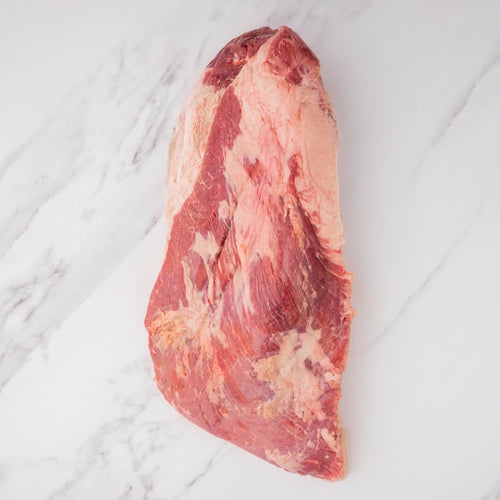
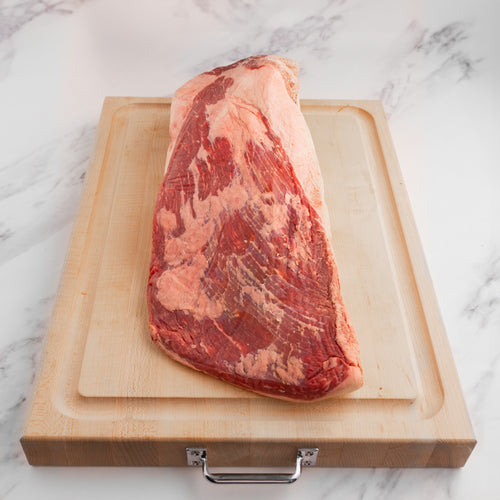
Start with a full packer brisket, both the point and the flat. The point is the thicker, fattier muscle that sits on top; the flat is the leaner muscle that runs beneath it. Smoking a packer gives you the best of both: the flat slices clean and the point renders into exceptionally rich, tender meat with enough fat to cube into burnt ends once the smoke is done.
Grade matters more on a long cook than almost any other preparation. A lean, low-grade brisket has nowhere to hide over twelve hours of heat — it dries out. American Wagyu brisket has more intramuscular fat than USDA Prime, which bastes the meat from the inside throughout the cook and produces a richer, more consistent result. Our Wagyu brisket is available in SRF Black® and SRF Gold® grades, with our Double R Ranch offering an exceptional USDA Choice and Prime option at a different price point.
Shop Wagyu Brisket → | Shop Double R Ranch Brisket →
|
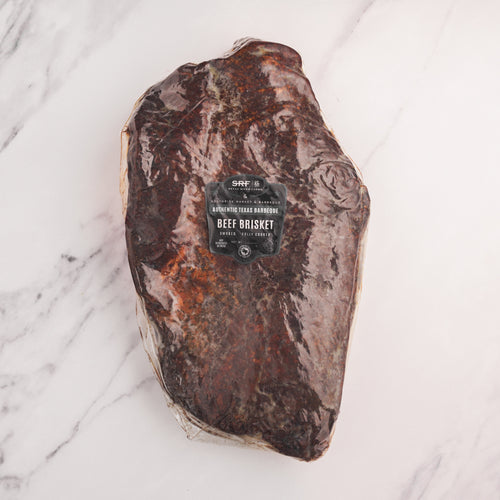
Want authentic Texas brisket without the smoke?
|
Essential Equipment
-
Probe thermometer — A critical piece of equipment. You cannot cook brisket by feel alone until you've done it enough times to know what the stall looks like. A reliable probe keeps you from second-guessing the cook. Shop Thermapen ONE →
-
Unwaxed butcher paper or heavy-duty foil — For wrapping at the stall. More on this in the wrapping section.
-
Sharp slicing knife — Brisket needs a clean slice against the grain. A long, straight-bladed brisket knife gives you the cleanest slice. The Shun Classic 4-Piece BBQ Set includes a 12" brisket knife purpose-built for this, plus a boning knife for trimming and an 8-slot roll to bring the whole setup with you. Shop Shun Classic 4-Piece BBQ Set →
-
Smoker — offset, pellet, or charcoal kettle and Kamado setups all work. The principles in this guide apply to all of them. How to Choose the Right Smoker →

Seasoning
A classic Texas brisket rub is salt, coarse black pepper and garlic powder. It's simple and lets the beef do the talking. If you want something that's ready to go, SRF's BBQ Brisket Rub is built for this cook. Shop BBQ Brisket Rub →

Smoking Methods: Low and Slow vs. Hot and Fast
Brisket is forgiving when you give it time and unforgiving when you rush it. The two most common approaches both work — they just produce different results and suit different setups.
| Low and Slow | Hot and Fast | |
| Smoker Temp | 225°F to 250°F | 300°F |
| Total Cook Time | 12 to 16 hours | 5 to 6 hours |
| Smoke Ring | Pronounced | Less Pronounced |
| Margin for Error | More forgiving | Tighter |
| Best For | Maximum flavor development | Working against a serving time |
Regardless of method, consistent heat management is the single most important variable. Fluctuating temps cause uneven cooking, extend the stall unpredictably, and dry out the flat. Set your temp, trust it, and resist the urge to keep opening the smoker.
Charcoal setup: Grill Smoked Brisket on Charcoal Grills →

How to Trim a Brisket
Trimming is one of the most debated steps in brisket prep. Some seasoned pitmasters trim aggressively, others remove very little. The goal either way is the same: create a uniform shape and smooth surfaces so the brisket cooks evenly on the smoker.
Here's how to approach it:
-
Trim cold — a refrigerator-cold brisket is firmer and much easier to work with
-
Start fat side down — remove the hard fat between the point and the flat first. There's a natural seam separating the two muscles that guides you to your desired coverage
-
Flip and finish — trim any larger pieces of fat from the top to level the brisket, and remove any silver skin on the exposed muscle
-
Leave ~1/4 inch across the fat cap — enough to baste the meat throughout the cook, not so much that it insulates unevenly
- Save the trimmings — Wagyu brisket fat renders into exceptional beef tallow
American Wagyu brisket comes with a more substantial fat cap and heavier marbling than commodity beef — you'll have more to work with, and more trimmings worth saving.
What to Do with Brisket Trimmings →
Fat Side Up or Down?
It's one of the most debated questions in brisket cooking, and opinions vary widely. The common argument for fat side up is that the cap melts and bastes the meat — but most beef experts point out that brisket muscle fibers are too tight to allow this.
We've tested both and relied on feedback from pitmasters across the competition circuit. Our best results come from fat side down. Kettle, Kamado, and pellet smokers deliver most of their heat from the bottom, so placing the brisket fat side down protects the meat from direct heat and promotes a more uniform bark. Place fat side toward your primary heat source and leave it undisturbed.

Brisket Smoking Temperatures & Timing
Temperature is the backbone of a successful brisket cook. Get it right and everything else falls into place. The target smoker temp throughout the cook is 225°F to 250°F, consistent, not fluctuating.
The Stall
At some point during the cook — typically when the internal temperature hits 150°F to 170°F, the temperature will stop climbing. This is the stall, and it can last anywhere from two to six hours. It's not a sign something is wrong. It's moisture evaporating from the surface of the meat, which cools it at the same rate the smoker is heating it. The solution is to wait it out or wrap the brisket to push through it. Do not crank the heat.
Timing
There's no precise formula for how long a brisket takes, too many variables affect it. As a general guideline, plan for approximately 1 to 1.5 hours per pound at 225°F. A 14-pound packer brisket could run anywhere from fourteen to sixteen hours. Wagyu brisket's superior fat content may shift timing compared to conventional beef as the fat renders differently throughout the cook.
Temperature & Doneness Table
| Phase | Smoker Temp | Internal Temp |
| Initial Smoke | 225°F to 250°F | 150°F to 160°F (the stall) |
| Wrap & Continue | 225°F to 250°F | 198°F to 205°F |
| The Rest | Off heat | 2 to 4 hours minimum |

When to Wrap a Brisket
Wrapping is how you push through the stall without sacrificing the cook. Known as the Texas Crutch, wrapping traps heat and moisture around the brisket and accelerates the final stretch of the cook. It's not cheating, it's what most competition pitmasters do.
When to Wrap
Two cues tell you it's time:
-
Temperature: internal temp between 160°F to 170°F
- Visual: the bark is mahogany in color and the fat has begun to render and pull back from the meat
If the bark looks right and the temp is in range, wrap it. Don't wait for one without the other.
Butcher Paper vs. Foil
Our recommendation: unwaxed butcher paper. It allows just enough moisture exchange to keep the bark intact while still pushing through the stall. Foil works — but on a Wagyu brisket with this much intramuscular fat, you don't need the extra insurance. Let the beef do the work.
| Butcher Paper | Foil | |
| Bark | Preserved - paper breathes | Softer - foil steams |
| Moisture | Good retention | Maximum retention |
| Finish Time | Slightly longer | Faster |
| Best For | Texture and bark quality | Speed and max juiciness |
How to Wrap
- Use two lengths of unwaxed butcher paper approximately 2.5 feet long — overlap them and place the brisket in the center.
- Wrap all sides tightly to make a neat package — eliminate air pockets to prevent the meat from steaming unevenly.
- Place the wrapped brisket back on the smoker seam-side down — the weight of the meat secures the wrap.
- Continue cooking to 198°F to 205°F internal, monitoring closely after wrapping as the finish accelerates.
- When pulling from the smoker, crack the wrap slightly to let heat and steam escape, place in an aluminum pan to catch any drippings, cover loosely with plastic wrap, then wrap in towels or place in a closed cooler — do not fully unwrap until ready to slice.
Watch: World Champion pitmaster Darren Warth demonstrates exactly how to wrap a brisket — step by step.
How to Tell When Brisket Is Done
Temperature gets you in the ballpark. Feel gets you across the finish line.
Most briskets are done somewhere between 198°F and 205°F internal, but the number on your thermometer is a guideline, not a guarantee. A brisket that probes tight at 200°F isn't done — the connective tissue hasn't fully rendered into gelatin and the meat will be tough regardless of what the thermometer says. A brisket that probes like warm butter at 195°F is done. Pull it.
The Probe Test
Start probing around 198°F, but temperature is just your cue to start checking — not your finish line. Insert your thermometer into the thickest part of the flat, avoiding fat pockets. It should slide in with no resistance, like pushing into a soft stick of butter. If you feel any tension, it's not done. Keep cooking and check every fifteen to thirty minutes.
SRF Gold grade briskets in particular may need additional time to fully break down their exceptional intramuscular marbling. Don't be surprised if a Gold needs to be pulled anywhere between 210°F and 214°F. Trust the feel over the number every time.
The Rest
The rest is not optional. Pull the brisket from the smoker and crack the wrap slightly to allow heat and steam to escape. Place in an aluminum pan to catch any drippings, cover loosely with plastic wrap, then wrap in towels or a moving blanket — or place in a closed cooler or Cambro. Hold for a minimum of two hours — four is better. This allows the juices to redistribute through the meat. Cut too soon and they run straight onto the cutting board.
The Wagyu Advantage
This is where American Wagyu brisket earns its reputation. The intramuscular fat throughout the muscle bastes the meat from the inside for the entire cook, which means a Wagyu brisket has significantly more margin for error than commodity beef. It's harder to dry out, more forgiving on timing, and more consistent in the final result.

How to Slice a Brisket
How you slice a brisket matters as much as how you smoke it. A perfectly cooked brisket sliced the wrong way will be chewy and tough. A properly sliced one will be tender, clean, and presentation-ready.
Separate the Point and Flat First
Once your brisket has rested and is ready to serve, separate the point from the flat before slicing. The two muscles run in different grain directions, which means you can't slice a whole packer in one pass. Cut through the fat seam that connects them, then slice each muscle individually against its own grain.
Slicing the Flat
The flat is the leaner of the two muscles and benefits from a thinner slice — approximately 1/4 inch. Always slice against the grain. Look at the surface of the flat and identify which direction the muscle fibers run, then cut perpendicular to them.
Slicing the Point
The point is thicker, fattier, and more forgiving. Slice it slightly thicker than the flat, again against the grain. Alternatively, cube it, return it to the smoker, and finish it as burnt ends. On a Wagyu brisket, the point has exceptional marbling that makes it particularly well suited for this.
The Right Knife
Sharp slicing knife — brisket needs a clean slice against the grain, plus a boning knife for trimming and separating the point from the flat. The Shun Classic 4-Piece BBQ Set covers all three cuts with handcrafted Japanese knives and an 8-slot knife roll for taking the setup on the road. Shop Shun Classic 4-Piece BBQ Set →
What is Wagyu Deckle →

The American Wagyu Advantage
Not all brisket is created equal — and nowhere is that more apparent than on a twelve-plus hour smoke.
American Wagyu brisket has more intramuscular fat than USDA Prime. That's not a fat cap difference — it's marbling throughout the muscle itself. On a long cook, that fat bastes the meat from the inside continuously, which produces a richer, more consistent result and significantly widens the margin for error. A Wagyu brisket is harder to dry out, more forgiving on timing, and delivers a depth of flavor that commodity beef simply can't replicate.
Our Wagyu brisket is available in SRF Black and SRF Gold grades. Both start with American Wagyu genetics and are raised on a proprietary diet. SRF Gold represents the highest level of marbling available — the choice for anyone who wants to experience what a truly exceptional brisket can be.
These aren't just our words. Our brisket has been used by Grand Champion teams across every major BBQ competition in the country — dubbed the "Winningest Brisket in BBQ," every major world championship BBQ contest has been won using a Snake River Farms American Wagyu brisket.
Tuffy Stone, 6-time World BBQ Champion, award-winning chef and celebrated pitmaster, says our American Wagyu briskets are "the perfect ingredient to give you the edge you need in competition or in the backyard. Starting with the best products sets you up to win. Snake River Farms fits right into my way of doing things, providing the best experience with the best products."
Shop Wagyu Brisket | Shop Double R Ranch Brisket | Shop Wagyu Smoked Brisket
"Smoked a 17.5 pound Gold grade for about 20 hours with a 6 hour rest for Thanksgiving. Reviews were fantastic, even people who don't eat red meat were having seconds and looking for leftovers the next day."
— Christopher F., Verified Buyer
"Very satisfied with every order from SRF! It's always very high quality and fast shipping! I use it at home and on the competition BBQ trail!"
— Anthony G., Verified Buyer
Common Mistakes When Smoking Brisket
Even experienced cooks make these. Here's what to watch for and how to fix it before it costs you a full day of cooking.
Not controlling smoker temperature
Wrapping at the wrong time
Pulling by temperature alone
Skipping the rest
Over-smoking
Slicing with the grain
Starting with the wrong beef
Featured Recipes & Related Content
The smoke is just the beginning. Here's what to do with your brisket once it comes off the smoker.

Brisket Burnt Ends
Cube the point, return it to the smoker, and finish it in sauce. Burnt ends are the richest, most flavorful bite on the entire brisket — and on a Wagyu brisket point, they're something else entirely. What Are Brisket Burnt Ends →

Tuffy Stone's Wagyu Brisket
World Champion pitmaster Tuffy Stone's competition-proven method, start to finish. If you want to see how the best in the business approach a Wagyu brisket, start here →

Brisket Nachos with Wagyu Tallow Kettle Chips
A next-level use for leftover brisket and rendered tallow. Snack-level crisp, brisket-loaded →

Smoked Brisket Burgers with Onion Whiskey Jam
Repurpose your brisket into one of the best burgers you've ever made. Not your average backyard burgers →

American Wagyu Braised Brisket in the Oven
For when the smoker isn't an option. Low and slow in the oven with American Wagyu produces a completely different result than commodity beef — rich, deeply flavored, and fork-tender. American Wagyu Braised Brisket in the Oven →
Ideas and Recipes for Leftover Brisket
Wagyu brisket leftovers are worth planning for. Tacos, hash, banh mi — the richness of the beef holds up and in some cases improves overnight. Ideas and Recipes for Leftover Brisket →
Frequently Asked Questions
What is the 3-2-1 rule for brisket?
What is the 4-2-10 rule for brisket?
Should I flip a brisket during smoking?
Why is my brisket still tough after 10 hours?
What is the 4-hour rule for smoking meat?

Ready to Smoke Your Best Brisket? Start With Better Beef
Consistent temperature, reliable timing, and the right beef — get those three things right and everything else follows.
American Wagyu brisket doesn't guarantee a perfect cook, but it gives you more margin for error than any other beef on the market. More intramuscular fat means the meat bastes itself throughout a twelve-plus hour smoke, producing a richer, more consistent result than commodity beef can deliver. The technique is in this guide. The beef is one click away.
Shop American Wagyu Brisket → | Shop Double R Ranch Brisket →
Featured Products