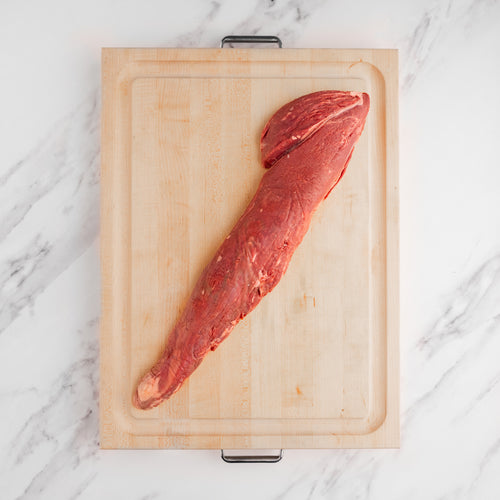
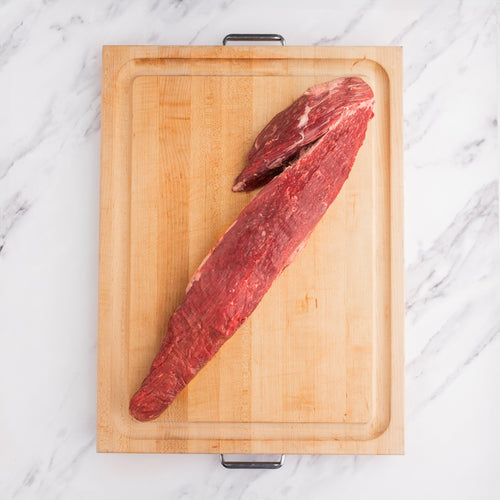
How to Cook Beef Tenderloin
When you set a whole beef tenderloin on the table, people assume you spent hours in the kitchen. The secret? This show‑stopping roast is actually one of the easiest holiday mains you can make.
Beef tenderloin is prized for its fine texture, buttery tenderness, and elegant presentation. With the right method, it cooks quickly, slices beautifully, and delivers that steakhouse‑quality experience at home. At Snake River Farms, we use this same premium cut to create our top‑selling filet mignons, so you can expect exceptional tenderness and rich American Wagyu flavor in every bite.
If you’ve ever felt intimidated by cooking a whole tenderloin, this guide walks you through it step by step. From seasoning and tying to doneness and slicing, we’ll show you how to get it right the first time.
Ready to cook a beef tenderloin that’s tender, elegant, and stress-free? Start with American Wagyu Beef Tenderloin for consistent results and exceptional flavor.

What Makes Beef Tenderloin So Special?
Beef tenderloin comes from a muscle that does very little work, which is why it’s naturally tender. Unlike tougher cuts that rely on fat or connective tissue breaking down over time, tenderloin is soft from the start.
What sets Snake River Farms beef tenderloin apart is our American Wagyu genetics. You’ll see a finer texture, subtle marbling, and a clean, rich flavor that elevates this classic cut without overpowering it. It’s the same tenderloin we portion into our filet mignons, making it one of the most versatile and refined cuts you can cook.
Additional benefits of beef tenderloin:
- Cooks faster than most roasts
- Elegant enough for holidays and celebrations
- Simple seasoning lets the beef shine
- Easy to portion for serving
Your tenderloin arrives frozen, so plan ahead. Proper thawing is key for even cooking. We recommend reviewing our Guide to Thawing Large Cuts before you begin.
Want to stretch your budget? Learn how to cut a tenderloin roast into steaks for filet mignon at home.
Exquisite quality and taste, some of the finest beef tenderloin I have yet experienced.
- Dio F., Verified Buyer

How to Cook Beef Tenderloin (The Method We Recommend Most)
Of all the methods we've tested in our kitchens, one stands out for delivering consistent, foolproof results every time. The reverse sear technique takes the guesswork out of cooking beef tenderloin, protecting its naturally tender texture while creating that beautiful steakhouse crust. If you're cooking tenderloin for the first time—or even if you've done it a hundred times—this is the method we trust most.
Why the Reverse Sear Works Best for Tenderloin
Tenderloin is lean and narrow, which means it benefits from gentle heat. Cooking low and slow first protects its delicate texture, while a short, high-heat finish creates a beautiful crust without overcooking the interior.
This reverse sear method is consistent, forgiving, and ideal for anyone cooking tenderloin for the first time. Tying your roast with butcher's twine helps it cook evenly, though it's optional if your tenderloin is already uniform in shape.
Watch: How to Tie a Roast Like a Pro | Simple Butcher's Twine Tutorial
Step-by-Step: Reverse Sear Beef Tenderloin
-
Thaw the tenderloin completely in the refrigerator, allowing 2 to 3 days for a whole roast. See our thawing guide for best results.
-
Trim away any visible silver skin if needed. This thin membrane won't break down during cooking and can affect texture.
-
Season generously with kosher salt. Add black pepper if desired.
-
Place the tenderloin on a wire rack set over a baking sheet.
-
Roast at 250°F until it reaches your target internal temperature, about 45 to 60 minutes for a whole tenderloin.
-
Pull the roast at the following temperatures:
→Rare: 110°F
→Medium rare: 120°F
→Medium: 130°F
→Medium well: 140°F
-
Rest the tenderloin for 10 to 30 minutes. Larger roasts benefit from longer resting times.
-
Increase oven temperature to 500°F.
-
Return the roast to the oven and sear for 5 to 10 minutes until a golden crust forms.
-
Slice into ½-inch medallions and serve.
Ready to impress? Start with American Wagyu Beef Tenderloin and taste the difference.
Watch: Tenderloin Roast Recipe | The Complete Holiday Meal
Tenderloin Doneness Guide
Beef tenderloin is best cooked using internal temperature rather than time alone. Because thickness can vary from roast to roast, a reliable meat thermometer ensures consistent results every time.
Doneness levels:
-
Rare: cool red center (pull at 110°F)
-
Medium rare: warm red center (pull at 120°F)
-
Medium: warm pink center (pull at 130°F)
- Medium well: slight pink (pull at 140°F)
We recommend pulling your roast 5 degrees before your target doneness, as the temperature will continue to rise during the resting period.
Serving size: Plan on approximately 6 to 8 ounces per person when serving beef tenderloin as a main course.
Want perfect doneness every time? Use the SuperFast Thermometer to track internal temperature and pull your tenderloin at exactly the right moment.

How Long to Cook Beef Tenderloin
Cooking time depends on size, oven temperature, and preferred doneness. Use these guidelines as a reference.
-
Whole tenderloin: 1½ to 2 hours total using reverse sear (including rest and final sear)
-
Half tenderloin: 25 to 30 minutes initial roast, plus sear
-
Per pound at 250°F: approximately 35 to40 minutes
-
At 350°F: 20 to 25 minutes per pound, depending on thickness
Always confirm doneness with an internal thermometer for best results.

Best Cooking Methods for Beef Tenderloin
Reverse Sear (Best Overall Method): Low heat followed by a quick sear delivers the most consistent tenderness and even doneness. Refer to the step‑by‑step method above for detailed guidance.
Traditional Oven Roast at 425°F: For a classic approach, roast tenderloin at a higher temperature for a shorter time. This method works well if you prefer a more conventional preparation.
Watch: Beef Tenderloin Roast Recipe | Buttery Crust Meets Bright Citrus Sauce
Grilled Tenderloin Roast: Sear the tenderloin over direct high heat, then finish over indirect heat until it reaches your desired internal temperature.
Sous Vide Beef Tenderloin: Sous vide delivers precise doneness and exceptional tenderness. Finish with a quick sear to develop color and flavor. Learn what sous vide cooking is and how it can take your tenderloin to the next level.
Common Mistakes to Avoid
We've seen these mistakes trip up even experienced cooks. Here's what to watch out for:
-
Overcooking the roast: Tenderloin has very little fat to buffer heat, so it can go from perfectly pink to overdone quickly. Pull it earlier than you think.
-
Skipping the resting period: Resting allows the juices to redistribute throughout the meat. Cut too soon and those juices end up on your cutting board instead of in each bite.
-
Not using a thermometer: Guessing doneness by time alone is risky. A reliable instant-read thermometer takes the guesswork out.
-
Searing too long at the end: The reverse sear's final step should be quick—just long enough to brown the exterior. Over-searing can push the meat past your target doneness.
- Starting with a partially frozen tenderloin: Uneven thawing leads to uneven cooking. Always thaw completely in the refrigerator. Review our thawing guide if you need help.
How to Season a Beef Tenderloin
Beef tenderloin shines with minimal seasoning. Because the meat itself is so tender and flavorful—especially with American Wagyu genetics—we recommend keeping it simple.
The basics: A generous coating of kosher salt is often all you need. Add freshly cracked black pepper if you like a bit of spice.
Optional additions:
- Garlic and herb blends
- Fresh rosemary or thyme
- Cracked peppercorn crust
- Citrus zest for brightness
We suggest avoiding heavy marinades or overly complex rubs that can mask the natural flavor of premium beef. Let the tenderloin speak for itself.
Get the tenderloin that makes simple seasoning shine—shop Tenderloin Roasts now.
Seasoned it with salt and pepper, seared it on the grill, and finished it to a medium rare on the smoker, very flavorful and it was so tender you could cut it with a plastic spoon, and even received a marriage proposal because of this cut of meat, can't wait to cook one again.
- John, Verified Buyer

What to Serve with Beef Tenderloin
Beef tenderloin pairs beautifully with classic sides and simple sauces that complement without competing.
Popular side dish options:
- Roasted potatoes or mashed potatoes
- Green beans almondine
- Roasted root vegetables
- Creamed spinach
- Simple arugula salad
Sauce pairings:
- Horseradish cream
- Rich pan sauce
- Red wine reduction
- Brandy peppercorn sauce
- Dijon cream sauce
For a complete holiday spread, explore our Complete Holiday Meal: Tenderloin Roast guide, which walks you through planning an entire menu around this centerpiece roast.
Our Favorite Tenderloin Recipes
Looking for more ways to prepare beef tenderloin? We've developed several recipes that showcase different flavor profiles and techniques:
-
Tenderloin Roast with Brandy Peppercorn Sauce – Rich, peppery, and elegant
-
Wagyu Tenderloin Roast with Dijon Sauce – Tangy and sophisticated
-
Pistachio-Crusted Beef Tenderloin with Roasted Garlic Horseradish Cream Sauce – Nutty, textured, unforgettable
- Herb Roasted Tenderloin with Horseradish Cream – Classic and crowd-pleasing
Each recipe highlights the tenderness and flavor that make beef tenderloin such a special cut.
Final Tips for Cooking Beef Tenderloin
Before you get started, here are a few reminders that will help ensure success:
- Trust internal temperature over time. Every oven and every roast is slightly different. Your thermometer is your most reliable tool.
- Rest longer than you think you need. We know it's tempting to slice right away, but patience pays off. The texture and juiciness depend on that resting period.
- Keep seasoning simple. Let the quality of the beef shine through. American Wagyu tenderloin doesn't need much help.
- Don't be afraid of the roast. Tenderloin looks impressive, but it's more forgiving than people think. Follow the steps, use your thermometer, and you'll do great.
Order American Wagyu Beef Tenderloin and make your next meal unforgettable.
Featured Products