How to Get a Good Crust on a Steak: Expert Tips for Perfect Sear
A great steak crust does more than look impressive on the plate. It adds deep, savory flavor, creates contrast with a juicy interior, and delivers that steakhouse-style experience we all chase at home. When the crust is right, every bite has texture, aroma, and richness that takes the steak to another level.
Getting there isn’t about luck or complicated tricks. A perfect crust comes down to a few controllable factors: high heat, the right technique, and starting with exceptional beef. When those elements work together, browning happens quickly and evenly, without pushing the steak past your target doneness.
This is where American Wagyu really shines. The natural marbling in our Snake River Farms beef helps promote even browning and richer flavor while protecting the interior from drying out. With the right approach, it’s easier to achieve a deep, golden-brown crust and the doneness you want inside.
Master every sear—explore our full Guide: How to Cook a Steak for tips, tricks, and step-by-step techniques.
Follow along with our video guide to achieve a flawless pan-seared crust: Searing a Steak | Cook Guide for a Perfect Pan Sear:
What Makes a Good Steak Crust
When we talk about a great steak crust, we’re really talking about flavor development. That deep brown exterior comes from the Maillard reaction, which occurs when heat transforms proteins and sugars on the surface of the steak. This reaction is responsible for the savory aroma and rich, complex flavor that define a properly seared steak.
A good crust is not the same thing as an overcooked exterior. Burning or excessive charring can taste bitter and dry out the meat underneath. The goal is controlled browning that happens quickly, allowing the interior to stay juicy and tender.
Visually, a well-formed crust should look:
- Deep brown rather than pale or blackened
- Evenly textured across the surface
- Slightly crisp on the outside with no burned spots
- When the crust looks right, it almost always tastes right.
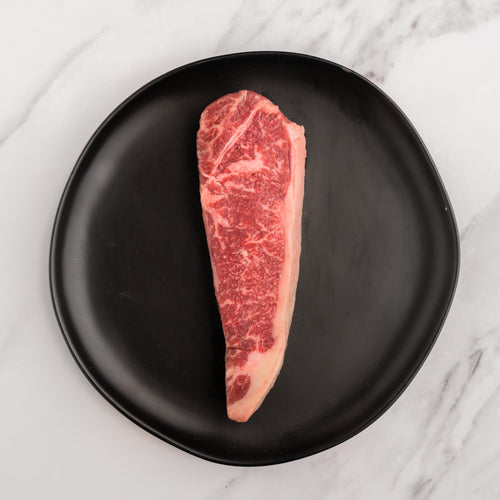
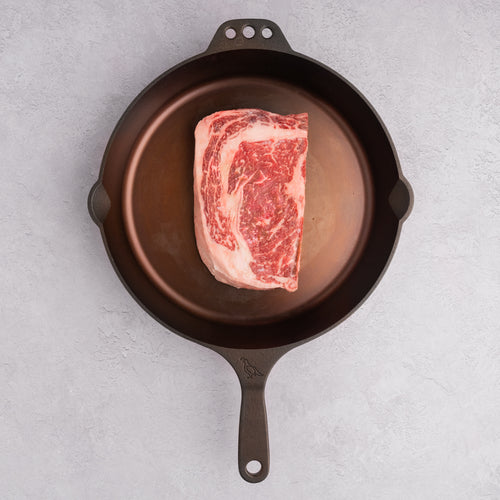
Ready to try it yourself? American Wagyu Ribeye or New York Strip gives you the marbling you need for an exceptional crust.

Preparing Your Steak for a Perfect Crust
Before the steak ever hits the heat, a little preparation makes a big difference. Most crust problems come down to moisture and temperature, not the pan.
Start with a Dry Surface
- Pat the steak completely dry with paper towels.
- Moisture turns to steam, which prevents browning and leads to a pale exterior.
Let It Warm Up
- Rest the steak at room temperature for 30 to 45 minutes.
- This promotes even cooking and helps the crust form without overcooking the center.
Season Simply
- Use a light, even coating of salt just before cooking.
- Salt boosts flavor and pulls surface moisture out so it can evaporate quickly.
- Add pepper after cooking if you’re working over very high heat.
Try the Cold Sear Method (Optional)
If you’re worried about overheating your pan or cooking the steak too fast, the cold sear method is a reliable alternative:
- Start the steak in a cold pan.
- Place the pan over high heat and flip the steak every 1 to 2 minutes.
- This allows fat to render gradually while still building a deep, even crust.
- This controlled approach works especially well for thicker cuts.
Ready to see this in Action? Watch how we use the cold sear method to build a deep, even crust.
Techniques to Achieve a Perfect Crust
There’s more than one way to build a great crust, and the best method often depends on the cut, thickness, and how you like to cook. These are the techniques we rely on most for consistent, flavorful results.
Pan Searing
Pan searing is one of the most reliable ways to develop a bold crust, especially when cooking indoors.
How we do it:
- Preheat a heavy skillet over high heat until it’s fully hot. Cast iron works best.
- Add a small amount of high-smoke-point oil or clarified butter.
- Place the steak in the pan and let it sear undisturbed for 1 to 3 minutes, depending on thickness.
- Flip once and repeat, allowing the crust to fully develop before moving the steak.
Leaving the steak alone is key. Movement interrupts browning and prevents an even crust.
Ready to put this technique to work? Our Pan-Seared Dry-Aged Bone-In Ribeye with Cilantro Chimichurri is a great place to start.
Reverse Sear
The reverse sear is ideal for thick, well-marbled steaks when you want maximum control.
How we do it:
- Cook the steak in a low oven until it’s just below your target internal temperature.
- Transfer the steak to a very hot pan or grill.
- Sear quickly on both sides to build a deep, even crust.
By cooking the interior first, you can focus entirely on crust formation at the end. This makes the reverse sear especially effective for American Wagyu.
Ready to try this technique for yourself? Start with our Reverse Seared Tomahawk with Lemon Basil Salsa Verde.
Grilling
Grilling produces excellent crust when heat zones are used intentionally.
How we do it:
- Set up a two-zone grill with direct heat for searing and indirect heat for finishing.
- Sear the steak over direct heat until a crust forms.
- Move the steak to indirect heat to finish cooking without burning the exterior.
- Flip only as needed to maintain even browning.
Watch for flare-ups caused by rendering fat and adjust placement as needed.
Ready to fire up the grill? This Grilled Cowboy Steak with Heirloom Tomato & Burrata Salad brings it all together.
Tips for Crust Without Overcooking
Building a deep crust while keeping the interior just right is all about control. These tips help us get the browning we want without pushing the steak past our target doneness.
- Use a thermometer. An instant-read thermometer removes the guesswork and lets you track internal temperature in real time, especially when searing over high heat.
- Pull early and let it rest. Remove the steak from the heat a few degrees before your target temperature. As it rests, carryover cooking finishes the job while the juices redistribute.
- Choose well-marbled cuts. Fat helps conduct heat, promotes even browning, and adds flavor. Steaks with good marbling develop better crusts and stay juicier inside.
- Use the right fat for searing. High-smoke-point oils and clarified butter allow you to sear aggressively without burning or adding bitter flavors.
When you control temperature and timing, you can focus on building a great crust instead of racing against overcooking.
Want to take your sear even further? Learn how beef tallow delivers higher heat, deeper browning, and richer flavor in Cooking with Beef Tallow: How to Unlock Bold Flavor and Better Sear.
Common Mistakes That Prevent a Good Crust
Even great steak can fall short if a few fundamentals are missed. These are the most common mistakes we see when a crust doesn’t develop the way it should.
- Cooking straight from the refrigerator. A cold steak cooks unevenly, making it harder to build a crust without overcooking the center.
- Overcrowding the pan. Too many steaks at once trap steam and lower the surface temperature, which prevents proper browning.
- Flipping too often. Moving the steak repeatedly interrupts crust formation and leads to uneven color.
- Using heat that’s too low. Without enough heat, the steak won’t trigger proper browning and the exterior stays pale and soft.
Avoiding these mistakes alone can dramatically improve your results.
Frequently Asked Questions about Getting a Good Steak Crust
Why does my steak never get the perfect crust?
How do you get a good sear on a steak?
How do you get a nice crust on a thin steak?
What does a good crust on a steak look like?

Take Your Steak to the Next Level
Now that you know how to get a perfect crust, it’s time to put these techniques into action. With the right heat, timing, and a bit of care, you can turn any steak into a restaurant-quality experience at home.
Learn More: Dive into our How to Cook a Steak guide to explore expert tips, step-by-step techniques, and everything you need to master the sear.
Shop Premium Cuts: Ready to practice? Grab an American Wagyu steak from us and start building that perfect crust tonight. With our marbled, flavorful steaks, you’ll see—and taste—the difference.
Featured Products