How to Cut a Brisket: Separating the Point and Flat for Perfect Slices

Slice a brisket wrong and even a perfect smoke ends up tough and dry on the plate. The key is understanding that a full packer brisket has two muscles, the flat and the point, and the grain runs in different directions in each. Separate them before you make a single slice. Start with the flat, cutting even slices against the grain. Rotate the point 90 degrees so it runs parallel to you, then slice against its own grain, or cube it into burnt ends. On an SRF American Wagyu brisket, the point's exceptional marbling makes it particularly well suited for both.
Let It Rest First
Resting is not optional. Pull your brisket from the smoker, crack the wrap slightly to let steam escape, and set it aside for a minimum of two hours before you make a single cut. Four hours is better. Cut too soon and the juices run straight onto the cutting board instead of staying in the meat where they belong. Once the brisket has fully rested, the hard fat has rendered, the muscles have relaxed, and you are ready to slice.
For full rest guidance, see our How to Smoke a Brisket guide→
What You'll Need
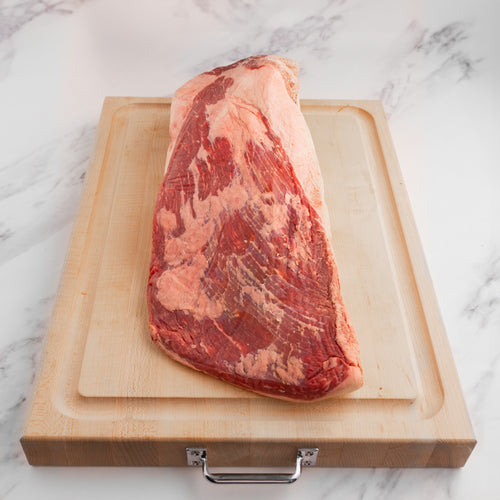
A sharp slicing knife is non-negotiable. Brisket needs a clean, long stroke against the grain, and a dull or short blade will tear the meat rather than cut it. The Shun Classic 4-Piece BBQ Set includes a 12" brisket knife purpose-built for this, plus a boning knife for separating the point from the flat. A large cutting board with enough room to maneuver a full packer is the only other thing you need.
Shop Shun Classic 4-Piece BBQ Set →
How to Identify the Point and Flat
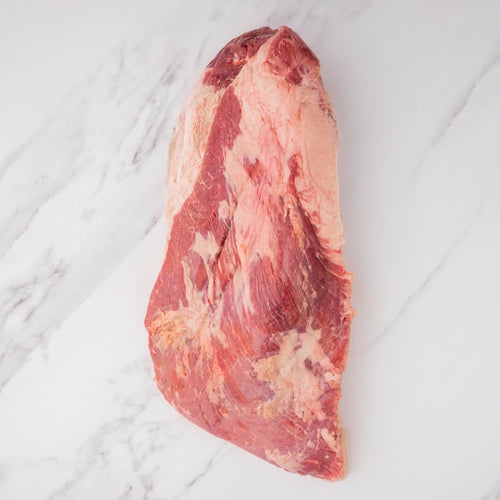
A full packer brisket is made up of two separate muscles. The flat is the leaner of the two, long and even, and slices clean. The point sits on top, thicker and fattier, with the grain running in a different direction than the flat. Between them is a seam of hard fat that, after a long smoke, has fully rendered out, making the two muscles easy to separate by hand or with a boning knife.
Once separated, you have two distinct pieces to work with and each needs to be sliced against its own grain. Knowing where one ends and the other begins is the most important step before you make a single slice.

How to Cut a Brisket: Step by Step

Step 1: Find the separation point
Look for where the point ends and the flat tucks in underneath. You will see the fat seam running between the two muscles. This is your guide.

Step 2: Separate the point from the flat
Cut through the fat seam with your boning knife to separate the two muscles completely. After a long smoke the hard fat has fully rendered, so this comes apart easily. Use your hands as much as the knife.

Step 3: Slice the flat
Start with the flat. Cut even slices against the grain, working from one end to the other. A quarter inch to a third of an inch is the standard competition slice, thick enough to hold together, thin enough to be tender.

Step 4: Rotate and slice the point
Take the point and rotate it 90 degrees so it runs parallel to you. Slice against its own grain, slightly thicker than the flat. The point's higher fat content holds up well to a more generous slice.

Step 5: Or cube the point for burnt ends
The point can also be cubed and returned to the smoker to finish as burnt ends. On an SRF American Wagyu brisket the point's exceptional marbling makes it particularly well suited for this. The fat renders into something close to candy.
Watch: How to Make Brisket Burnt Ends →
Should You Slice Brisket Fat Side Up or Down?
Fat side down gives you a more stable cutting surface. The flat sits flush against the cutting board and is less likely to shift while you slice. Fat side up is a personal preference and works fine, but you lose some of that stability. Either way, the more important variable is slicing against the grain, not which side faces up. Separate the point from the flat first and the orientation question largely takes care of itself.
Do You Cut a Brisket With or Against the Grain?
Always against the grain. Slicing against the grain shortens the muscle fibers, which is what creates a tender, easy-to-eat bite. Slice with the grain and those fibers stay long, making even a perfectly smoked brisket feel tough and chewy. The nuance with brisket is that the grain runs in different directions in the point and the flat, which is exactly why separating them before you slice matters. Once they are apart, identify the grain in each muscle and cut straight across it.
Is It Better to Slice Brisket Warm or Cold?
Slice warm, not piping hot and not cold. Once your brisket has rested for a minimum of two hours, it is at the right temperature to slice. The juices have reabsorbed, the muscles have relaxed, and the fat has fully set. Cold brisket straight from the fridge is harder to slice cleanly and the fat firms up in a way that works against you. If you are reheating leftover brisket, slice it cold first and reheat the slices individually rather than reheating the whole brisket and then slicing.
What to Do With the Point: Burnt Ends
The point is the fattier, thicker muscle and it has a second life beyond slicing. Cube it into roughly one to two inch pieces, return it to the smoker, and finish in your favorite BBQ sauce until the edges caramelize and the fat renders into something close to candy. On an SRF American Wagyu brisket the point's exceptional marbling makes it particularly well suited for burnt ends, the intramuscular fat breaks down over the second cook and produces a richness that a leaner point simply can't match.
What Are Brisket Burnt Ends? →
Are You Supposed to Cut All the Fat Off?
No. Trimming happens before the cook, not at slicing. By the time your brisket comes off the smoker, the hard fat has fully rendered out and the fat cap has softened considerably. At the slicing stage you are not trimming, you are separating the point from the flat along the fat seam and slicing each muscle against its own grain. If you find yourself cutting away large pieces of fat at the slicing stage, that is a sign the brisket may have been undercooked.
Ready to Fire Up the Smoker?
The right brisket makes all the difference. Whether you're smoking for a backyard crowd or chasing your first competition, start with the best and the results follow.
Shop American Wagyu Brisket →
Shop Double R Ranch Brisket →
Keep exploring:
How to Smoke a Brisket | Brisket 101 | What Are Brisket Burnt Ends?
Featured Products