How to Cook a Ribeye Steak
Juicy, tender, and deeply flavorful, ribeye steak is one of the most iconic cuts of beef and one of the most rewarding to master at home. Whether you're searing on the stovetop, finishing in the oven, or firing up the grill, this guide will show you exactly how to cook a ribeye steak to perfection.
We’ll walk you through five foolproof cooking methods, recommended internal temperatures, chef-level tips, and standout ribeye cuts to try from American Wagyu to bone-in cowboy steaks. If you’re aiming for restaurant-quality steak night at home, you’re in the right place.
|
Table of Contents |
Choosing the Right Ribeye
The first step in learning how to cook a ribeye steak is choosing a high-quality cut. At Snake River Farms, we offer a wide range of exceptional options, from richly marbled American Wagyu to bold and beefy USDA Prime and Choice.
American Wagyu Ribeye – Luxurious marbling and rich beefy flavor.
> Shop Snake River Farms American Wagyu Ribeye Steaks
USDA Prime & Choice Ribeye – Classic cuts with a bold bite.
> Shop USDA Choice & Prime Ribeye Steaks
Want to go even more premium? Consider a Tomahawk or Cowboy ribeye steak.
Watch: What’s the Difference Between a Cowboy and Tomahawk Steak?
Not sure which cut is right for you? Check out the comparison charts below to see how each ribeye stacks up in terms of size, flavor, texture, and ideal cooking method.
American Wagyu Ribeye
The ribeye is one of the most celebrated steak cuts, prized for its rich marbling, tenderness, and juicy flavor. At Snake River Farms, our premium American Wagyu takes these qualities to the next level. Explore our selection of boneless filets, classic ribeye steaks, and show-stopping bone-in cuts like the American Wagyu Tomahawk.
| Cut | Grade | Bone | Aging | Size (avg.) | Texture | Flavor | Best Method |
| Ribeye Steak | SRF Black® & SRF Gold® |
Boneless | Wet-Aged | 12 to 15 oz | Tender | Rich, buttery | Steakhouse |
| Ribeye Filet | SRF Black® & SRF Gold® |
Boneless | Wet-Aged | 6, 8, 10 oz | Very tender | Luscious | Pan-sear |
| Cowboy Steak | SRF Gold® | Bone-In | Wet-Aged | 2.5 lbs | Bold | Intense | Grill or reverse-sear |
| Tomahawk | SRF Black® & SRF Gold® |
Long Bone | Wet-Aged | 2.5 lbs | Tender | Decadent | Reverse Sear or grill |
| Rolled Cap of Ribeye | SRF Gold® | Boneless | Wet-Aged | 2 x 4oz, 6, 8, 10 oz | Buttery | Marbled, beefy | Pan Sear or grill |
| Cap of Ribeye Steak | SRF Black® | Boneless | Wet-Aged | 8 oz | Ultra-rich | Most marbled | Pan Sear or grill |
| Dry-Aged Bone-In Ribeye | SRF Black® | Bone-In | Dry-Aged | 32 oz | Firm | Nutty, deep | Reverse-sear |
| Dry-Aged Tomahawk | SRF Black® & SRF Gold® |
Long Bone | Dry-Aged | 1.75 to 2.5 lbs | Luxurious | Earthy, bold | Reverse-sear |
USDA Choice & Prime Ribeye
Each Double R Ranch Ribeye is hand-selected to meet USDA Choice standards or higher, ensuring consistent quality and bold flavor. Known as the “steak lover’s steak,” these ribeyes include boneless filets, traditional cuts, and impressive bone-in cowboy and tomahawk steaks—perfect for a hearty, satisfying meal.
| Cut | Grade | Bone | Aging | Size | Texture | Flavor | Best Method |
| Ribeye Steak | Choice & Prime | Boneless | Wet-Aged | 12 to 16 oz | Juicy | Classic beef | Reverse Sear or grill |
| Bone-In Filet | Choice | Bone-In | Wet-Aged | 18 oz | Tender | Mild | Reverse Sear or Steakhouse |
| Cowboy Steak | Choice & Prime | Bone-In | Wet-Aged | 2 lbs | Robust | Bold | Reverse Sear |
| Tomahawk | Choice | Long Bone | Wet-Aged | 2.5 lbs | Juicy | Rich, meaty | Grill or reverse sear |
| Cap of Ribeye | Choice | Boneless | Wet-Aged | 6, 8 oz | Compact | Full-flavored | Pan Sear or grill |
| Dry-Aged Ribeye | Choice & Prime | Boneless | Dry-Aged | 14 oz | Firm | Earthy | Reverse Sear or Grill |
| Dry-Aged Bone-In Ribeye | Prime | Bone-In | Dry-Aged | 32 oz | Meaty | Concentrated | Grill or reverse sear |
| Dry-Aged Tomahawk | Prime | Long Bone | Dry-Aged | 2.5 lb | Dense | Bold | Reverse Sear or grill |
"I have been a long time supporter of SRF. Their product is really unmatched when it comes to the three things I really look for in quality meat; taste, texture and marbling. SRF always hits those markers, creating the perfect balance and bite every time." - Chef Tim Hollingsworth, Michelin-starred chef and restaurateur

5 Foolproof Methods to Cooking the Perfect Ribeye Steak
Cooking the perfect ribeye steak is all about technique and timing. Whether you’re using the stovetop, oven, grill, or sous vide, these five methods will help you achieve restaurant-quality results at home. Each technique brings out unique flavors and textures, so choose one that fits your kitchen setup and desired doneness.
1. Steak House Method
Ideal for: Thick-cut ribeyes and those who love a classic steakhouse crust with tender, evenly cooked interiors.
How to cook ribeye in the oven:
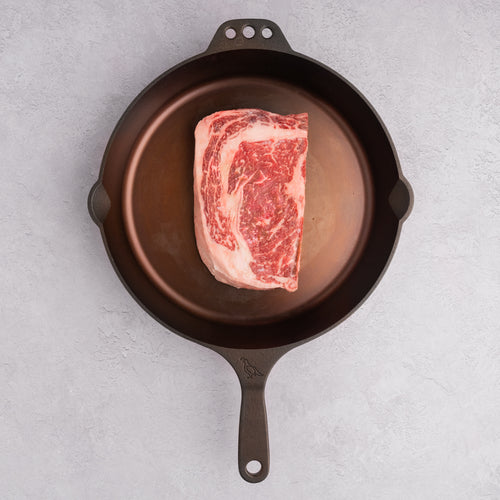
- Season - Heat a heavy skillet over medium-high heat until hot. Add a light coat of vegetable oil to the skillet. Season ribeye steaks with salt and pepper.
- Sear - Place steaks in hot skillet and sear for 4 minutes, turning once. If steak sticks to the skillet, it’s not ready to turn. Wait until it releases on its own.
- Cook - Place skillet in a 350°F degree oven for 10 to 20 minutes depending on desired doneness. Turn once halfway through the cooking time. Remove from oven when preferred internal temperature is reached. See chart below for suggested temperatures.
-
Rest - Remove steaks from a skillet and cover loosely with aluminum foil. Let stand 5 to 10 minutes. The steaks will continue to cook and the temperature will rise about 5 degrees.
Pro Tip: Use a cast iron skillet for excellent heat retention and even searing. Try finishing with a pat of compound butter or garlic herb butter for extra richness.
Shop Now: American Wagyu Ribeye Steaks
2. Pan Searing (Stovetop)
Ideal for: Quick weeknight dinners or cooking ribeye steak on the stove without an oven.
How to cook ribeye steak on the stovetop:
- Season - Heat a heavy skillet (cast iron is ideal) over medium heat until hot. Add a light coat of vegetable oil to the skillet. Season top side of steaks with salt and pepper.
- Sear - Place ribeye steaks, seasoned side down, in skillet and sear 4 to 5 minutes until nicely browned. Season the top side of the steak with salt and pepper. If the steak sticks to the skillet, it’s not ready to turn. Wait until it releases on its own.
- Flip - Turn steaks over and allow to cook for an additional 3 to 5 minutes. After 2 to 3 minutes, use a thermometer to test the thickest part of the steak. When the temperature reaches the desired level, remove from the skillet. See chart below for temperature guidelines.
- Rest - Remove steaks from a skillet and cover loosely with aluminum foil. Let stand 5 to 10 minutes. The steaks will continue to cook and the temperature will rise about 5 degrees.
Pro Tip: Baste the steak with melted butter, garlic, and rosemary during the last minute for an aromatic finish.
Watch: How to Cook a Bone-In Ribeye (Cowboy Steak)
3. Reverse Sear
Ideal for: Thick ribeyes where precise temperature control and a perfect crust matter most.
How to reverse sear a ribeye steak:
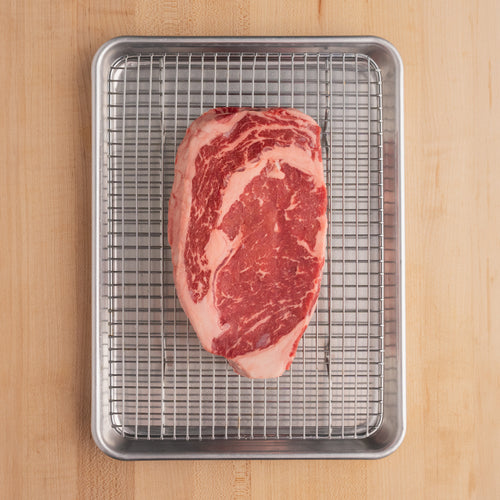
- Season - Heat oven to 275°F degrees. Season ribeye steak with salt and pepper. Cover a baking sheet with foil and place a metal rack in the middle. The idea is to elevate the steak from the pan.
- Cook - Place the pan, grill and ribeye steak in the oven. Bake until the steak reaches the temperature that matches your preference. See the chart for exact temperatures. For medium-rare, cook until 120°F degrees. This can take up to 60 minutes, but begin checking the internal temperature at 30 minutes. See chart below for temperature guidelines
- Rest - Remove steak from oven, loosely cover with foil and allow to rest for 10 to 15 minutes.
- Sear - Add a light coating of vegetable oil to a heavy skillet and heat over high heat until hot. Sear the ribeye on each side for 60 to 90 seconds to form a beautiful crust. Serve.
Pro Tip: This method reduces the risk of overcooking and ensures a juicy interior with a perfect crust every time.
Read More: Steakhouse Ribeye Guide

4. Grilling
Ideal for: Outdoor cooking enthusiasts who want bold, smoky flavor and charred grill marks.
How to grill a ribeye steak:
- Season - Turn on grill to medium heat. Season grill with a light coat of vegetable oil. Season ribeye steaks with salt and pepper or your favorite rub.
- Sear - Place steak on hot grill, close lid and allow to cook for 2 minutes. Lift steak off the grill, turn 45 degrees and place back on the grill. Allow to cook 2 more minutes.
- Flip - Turn steak over and cook for 2 minutes. Lift steak off the grill, turn 45 degrees and place back on the grill. Allow to cook for 2 more minutes. For medium-rare, the total cook time is 8 minutes. Check the temperature of the thickest part of the steak to determine when it is done to your preference. See chart below for temperature guidelines..
- Rest - Remove steaks from the skillet and cover loosely with aluminum foil. Let stand 5 minutes. The steaks continue to cook the temperature will rise about 5 degrees. Finish with a pinch of flaked salt. Serve.
Pro Tip: Use a meat thermometer to ensure doneness and avoid guessing.
Try This Recipe: Grilled Ribeye with Crispy Potato + Smoked Bacon Vinaigrette
5. Sous Vide
Ideal for: Precision cooking and hands-off convenience that guarantees tender, juicy results.
How to sous vide a ribeye steak:
-
Heat Water - Place your immersion circulator in a container with water and set the temperature. Sous vide temperatures are different than other methods. Here are our recommendations:
Rare – 120°F.
Medium-rare – 130°F.
Medium – 135°F.
Medium-well –145°F.
- Season - Lightly season boths sides of the steak with salt and pepper.
- Package & Seal - Use a vacuum sealer to seal the ribeye steak in a bag. You can also use a self-sealing plastic bag by placing the bag in a container of water, being careful to keep the lid above the waterline. The water pressure will displace the air as the steak drops deeper into the water. Seal the bag when all or most of the air has been pushed out of the bag.
- Cook - Place the sealed bag into the water. We recommend cooking your steak a minimum of one hour and no longer than two hours.
- Heat Skillet - Add a light coat of vegetable oil to a heavy skillet. Place on a burner set to medium-high heat.
- Sear - Remove the steak from the sealed bag. Pat the steak dry and place in the hot pan. Cook about 1 to 2 minutes per side to create a brown, crisp crust. Steaks cooked sous vide do not require resting so you can serve immediately.
Pro Tip: Because sous vide cooks the steak evenly throughout, resting is optional—serve immediately after searing.
Learn More: How to Cook a Cast Iron Ribeye

Temperature Guide: How Long to Cook a Ribeye Steak
Here are the magic numbers you’ll need to determine when your ribeye steak is cooked to the degree of doneness you most prefer. The internal temp is when the ribeye steak should be removed from the heat. The steak will continue to cook, so the temperature will rise during the rest period.
Watch: Cooking Steak to the Perfect Temp and Doneness
Ribeye Recipes to Master at Home
Ready to put your ribeye skills to work? These recipes highlight the best of Snake River Farms—whether you’re grilling a tomahawk or reverse-searing a cowboy steak.
-
Rolled Cap of Ribeye with Garlic Herb Compound Butter
A restaurant-worthy finish with rich herb butter and ultra-tender marbling.
> Get the Recipe -
Steakhouse Ribeye: Restaurant Steaks at Home
A simple, bold pan-seared ribeye finished with butter basting.
> Get the Recipe -
Grilled Ribeye with Crispy Potato + Bacon Vinaigrette
Fire-kissed flavor meets salty-savory perfection.
> Get the Recipe -
Balsamic Grilled Steak + Blue Cheese Salad
A fresh, flavor-packed summer salad with rich grilled ribeye.
> Get the Recipe -
Coffee-Crusted Tomahawk with Charred Scallion Chimichurri
Impressive presentation and bold, smoky depth.
> Get the Recipe -
Reverse-Seared Cowboy Steaks with Chimichurri
Perfect for thick-cut ribeyes—crispy crust, juicy center, herbaceous finish.
> Get the Recipe
Want more inspiration? Explore our full collection of SRF Ribeye Recipes.

Bring the Steakhouse Home
Mastering how to cook a ribeye is easier—and more rewarding—when you start with the best. Whether you're reverse-searing a tomahawk or pan-searing a ribeye filet, these methods and recipes help you serve restaurant-quality steak at home, any night of the week.
Ready to try it yourself?
> Shop American Wagyu Ribeye Steaks
> Explore USDA Prime & Choice Ribeye Cuts
Featured Products