

Anatomy of a Prime Rib: A Guide to Beef's Most Memorable Roast

Few cuts of beef create anticipation like prime rib. Its savory aroma fills the kitchen, building appetites in the dining room. When it finally makes a dramatic appearance at the table, the holidays have officially begun.
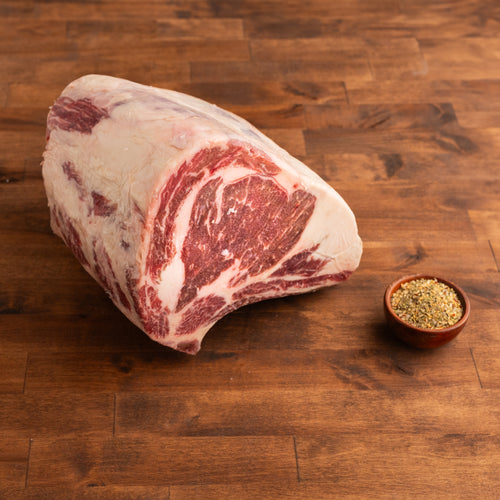
But beneath that beautiful exterior, a prime rib is a collection of distinct muscles, each with its own marbling and texture. Understanding how they're arranged helps explain why some bites are buttery and rich while others are firm and beefy.
Whether you're choosing a roast, carving it or simply appreciating what's on your plate, here's a closer look at the anatomy of one of beef's greatest cuts.

What Is Prime Rib and Where Does It Come From?
Prime rib is a roast cut from the rib primal, and its name describes the cut, not the grade.
Prime rib comes from the rib primal, located between the chuck (shoulder) and loin (lower back). Because these muscles don't get much exercise, the meat is naturally tender and richly marbled.
The name "prime rib" refers to the cut, not the USDA grade. A prime rib roast can be USDA Prime, USDA Choice or American Wagyu. Regardless of grade, the same muscles make up the roast.
Prime Rib vs Ribeye: What's the Difference?
Prime rib vs ribeye is a question of preparation, not origin.
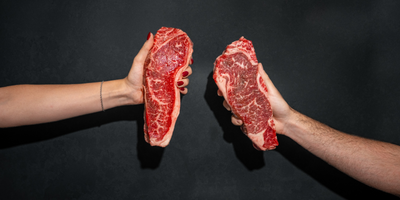
A ribeye steak comes from the same section of the rib primal. The difference is in how it's prepared: A quick sear and a slow roast create two very different experiences from the same remarkable piece of beef.
| Prime Rib | Ribeye Steak | |
| Where it comes from | Rib primal | Same section of the rib primal |
| How it's prepared | Slow roast | Quick sear |
Prefer a quick sear? Shop ribeye steaks cut from the same section of the rib primal, or read The Holiday Steak Playbook for help choosing a steak for your holiday table.
How Do You Choose Bone-In vs Boneless Prime Rib?
Choose bone-in vs boneless prime rib based on convenience and presentation, since both deliver the same rich flavor.
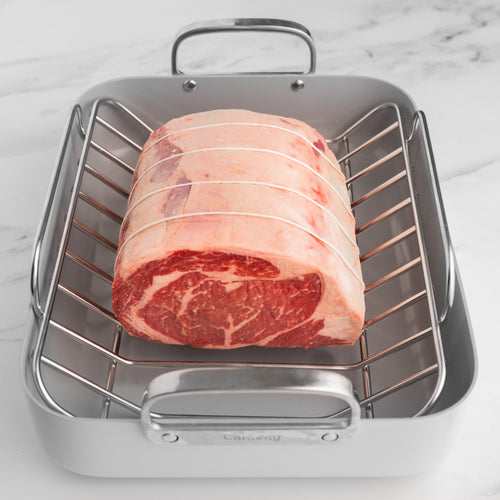
A bone-in roast, or standing rib roast, cooks resting on the rib bones and creates a classic presentation. A boneless roast is easier to season, carve and portion while delivering nearly identical flavor. The choice comes down to convenience and presentation rather than quality.
Explore our bone-in prime rib roasts and boneless prime rib roasts to find the right fit for your table.
Best ever! I kept it on the rare side, used it also on sandwiches. Bones for stock. Spectacular flavor, tender and juicy. All the goodness in one big piece of the highest quality beef. - Antje K., verified buyer
What Are the Parts of a Prime Rib?

A prime rib is built from three main muscles: the eye of the rib, the ribeye cap and, in some roasts, the complexus.
- Eye of the Rib: The longissimus dorsi, or eye of the ribeye, forms the center of each slice. Fine-grained and richly marbled, it delivers prime rib's signature tenderness and juiciness.
- Cap of Ribeye: The spinalis dorsi, or ribeye cap, wraps around the center eye. It's prized for its rich marbling and delicate texture that practically melts in your mouth.
- Complexus: The complexus is a smaller muscle with a slightly coarser texture and robust beef flavor. This is only found in prime rib sourced closer to the shoulder.
A whole roast also includes the fat cap, the internal fat and the rib bones.

Frequently Asked Questions About Prime Rib
Is prime rib the same as USDA Prime?
What is a standing rib roast?
What is the ribeye cap?
Why are some bites of prime rib firmer than others?
Why is prime rib so tender?
Why Is Prime Rib Called the King of Roasts?
Prime rib earns its title because every slice brings together distinct muscles with their own marbling and texture.
A prime rib isn't simply a uniform cut of beef. It's a collection of distinct components that come together to create a spectacular dining experience.
Once you understand the anatomy of a prime rib, every slice tells a story. You'll appreciate the subtle differences in texture and flavor and understand why prime rib has earned its reputation as the king of roasts.
Waygu has been on my wish list for a long time. This Thanksgiving, I just decided to forego the turkey and "bust the budget" with a SRF Waygu Boneless Prime Rib. Lets just say, not one morsel was left on the platter. Everyone left with a big smile on their face and SRF on their minds and list. - Roland P., verified buyer
Prime Rib Tips From Team SRF
You know the anatomy. Now put it to work. Watch Mandy Tanner share her advice for roasting a tender, flavorful prime rib at home, from preparation through resting.
Cooking a bone-in roast? Watch Mandy Tanner show how to tie a prime rib with butcher’s twine so it holds its shape in the oven.
We started ordering this Wagyu Bone-in Prime Rib years ago for New Years’ Day meal. It is now a family tradition. The ribs were so tasty and the roast was so tender. . I would highly recommend this to anyone who’s looking for an outstanding tasting Prime Rib that looks as good as it tastes. The ages ranged from 8 to 74 and everyone loved it. - Sheryl S., verified buyer
For step-by-step temperatures and timing, see our prime rib cooking guide.
Bring the King of Roasts Home
Now that you know what lies beneath every slice, choose the prime rib that fits your table. Snake River Farms offers bone-in and boneless prime rib roasts in American Wagyu, USDA Prime and USDA Choice, so you can pick the grade and presentation that suit your holiday gathering.

Wagyu Boneless Prime Rib
Easy to carve and perfect for buffets or smaller gatherings where convenience matters.
Shop Boneless Wagyu Prime Rib →Wagyu Bone-In Prime Rib
Impressive centerpiece with rich flavor. Roasted on the bone for a classic standing rib roast presentation.
Shop Bone-In Wagyu Prime Rib →Wagyu Tomahawk Roast
Show-stopping presentation with extra-long bones. Perfect for celebrations and dinner parties.
Shop Wagyu Tomahawk Roast →Wagyu Smoked Prime Rib
Fully cooked and expertly smoked for rich flavor. Just heat and serve for a no-stress holiday meal.
Shop Wagyu Smoked Prime Rib →Double R Ranch Bone-In Prime Rib
Hearty beef flavor with a classic bone-in presentation for the holiday table.
Shop Double R Ranch Bone-In Prime Rib →Double R Ranch Boneless Prime Rib
Convenient, tender and easy to carve. A versatile choice for both holidays and special dinners.
Shop Double R Ranch Boneless Prime Rib →