How to Cook A Frozen Steak

When I was growing up, my mom often cooked frozen steaks on our charcoal grill. I grew up in a family of seven, and my mom was the master of putting together hearty meals in a pinch. I remember those steaks being delicious, though that memory may be influenced by the appetite of a 10 year old who ate everything in sight.
Can you cook a frozen steak? At SRF, we believe the best approach is to slowly thaw a frozen steak in the refrigerator, then cook it using your favorite method. Still, the question sparked our curiosity and sent us searching for answers.
An online search turned up countless articles, blogs, and videos with wildly different opinions. Some sources even claimed frozen steaks produce better results than conventional methods. The theory is that the frozen interior thaws gradually, allowing the steak to cook more evenly from edge to edge.
So, like any curious steak lover, I headed to the kitchen to test it myself. What we found is that it's possible to cook a high quality steak from frozen if you follow a few key tips and techniques. We uncovered two successful methods, but we will continue to research and add anything we discover.

How to Cook a Frozen Steak on the Stovetop: Pan Sear with Oven Finish
Any accomplished home cook has pan seared a steak and finished it in the oven to reach the desired temperature. This is sometimes referred to as the "steakhouse method," and it works well for a frozen steak.
The best results are achieved with a thick cut steak measuring 1 ½ inches or more.
Heat oven to 300°F.
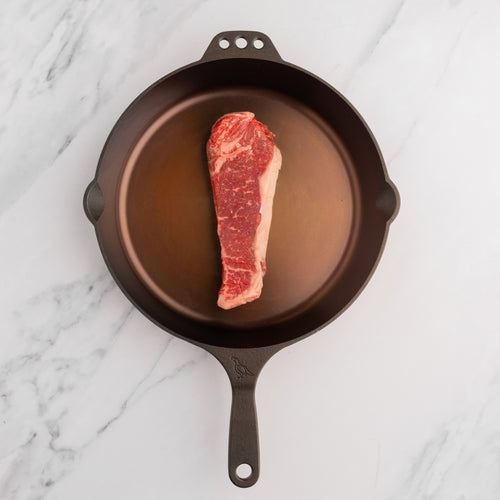
Add oil to a cast iron skillet to a depth of about 1/8 inch. The trick is to use more oil than you would when pan searing a thawed steak. Place over medium high heat until the oil begins to shimmer.
Place the frozen steaks in the pan. Use tongs and exercise care. The oil will spatter. Sear each steak until nicely browned, about 2 minutes. Flip and sear the other side.
Put the steaks and pan in the oven. Cook until the steaks reach your preferred level of doneness: 110°F for rare, 120°F for medium rare, or 130°F for medium.
When the steaks reach the temperature you desire, remove them from the oven. Set on a cutting board and allow to rest for 10 minutes. Season with kosher salt and freshly ground pepper, or your favorite seasoning, before serving. Since dry ingredients do not adhere well to a frozen steak, we found seasoning generously after resting works well.
Ready to put this method to work? Shop American Wagyu Steaks →

Sous Vide: The Most Foolproof Methos for Cooking Frozen Steak
This is a surefire technique for cooking a frozen steak. A water bath is heated and maintained at a precise temperature with an immersion circulator. A frozen steak evenly thaws and cooks to an exact degree of doneness. A hot skillet or grill is then used for a delicious final sear.
Frozen steaks take longer to cook, so additional time is required.
Use an immersion circulator, or sous vide tool, to bring water to your target temperature. We have found that using slightly higher temperatures than conventional methods works best for sous vide. Suggested temperatures are 125°F for rare, 130°F for medium rare, and 135°F for medium.
Inspect your frozen steak. If there are no punctures and the plastic is tight around the steak, place it directly into the water bath. This is the most convenient technique, though it is not possible to pre season the steak.
If the package is loose, has a hole, or if you want to pre season the steak, remove the packaging.
Insert the steak in a food sealer bag or zip top bag. Add kosher salt and pepper to taste, along with a tablespoon of neutral oil. You can also add thyme, rosemary, and crushed garlic cloves, if desired.
Seal the bag with a food sealer, or submerge a zip top bag with a small opening to remove the air. Seal completely once submerged.
Place the sealed steaks in the water bath. Leave the steak in the bath for 2 hours for steaks less than 1 ½ inches thick and 3 hours for steaks 1 ½ inches thick or larger.
Remove the steak from the bag and pat dry with paper towels to remove excess moisture. Heat a heavy skillet over medium high heat with a light coating of oil. Sear 1 to 2 minutes per side. There is no need to rest. The steak is ready to serve immediately.
Watch it in action: See how we cook a frozen New York Strip using the sous vide method in the video below →
Ready to stock your freezer? SRF steaks are individually vacuum-sealed and cut thick — exactly what these methods call for. Shop American Wagyu Steaks →
Frequently Asked Questions
Do I need to defrost a steak before cooking it?
No — both methods above are designed for cooking directly from frozen. That said, we always recommend thawing in the refrigerator when time allows. It opens up more seasoning options and works with every cooking method.
What happens if you cook a steak that isn't fully defrosted?
The exterior cooks faster than the center, which is why Method 1 uses a low oven temperature after the initial sear. If you skip the oven finish and rely on the stovetop alone, you risk an overcooked crust before the interior comes up to temperature. Following either method above prevents that.
How do you cook a frozen steak in a frying pan?
Use the Pan Sear with Oven Finish method above. The key differences from cooking a thawed steak: use more oil, expect a slightly longer sear, and always finish in a 300°F oven rather than on the stovetop alone.
Is it better to cook a frozen steak or thaw it first?
For most situations, thawing first gives you more control over seasoning and works with more cooking methods. But if you're in a pinch, cooking from frozen with the right technique produces excellent results — especially with a thick-cut steak.

Author Bio
Dave Yasuda has worked with Snake River Farms for over 12 years, cooking virtually every product we sell. He has prepared SRF products for photoshoots, food festivals, company events, and customers. A skilled home cook, Dave has collaborated in the kitchen with award-winning chefs, recipe developers, and content creators to enhance his culinary skills. He has also been a featured guest on numerous food-centric podcasts, including Bon Appetit’s “Dinner SOS” hosted by Chris Morocco.